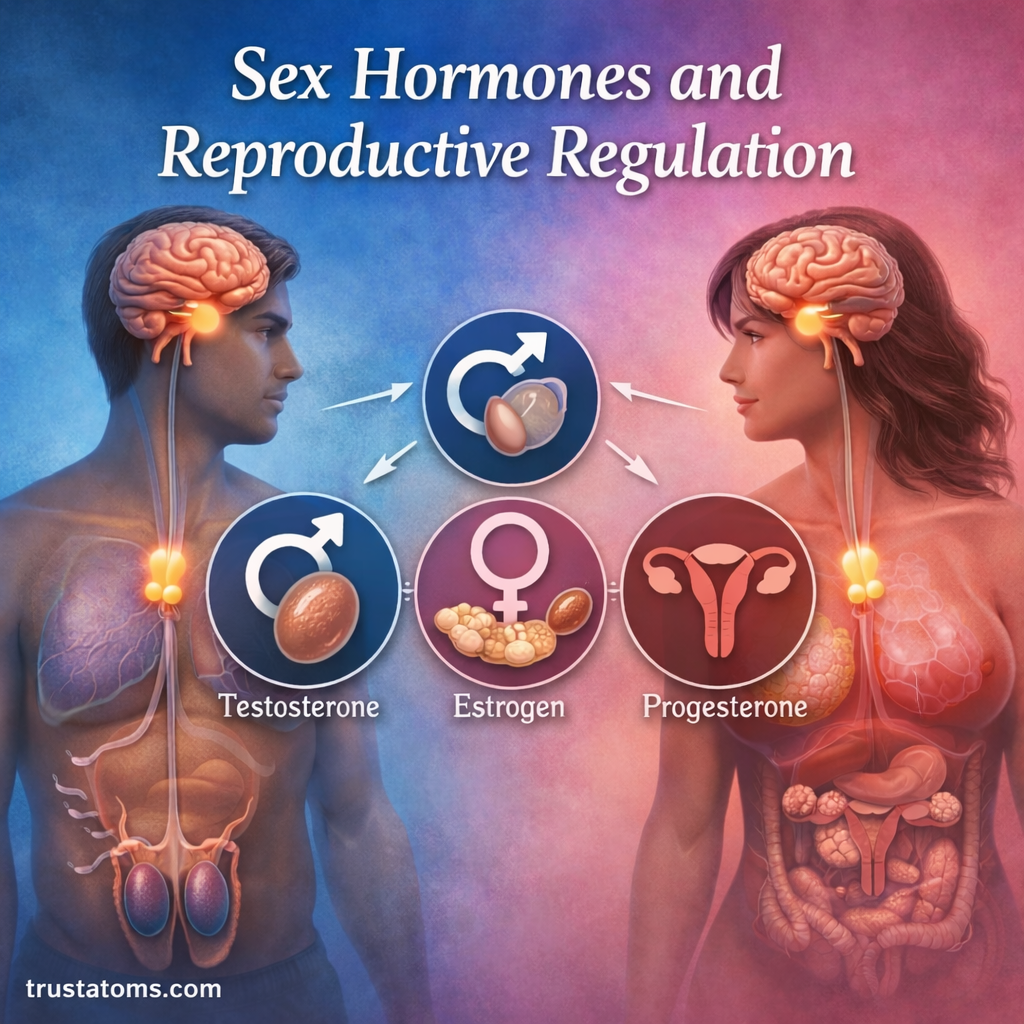
Sex hormones play a central role in human reproduction, development, and overall physiological balance. These chemical messengers regulate everything from puberty and fertility to secondary sexual characteristics and reproductive cycles.
Understanding how sex hormones function helps explain how the body maintains reproductive health and responds to internal and external changes.
What Are Sex Hormones?
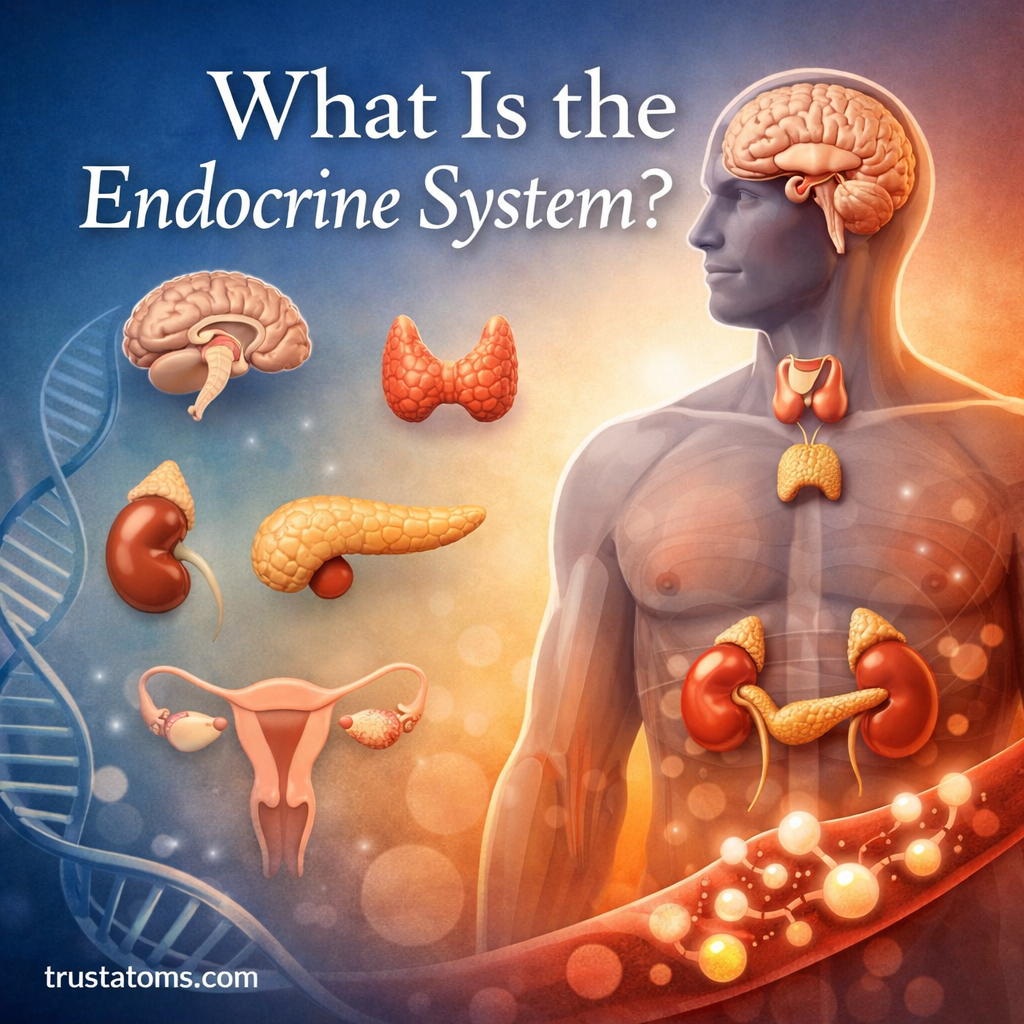
Sex hormones are a group of steroid hormones primarily produced by the gonads:
- Testes in males
- Ovaries in females
They are also produced in smaller amounts by the adrenal glands.
The three main categories of sex hormones include:
- Androgens (e.g., testosterone)
- Estrogens (e.g., estradiol)
- Progesterone
These hormones influence reproductive organs, sexual development, and behavior.
Major Sex Hormones and Their Functions
Testosterone
Testosterone is the primary male sex hormone, though it is present in both sexes.
Key functions include:
- Development of male reproductive organs
- Promotion of sperm production (spermatogenesis)
- Growth of facial and body hair
- Deepening of the voice
- Increased muscle mass and bone density
In females, testosterone contributes to libido and overall hormonal balance.
Estrogen
Estrogen is the primary female sex hormone, with several forms such as estradiol being the most active.
Key roles include:
- Regulation of the menstrual cycle
- Development of female reproductive structures
- Growth of breast tissue
- Maintenance of bone health
- Influence on mood and cognitive function
Estrogen levels fluctuate throughout the menstrual cycle to support ovulation and uterine preparation.
Progesterone
Progesterone works alongside estrogen to regulate the reproductive system.
Its primary functions include:
- Preparing the uterus for potential pregnancy
- Supporting early stages of pregnancy
- Regulating the menstrual cycle
- Stabilizing the uterine lining (endometrium)
Progesterone levels rise after ovulation and fall if pregnancy does not occur.
The Hypothalamic-Pituitary-Gonadal (HPG) Axis
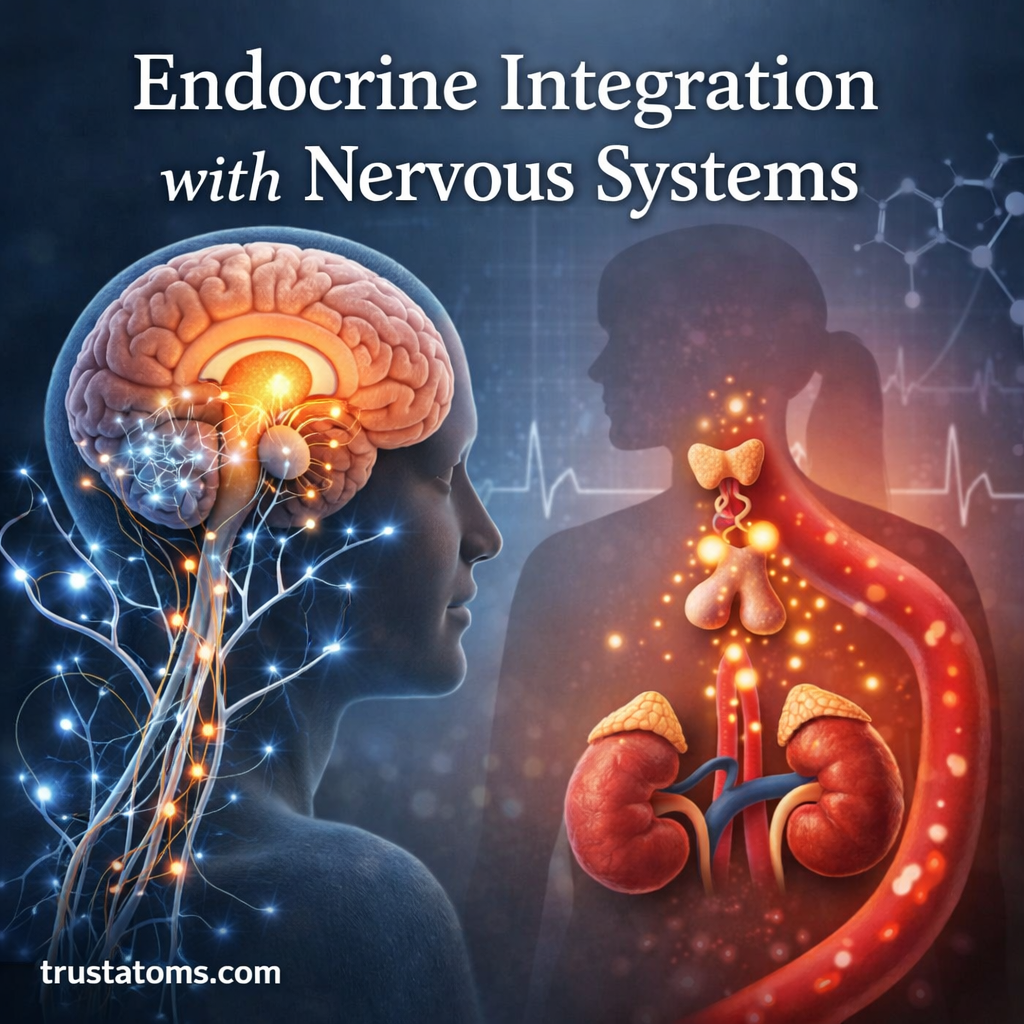
Reproductive regulation is controlled by a feedback system known as the HPG axis, which connects:
- Hypothalamus
- Pituitary gland
- Gonads (testes or ovaries)
How the HPG Axis Works
- The hypothalamus releases gonadotropin-releasing hormone (GnRH)
- GnRH stimulates the pituitary gland
- The pituitary releases:
- Luteinizing hormone (LH)
- Follicle-stimulating hormone (FSH)
- LH and FSH act on the gonads to produce sex hormones
- Sex hormones provide feedback to regulate further hormone release
This feedback loop ensures hormonal balance and proper reproductive function.
Hormonal Regulation in Males
In males, reproductive regulation is relatively stable compared to females.
Key Processes
- FSH stimulates sperm production in the testes
- LH stimulates testosterone production
- Testosterone supports spermatogenesis and male traits
Feedback Control
- High testosterone levels signal the hypothalamus and pituitary to reduce GnRH, LH, and FSH production
- This prevents excessive hormone production
Hormonal Regulation in Females
In females, hormone levels fluctuate in a cyclical pattern known as the menstrual cycle.
Phases of the Menstrual Cycle
- Follicular Phase
- FSH stimulates follicle development in the ovaries
- Estrogen levels begin to rise
- Ovulation
- A surge in LH triggers the release of an egg
- This typically occurs mid-cycle
- Luteal Phase
- Progesterone increases to prepare the uterus for implantation
- Estrogen remains elevated
- Menstruation
- If fertilization does not occur, estrogen and progesterone levels drop
- The uterine lining is shed
Feedback Mechanisms in Reproductive Hormones
Hormonal regulation relies on two main types of feedback:
Negative Feedback
- Most common mechanism
- High hormone levels suppress further production
- Maintains balance and prevents overproduction
Positive Feedback
- Occurs during ovulation
- Rising estrogen levels trigger a surge in LH
- Leads to the release of an egg
This temporary positive feedback ensures timely ovulation.
Role of Sex Hormones in Puberty
Puberty marks the activation of the HPG axis.
In Males
- Increased testosterone leads to:
- Growth of reproductive organs
- Development of secondary sexual characteristics
- Initiation of sperm production
In Females
- Increased estrogen leads to:
- Breast development
- Onset of menstruation
- Maturation of reproductive organs
Puberty represents the transition to reproductive capability.
Factors That Influence Sex Hormone Levels
Several internal and external factors can affect hormone levels:
- Age (e.g., menopause, andropause)
- Stress and cortisol levels
- Nutrition and body fat percentage
- Physical activity
- Sleep patterns
- Medical conditions (e.g., polycystic ovary syndrome, hypogonadism)
Hormonal balance is sensitive to lifestyle and overall health.
Importance of Hormonal Balance
Proper regulation of sex hormones is essential for:
- Fertility and reproductive health
- Bone strength and density
- Muscle development
- Mood stability and mental health
- Energy levels and metabolism
Imbalances can lead to symptoms such as irregular cycles, infertility, fatigue, or mood changes.
Final Thoughts
Sex hormones are essential regulators of human reproduction and development. Through the coordinated action of testosterone, estrogen, and progesterone—and the control of the HPG axis—the body maintains a delicate hormonal balance.
Understanding these processes provides valuable insight into reproductive health, hormonal disorders, and the biological mechanisms that support human life.