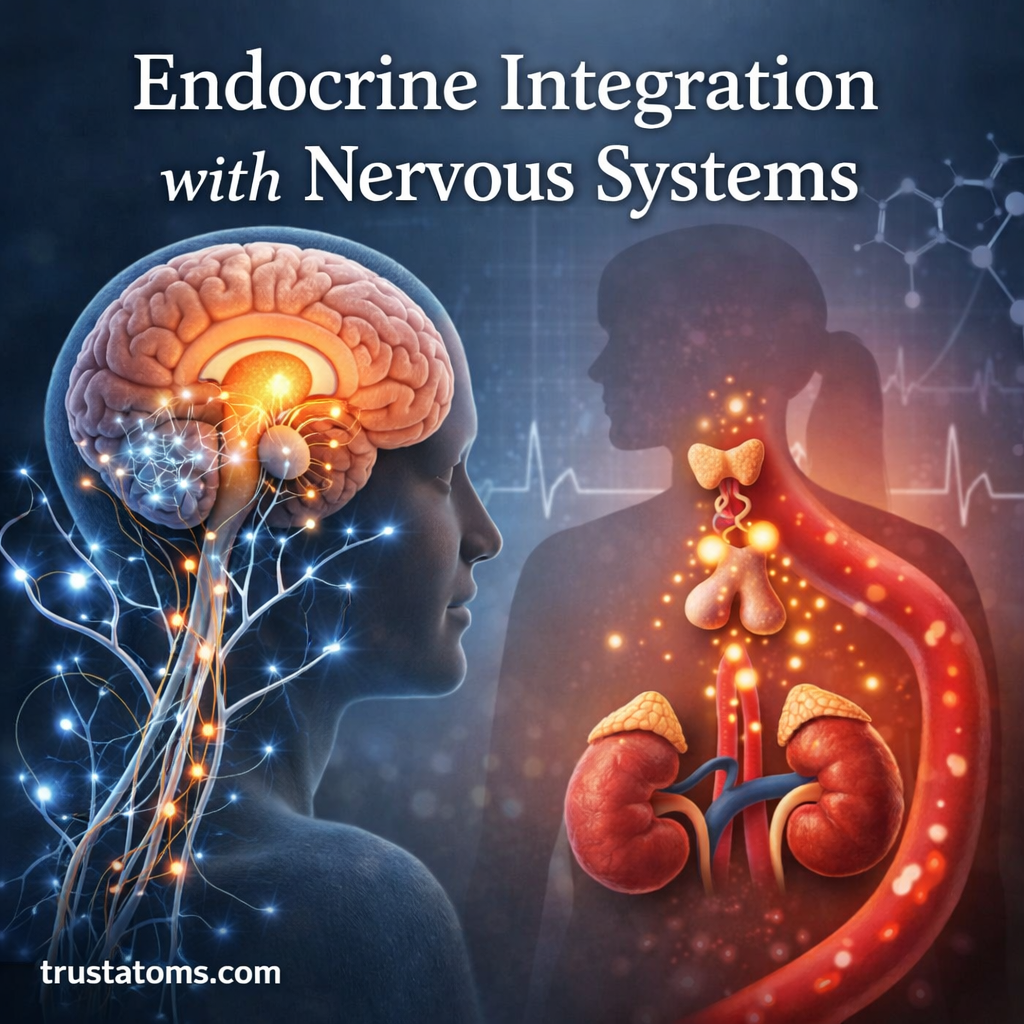
The human body relies on two major communication systems to maintain balance and respond to internal and external changes: the nervous system and the endocrine system. While they operate differently—one using rapid electrical signals and the other using slower chemical messengers—they are deeply interconnected.
This integration allows the body to coordinate everything from stress responses and metabolism to growth, reproduction, and emotional regulation.
Overview of the Two Systems
Nervous System: Fast and Precise
The nervous system uses electrical impulses and neurotransmitters to send rapid signals between cells. It is responsible for immediate responses, such as reflexes, movement, and sensory perception.
Key characteristics:
- Speed: milliseconds
- Communication method: electrical + chemical
- Target specificity: highly precise
- Duration: short-lived effects
Endocrine System: Slow and Widespread
The endocrine system releases hormones into the bloodstream, affecting target organs over a longer period.
Key characteristics:
- Speed: seconds to hours (or longer)
- Communication method: chemical (hormones)
- Target specificity: broader distribution
- Duration: longer-lasting effects
How the Systems Work Together
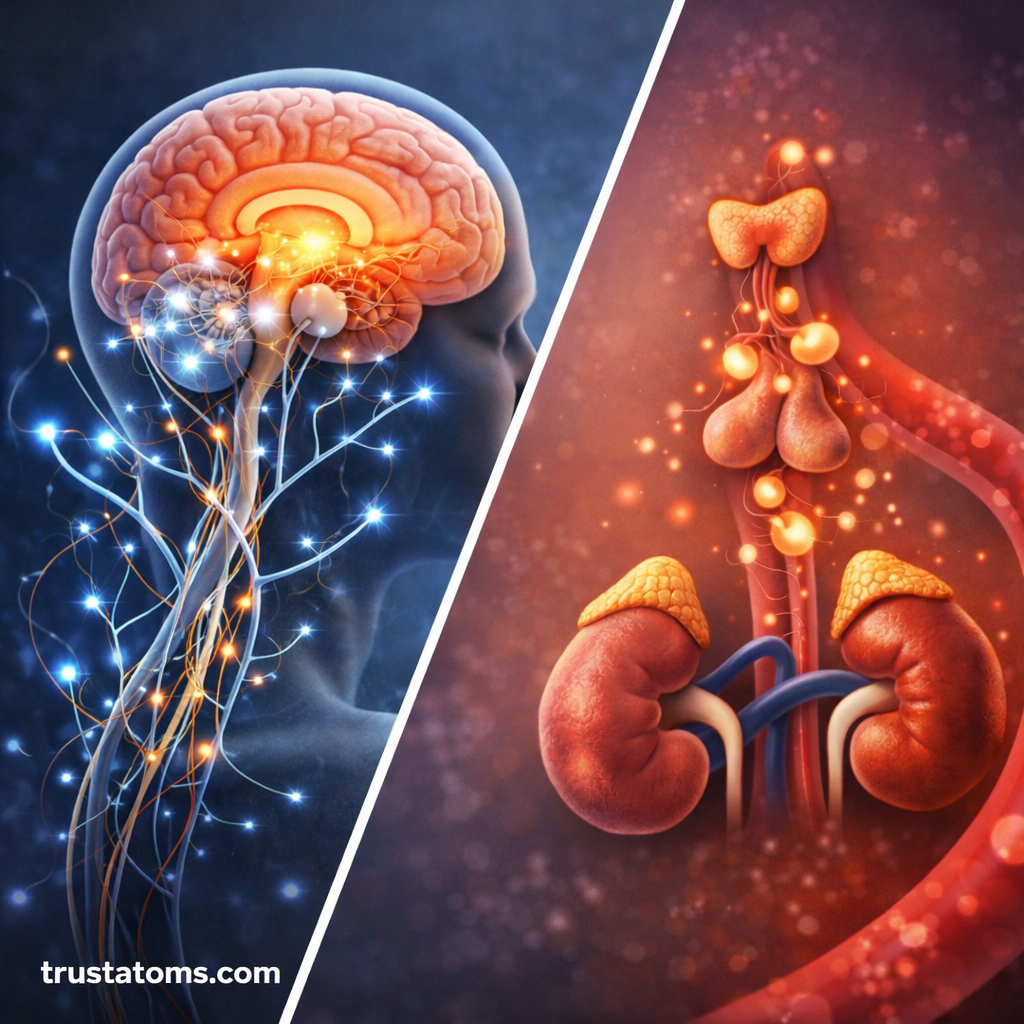
The nervous and endocrine systems are not separate—they constantly interact to maintain homeostasis.
Shared Goals
Both systems regulate:
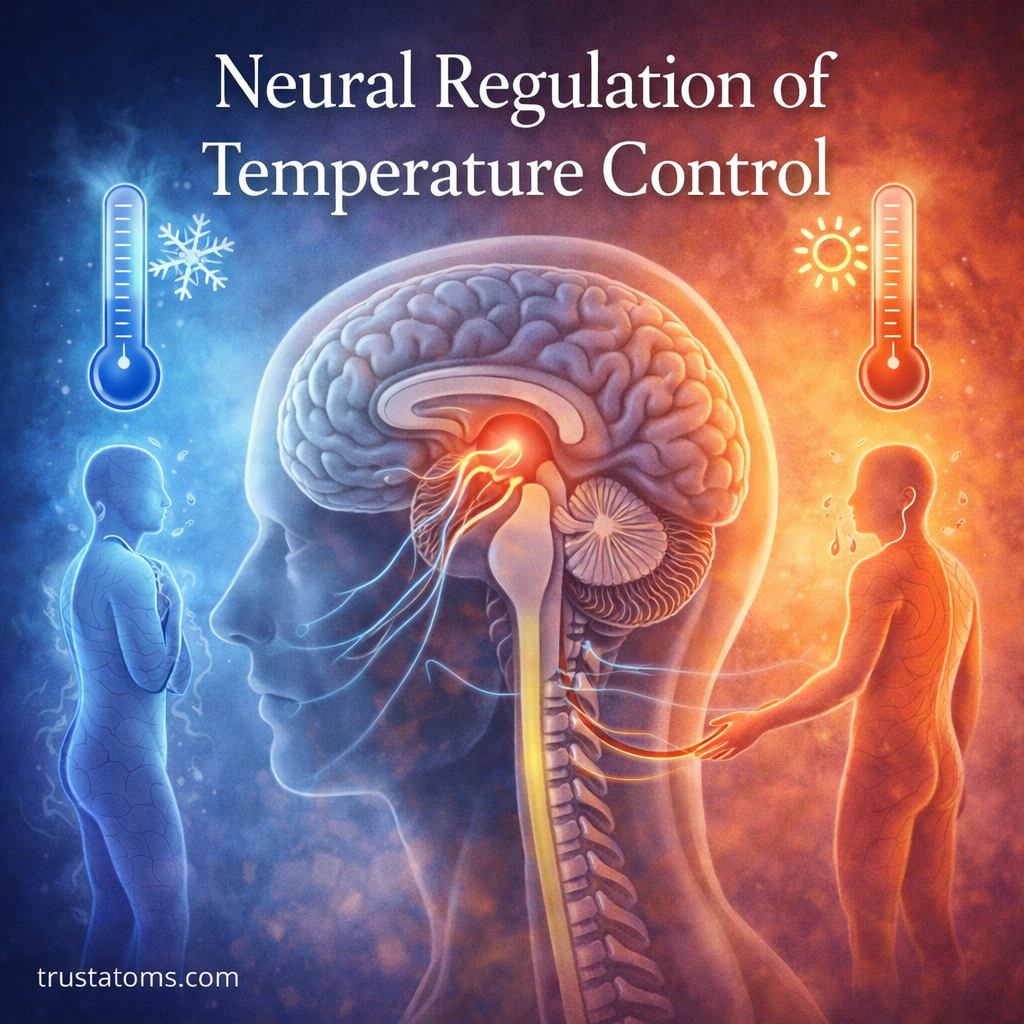
- Body temperature
- Blood pressure
- Energy balance
- Stress responses
- Reproductive functions
Complementary Functions
- The nervous system handles immediate reactions
- The endocrine system sustains and modulates long-term changes
For example, during a stressful event:
- The nervous system triggers an immediate “fight-or-flight” response
- The endocrine system releases hormones to maintain that response over time
The Hypothalamus: The Central Link
The hypothalamus is the primary structure that connects the nervous and endocrine systems.
Functions of the Hypothalamus
- Receives input from the brain and body
- Monitors internal conditions (temperature, hydration, etc.)
- Produces releasing and inhibiting hormones
- Controls the pituitary gland
Why It Matters
The hypothalamus acts as a translator:
- Converts neural signals into hormonal outputs
- Ensures coordination between rapid and long-term responses
The Hypothalamic-Pituitary Axis
The hypothalamus communicates directly with the pituitary gland, often called the “master gland” of the endocrine system.
Two Main Pathways
1. Anterior Pituitary (Hormonal Signaling)
- Hypothalamus releases regulatory hormones
- These travel through blood vessels to the anterior pituitary
- The pituitary then secretes hormones that act on other glands
Examples:
- Thyroid-stimulating hormone (TSH)
- Adrenocorticotropic hormone (ACTH)
2. Posterior Pituitary (Neural Connection)
- Hypothalamic neurons send signals directly to the posterior pituitary
- Hormones are released into the bloodstream
Examples:
- Oxytocin
- Antidiuretic hormone (ADH)
Neuroendocrine Cells
Some specialized cells function as both neurons and endocrine cells.
Key Features
- Receive neural input
- Release hormones into the bloodstream
- Bridge electrical and chemical communication
Examples
- Hypothalamic neurosecretory cells
- Adrenal medulla cells (release adrenaline in response to neural signals)
The Stress Response: A Clear Example
One of the best demonstrations of endocrine-nervous integration is the stress response.
Immediate Response (Nervous System)
- Activation of the sympathetic nervous system
- Rapid release of adrenaline
- Increased heart rate and alertness
Sustained Response (Endocrine System)
- Activation of the hypothalamic-pituitary-adrenal (HPA) axis
- Release of cortisol from the adrenal cortex
- Maintains energy availability and prolonged alertness
Step-by-Step Process
- Stressor is detected by the brain
- Hypothalamus activates the sympathetic nervous system
- Adrenal medulla releases adrenaline
- Hypothalamus signals pituitary gland
- Pituitary releases ACTH
- Adrenal cortex releases cortisol
Feedback Mechanisms
Integration depends heavily on feedback loops, especially negative feedback.
Negative Feedback
- Hormones inhibit their own production
- Prevents overactivation
Example:
- High cortisol levels signal the hypothalamus and pituitary to reduce output
Positive Feedback (Less Common)
- Amplifies responses
- Occurs in specific situations like childbirth (oxytocin release)
Circadian Rhythms and Integration
The nervous and endocrine systems work together to regulate biological rhythms.
Role of the Brain
- The suprachiasmatic nucleus (SCN) acts as the body’s internal clock
- Receives light input from the eyes
Hormonal Regulation
- Controls melatonin release from the pineal gland
- Regulates sleep-wake cycles
This coordination ensures that physiological processes align with day-night patterns.
Clinical Relevance
Disruptions in endocrine-nervous integration can lead to various disorders.
Common Issues
- Chronic stress and cortisol imbalance
- Sleep disorders due to disrupted circadian rhythms
- Hormonal imbalances affecting mood and metabolism
Examples
- Cushing’s syndrome (excess cortisol)
- Hypothyroidism (reduced metabolic regulation)
- Anxiety disorders linked to dysregulated stress pathways
Key Takeaways
- The nervous system provides rapid, targeted responses
- The endocrine system delivers slower, long-lasting effects
- The hypothalamus is the central link between both systems
- The hypothalamic-pituitary axis coordinates hormonal control
- Feedback mechanisms maintain balance
- Integration is essential for homeostasis, stress response, and daily rhythms
Final Thoughts
Endocrine integration with the nervous system is essential for survival and adaptability. By combining speed with sustained regulation, the body can respond effectively to immediate challenges while maintaining long-term stability.
Understanding this connection provides insight into how the body maintains balance—and what happens when that balance is disrupted.