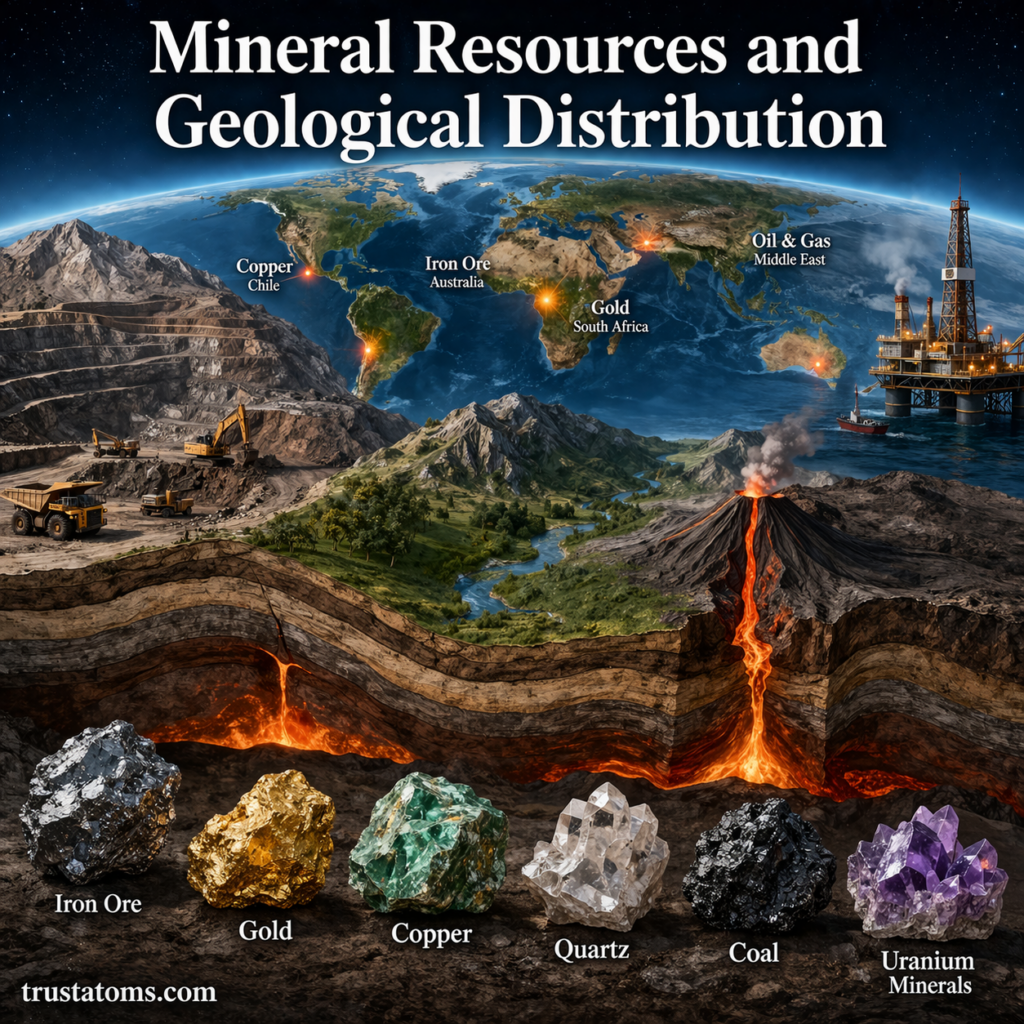
Mineral resources are essential to modern life. From construction materials and electronics to energy production and manufacturing, minerals form the backbone of global economies. Understanding how these resources are distributed across Earth helps explain why certain regions are rich in specific minerals and how geology shapes resource availability.
What Are Mineral Resources?
Mineral resources are naturally occurring substances found in Earth’s crust that can be extracted and used for economic benefit.
They include:
- Metals (iron, copper, gold)
- Industrial minerals (limestone, gypsum, salt)
- Energy resources (coal, uranium)
Key Characteristics
- Formed through natural geological processes
- Found in concentrated deposits called ores
- Extracted through mining or drilling
How Minerals Form
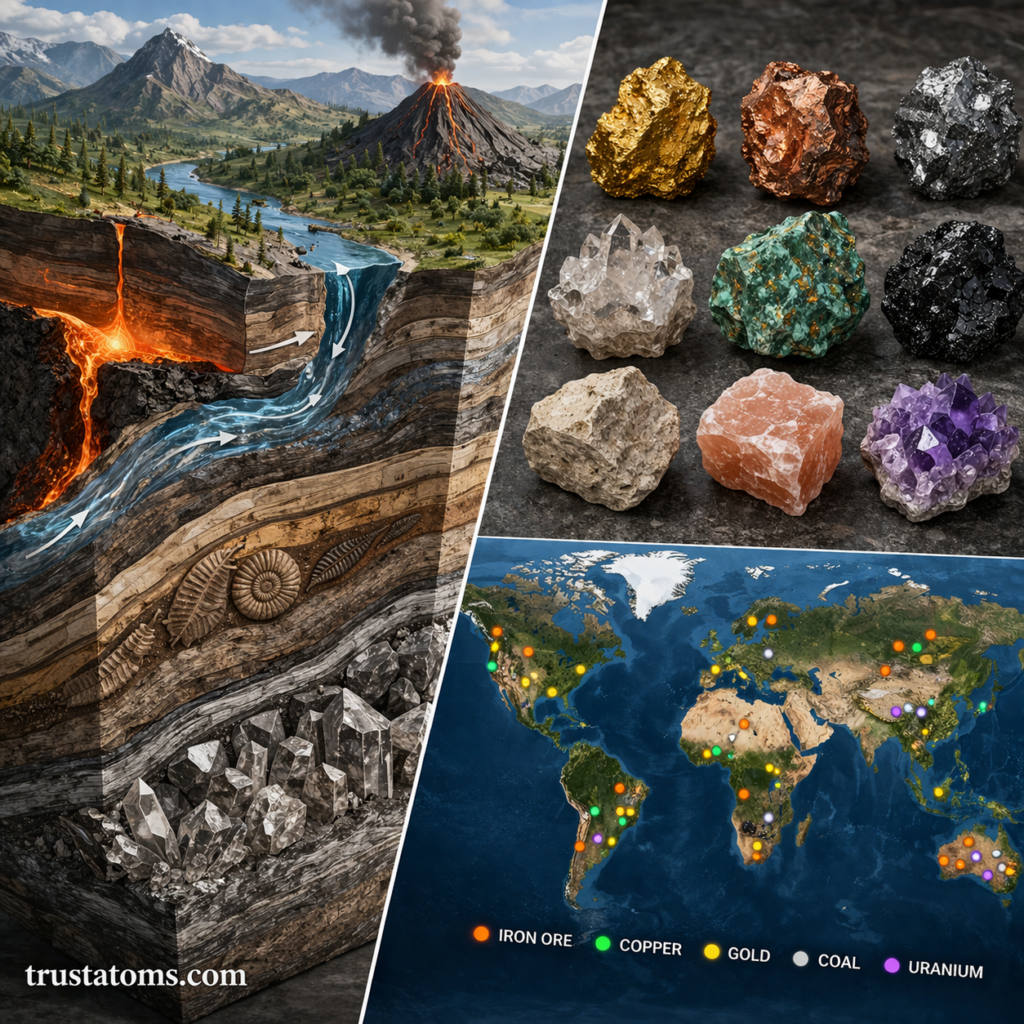
Minerals form through a variety of geological processes over millions of years.
1. Magmatic Processes
- Occur when molten rock (magma) cools and solidifies
- Dense minerals settle and concentrate
- Common minerals: chromium, nickel, platinum
2. Hydrothermal Processes
- Hot, mineral-rich fluids move through cracks in rocks
- Minerals crystallize as fluids cool
- Common minerals: gold, silver, copper
3. Sedimentary Processes
- Minerals are deposited by water, wind, or ice
- Layers build up over time
- Common minerals: coal, salt, gypsum
4. Metamorphic Processes
- Existing rocks change under heat and pressure
- Minerals recrystallize into new forms
- Common minerals: graphite, talc
Types of Mineral Resources
Mineral resources are broadly categorized based on their use.
Metallic Minerals
- Contain metal elements
- Used in construction, manufacturing, and technology
Examples:
- Iron (steel production)
- Aluminum (lightweight structures)
- Copper (electrical wiring)
Non-Metallic Minerals
- Do not contain metals
- Used in building materials and industrial applications
Examples:
- Limestone (cement)
- Sand and gravel (construction)
- Phosphate (fertilizers)
Energy Minerals
- Used to produce energy
Examples:
- Coal
- Uranium
- Oil and natural gas (technically organic but often grouped here)
Geological Distribution of Minerals
Minerals are not evenly distributed across Earth. Their location depends on geological history and processes.
Factors Influencing Distribution
- Plate tectonics
- Rock type (igneous, sedimentary, metamorphic)
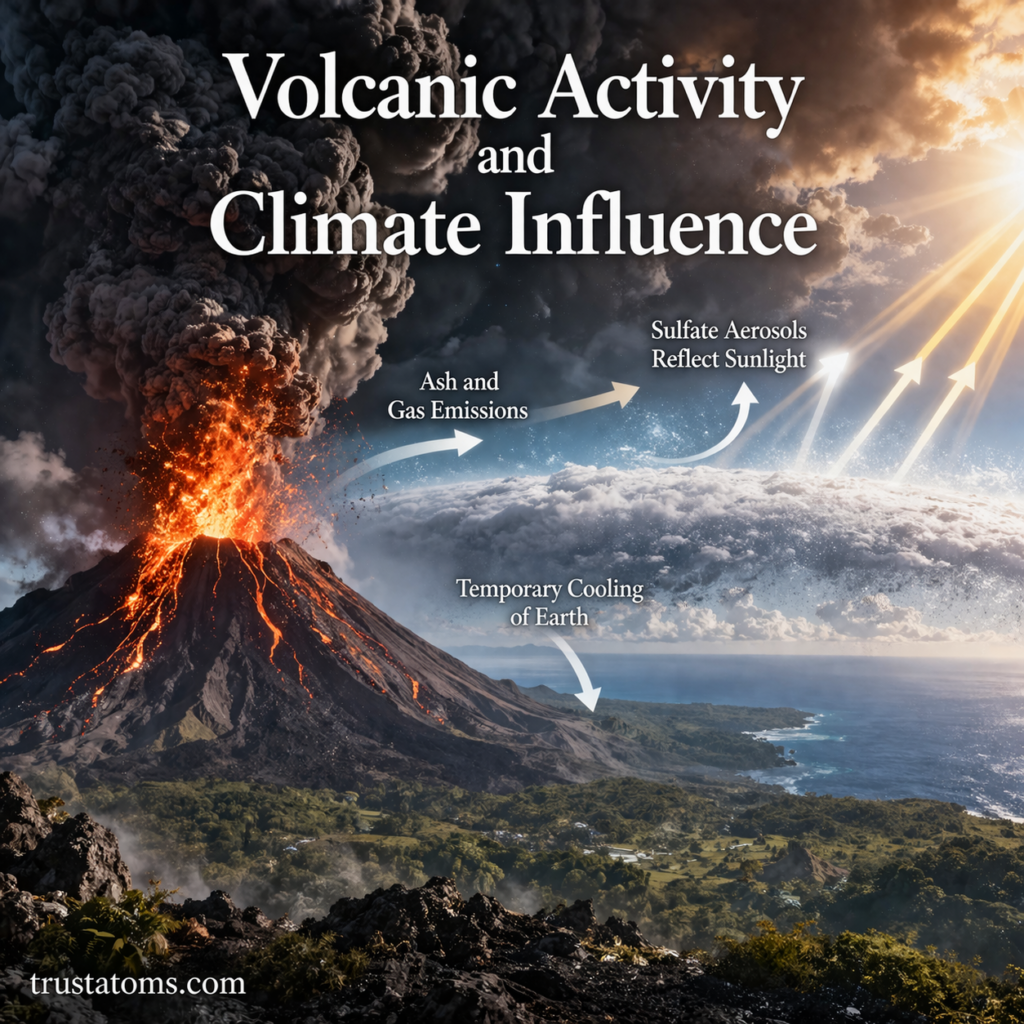
- Past volcanic activity
- Erosion and sedimentation
Role of Plate Tectonics
Plate tectonics plays a major role in mineral distribution.
Key Effects
- Convergent boundaries: Rich in metals like copper and gold
- Divergent boundaries: Associated with volcanic minerals
- Transform boundaries: Less associated with mineral formation but influence fault-related deposits
Regions near tectonic activity often contain valuable mineral deposits.
Major Mineral-Rich Regions
Certain parts of the world are especially rich in mineral resources.
Examples
- South Africa: Gold and platinum
- Australia: Iron ore and bauxite
- Chile: Copper
- Middle East: Oil and natural gas
- Canada: Nickel and uranium
These regions have unique geological histories that allowed mineral deposits to form and concentrate.
Ore Deposits and Mining
Minerals are extracted from ore deposits, which are concentrations of valuable materials.
Types of Mining
- Surface mining
- Used for shallow deposits
- Examples: open-pit mining
- Underground mining
- Used for deep deposits
- More complex and costly
- Placer mining
- Extracts minerals from sediments (e.g., gold in riverbeds)
Environmental Impact of Mineral Extraction
Mining provides essential resources but can impact the environment.
Common Impacts
- Land degradation
- Water pollution
- Air pollution
- Habitat destruction
Sustainable Practices
- Recycling minerals
- Reducing waste
- Rehabilitating mined land
- Using cleaner extraction technologies
Why Mineral Resources Matter
Mineral resources are critical for:
- Infrastructure development
- Technology and electronics
- Energy production
- Economic growth
Access to these resources often influences global trade and geopolitics.
Final Thoughts
Mineral resources and their geological distribution are shaped by Earth’s dynamic processes. From magma cooling deep underground to sediment layers forming over time, these processes determine where valuable minerals are found.
Understanding how minerals form and where they are located helps us use resources more efficiently, plan for sustainable extraction, and better manage Earth’s natural wealth.