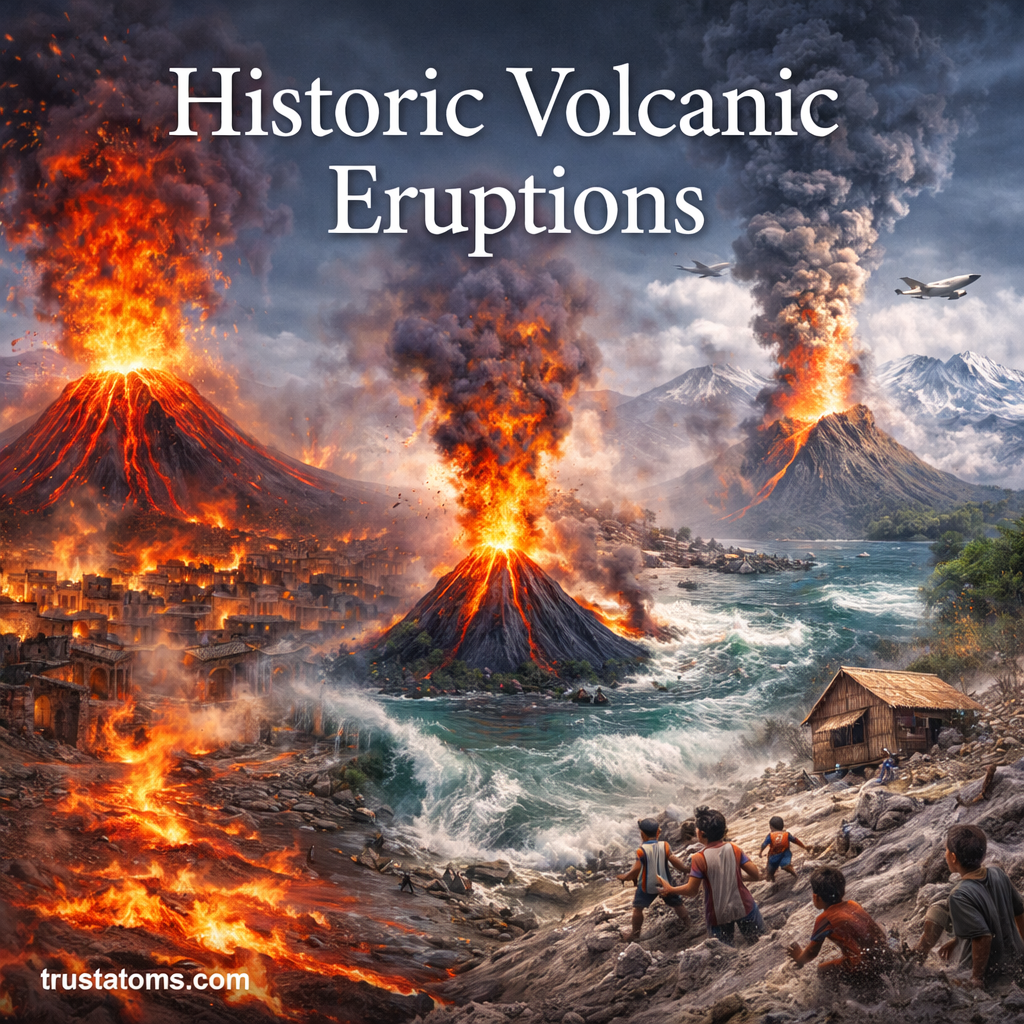
Volcanic eruptions are among the most dramatic natural events on Earth. They can reshape landscapes, alter climates, and impact human history in profound ways.
From ancient eruptions that buried entire cities to modern events that disrupted global travel, historic volcanic eruptions provide valuable insight into how our planet works—and how societies can better prepare.
What Is a Volcanic Eruption?
A volcanic eruption occurs when magma (molten rock beneath the Earth’s surface) rises and escapes through cracks or vents in the crust.
When pressure builds up, it can lead to explosive or gradual releases of:
- Lava
- Ash clouds
- Gas (such as sulfur dioxide)
- Pyroclastic flows (fast-moving hot gas and debris)
Why Study Historic Volcanic Eruptions?
Studying past eruptions helps scientists:
- Understand volcanic behavior and warning signs
- Predict future eruptions more accurately
- Assess risks to nearby populations
- Study climate effects caused by volcanic gases and ash
Historic eruptions also reveal how human societies have adapted—or struggled—in the face of natural disasters.
Notable Historic Volcanic Eruptions
Below are some of the most significant eruptions in recorded history.
Mount Vesuvius (79 AD)
The eruption of Mount Vesuvius is one of the most famous in history.
- Location: Italy
- Impact: Destroyed the Roman cities of Pompeii and Herculaneum
Key details:
- A massive ash cloud buried entire քաղաքs in hours
- Preserved buildings, artifacts, and even human remains
- Provided modern scientists with detailed insight into Roman life
Mount Tambora (1815)
The eruption of Mount Tambora is the most powerful eruption in recorded history.
- Location: Indonesia
- Volcanic Explosivity Index (VEI): 7
Key impact:
- Triggered the “Year Without a Summer” in 1816
- Caused global crop failures and food shortages
- Led to widespread famine and economic disruption
Krakatoa (1883)
The eruption of Krakatoa was one of the loudest events ever recorded.
- Location: Indonesia
Key impact:
- Explosion heard thousands of miles away
- Generated massive tsunamis killing over 36,000 people
- Produced atmospheric effects that altered sunsets worldwide
Mount St. Helens (1980)
The eruption of Mount St. Helens is one of the most studied volcanic events in modern history.
- Location: United States
Key impact:
- Largest landslide in recorded history
- Flattened forests over a wide area
- Advanced scientific monitoring and eruption prediction
Mount Pinatubo (1991)
The eruption of Mount Pinatubo had significant global effects.
- Location: Philippines
Key impact:
- Released massive amounts of sulfur dioxide into the atmosphere
- Caused global temperatures to drop temporarily
- Demonstrated how volcanoes can influence climate
Eyjafjallajökull (2010)
The eruption of Eyjafjallajökull disrupted modern life in a unique way.
- Location: Iceland
Key impact:
- Ash cloud grounded air travel across Europe
- Highlighted global dependence on aviation
- Showed how even moderate eruptions can have widespread effects
Types of Volcanic Eruptions
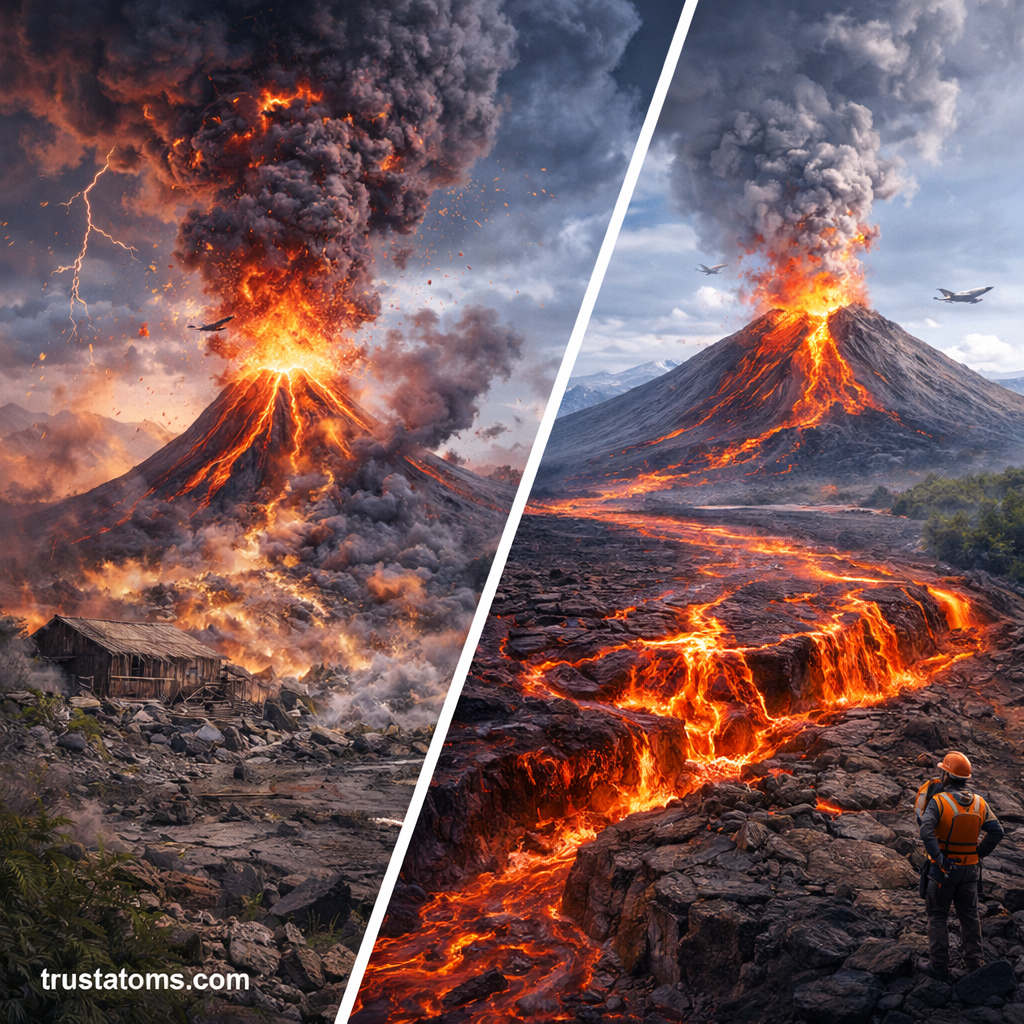
Volcanic eruptions vary widely depending on magma composition and pressure.
1. Explosive Eruptions
- Violent and sudden
- Produce ash clouds and pyroclastic flows
- Highly destructive
2. Effusive Eruptions
- Slow and steady lava flow
- Less explosive but still dangerous
- Common in shield volcanoes
Common Impacts of Major Eruptions
Historic eruptions often share similar consequences:
Environmental Effects
- Air pollution from ash and gases
- Changes in global temperature
- Destruction of ecosystems
Human Impact
- Loss of life and displacement
- Damage to infrastructure
- Long-term economic disruption
Secondary Hazards
- Tsunamis (if eruption occurs underwater or near coastlines)
- Lahars (mudflows caused by volcanic debris and water)
- Landslides
How Historic Eruptions Changed Science
Major eruptions have helped scientists:
- Develop volcanic monitoring systems
- Improve evacuation strategies
- Understand climate interactions
- Create hazard maps for high-risk regions
Technologies such as satellite monitoring and gas detection have greatly improved early warning capabilities.
Lessons Learned From the Past
Historic volcanic eruptions offer critical lessons:
- Monitor active volcanoes continuously
- Establish clear evacuation plans
- Educate communities about risks
- Strengthen infrastructure in volcanic regions
Preparedness can significantly reduce the impact of future eruptions.
Final Thoughts
Historic volcanic eruptions remind us of the Earth’s immense power. While eruptions can be destructive, they also play a vital role in shaping landscapes and ecosystems.
By studying past events, scientists and communities can better anticipate future eruptions and minimize their impact—turning knowledge into resilience.