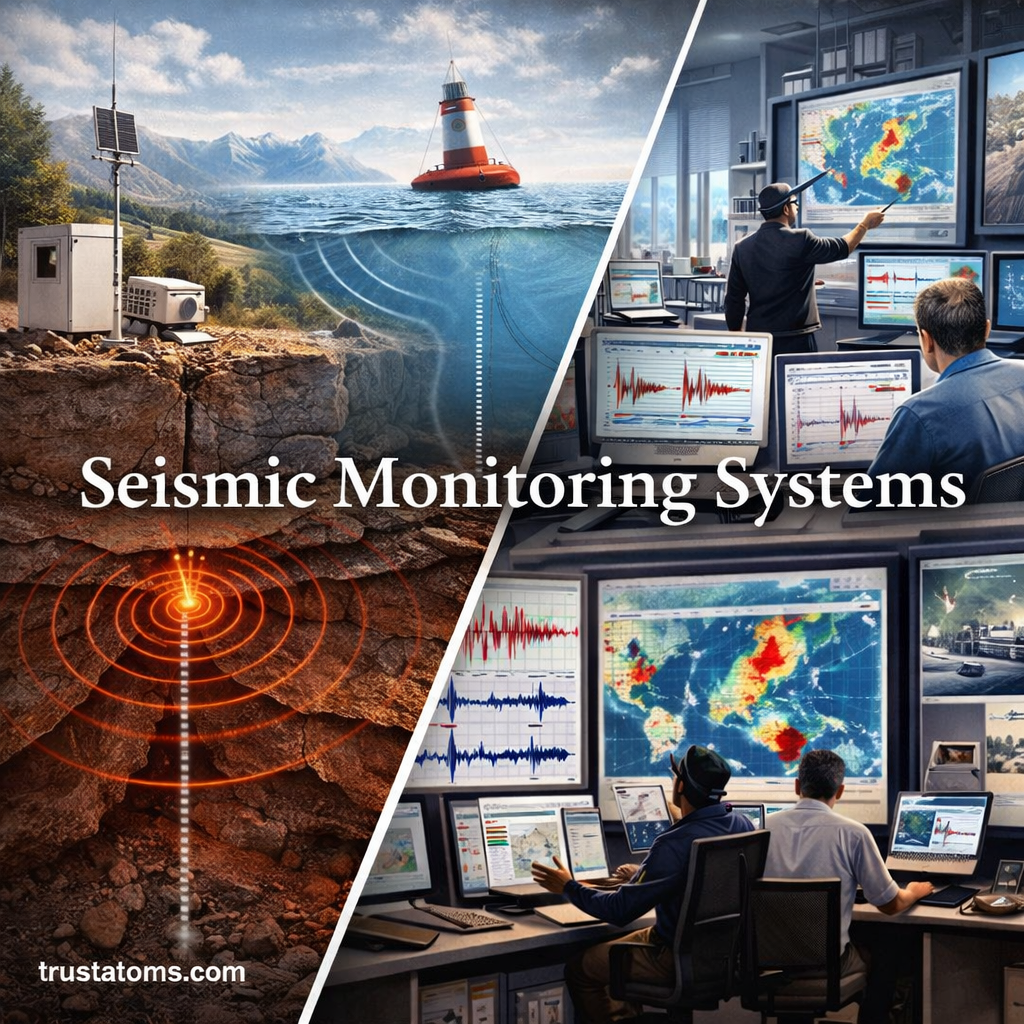
Seismic monitoring systems are essential tools used to detect, measure, and analyze earthquakes. These systems help scientists understand Earth’s internal activity, provide early warnings, and reduce the impact of seismic hazards on communities.
From underground sensors to global data networks, modern seismic monitoring plays a critical role in protecting lives and infrastructure.
What Is a Seismic Monitoring System?
A seismic monitoring system is a network of instruments and technologies designed to detect ground vibrations caused by earthquakes and other seismic events.
These systems:
- Record seismic waves traveling through the Earth
- Measure earthquake strength and location
- Provide data for analysis and early warnings
They operate continuously, monitoring both small and large seismic activities around the world.
How Do Seismic Monitoring Systems Work?
Seismic systems detect vibrations in the ground and convert them into data that scientists can analyze.
1. Detection of Ground Motion
- Sensors called seismometers detect movement
- Even tiny vibrations can be recorded
- Data is converted into electrical signals
2. Recording Seismic Waves
- Signals are displayed as waveforms (seismograms)
- Different wave types (P-waves and S-waves) are identified
- Arrival times help determine earthquake location
3. Data Transmission
- Data is sent to monitoring centers in real time
- Networks combine information from multiple stations
- Faster communication improves response time
Key Components of Seismic Monitoring Systems
A complete seismic monitoring system includes several important components.
Seismometers
- Sensitive instruments that detect ground motion
- Installed on land or ocean floors
- Can measure both small tremors and major earthquakes
Data Loggers
- Record and store seismic data
- Ensure continuous monitoring even during power loss
Communication Networks
- Transmit data via satellites, radio, or internet
- Enable real-time monitoring and alerts
Monitoring Centers
- Analyze incoming data
- Determine earthquake magnitude, depth, and location
- Issue warnings when necessary
Types of Seismic Monitoring Systems
Seismic monitoring systems can vary depending on their purpose and scale.
Local Monitoring Systems
- Focus on specific regions or fault zones
- Provide detailed data for local hazards
- Used near cities or high-risk areas
Regional Networks
- Cover larger geographic areas
- Combine data from multiple stations
- Help track seismic patterns across regions
Global Monitoring Systems
- Monitor earthquakes worldwide
- Used for scientific research and global safety
- Detect large events across continents and oceans
What Are Seismic Waves?
Seismic waves are energy waves generated by earthquakes. Monitoring systems rely on detecting these waves to understand seismic events.
Primary Waves (P-Waves)
- Travel fastest
- Move through solids, liquids, and gases
- First to arrive at monitoring stations
Secondary Waves (S-Waves)
- Slower than P-waves
- Only travel through solids
- Cause more noticeable ground shaking
Surface Waves
- Travel along Earth’s surface
- Cause the most damage during earthquakes
Role of Seismic Monitoring in Early Warning Systems
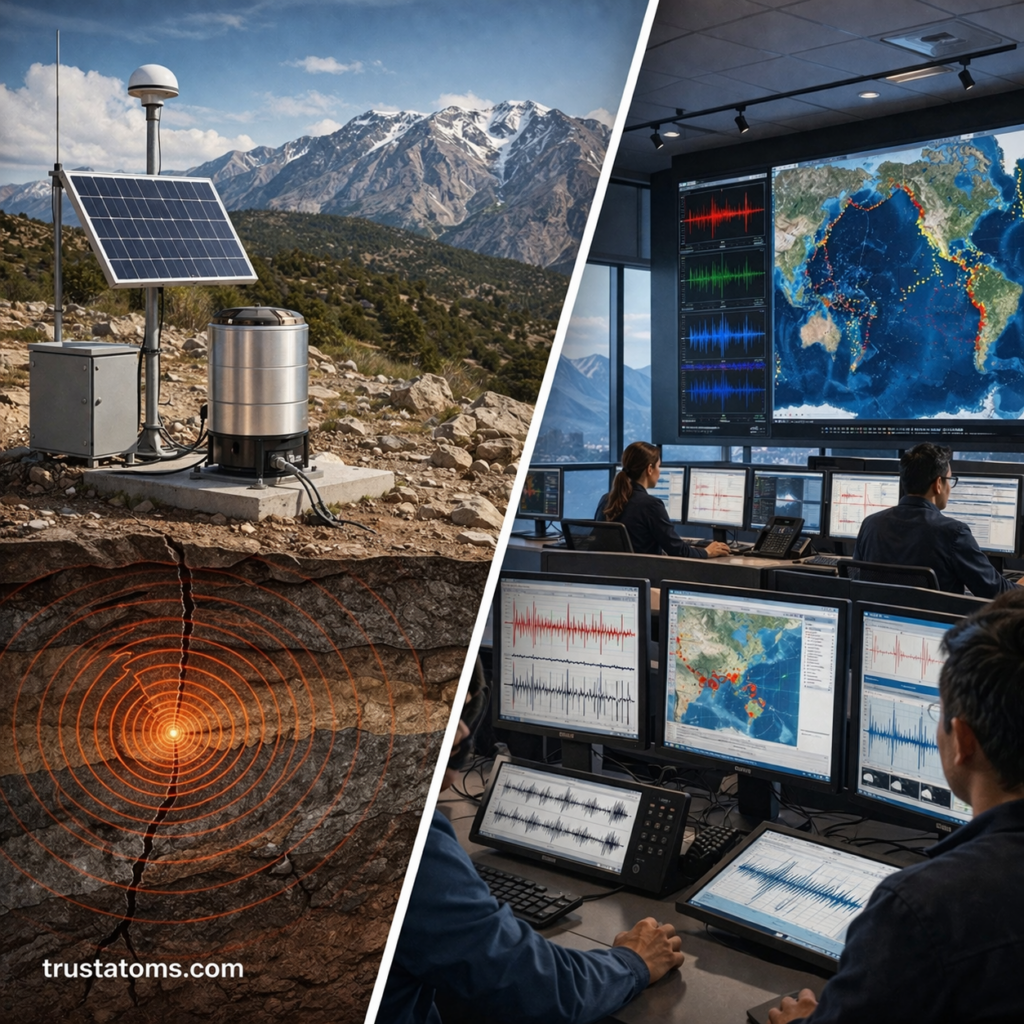
Seismic monitoring systems are critical for earthquake early warning systems.
How Early Warning Works
- P-waves are detected first (less damaging)
- Systems calculate earthquake location and magnitude
- Alerts are sent before stronger S-waves arrive
Even a few seconds of warning can:
- Allow people to take cover
- Stop trains and machinery
- Shut down critical infrastructure
Real-World Applications of Seismic Monitoring
Seismic monitoring systems are used in many important ways:
- Earthquake detection and hazard assessment
- Tsunami warning systems
- Monitoring volcanic activity
- Studying Earth’s internal structure
- Engineering and construction planning
They provide valuable data for both safety and scientific research.
Challenges in Seismic Monitoring
Despite advanced technology, seismic monitoring has limitations:
- Difficult to predict exact timing of earthquakes
- Remote areas may lack monitoring stations
- Data interpretation can be complex
- Ocean-based monitoring is more challenging
Ongoing improvements continue to enhance accuracy and coverage.
The Future of Seismic Monitoring
Advancements in technology are making seismic monitoring more effective:
- Improved sensor sensitivity
- Artificial intelligence for faster data analysis
- Expansion of ocean-based monitoring systems
- Integration with mobile alert systems
These innovations aim to provide faster and more reliable warnings.
Key Takeaways
- Seismic monitoring systems detect and analyze earthquakes
- Seismometers are the primary tools used to measure ground motion
- Seismic waves help determine earthquake location and strength
- Early warning systems rely on fast detection of P-waves
- Technology continues to improve global monitoring capabilities
Final Thoughts
Seismic monitoring systems are a vital part of modern Earth science and disaster preparedness. While earthquakes cannot be prevented, their impact can be reduced through timely detection and accurate data.
As technology advances, these systems will continue to improve, helping communities stay safer in the face of one of Earth’s most powerful natural forces.