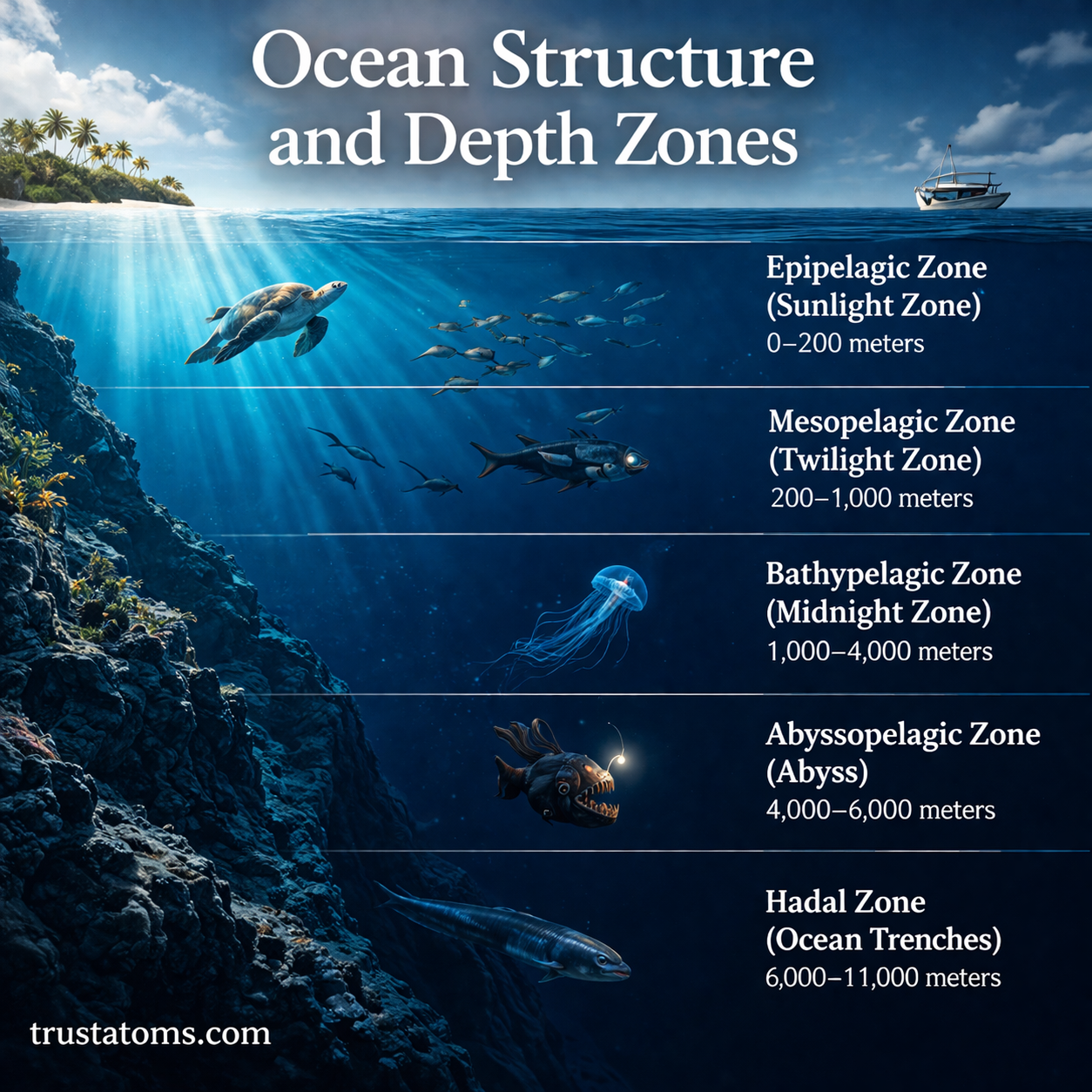
The ocean is not a uniform body of water—it is a complex, layered system shaped by light, pressure, temperature, and life. Understanding ocean structure and depth zones helps scientists study marine ecosystems, climate patterns, and the limits of life on Earth.
In this guide, we’ll break down how the ocean is structured both vertically and horizontally, and explore the unique characteristics of each depth zone.
What Is Ocean Structure?
Ocean structure refers to how the ocean is organized into layers based on physical and environmental conditions. These layers vary in:
- Light availability
- Temperature
- Pressure
- Salinity
- Biological activity
There are two main ways scientists describe ocean structure:
- Vertical zoning (depth-based layers)
- Horizontal zoning (distance from shore)
Vertical Ocean Zones (By Depth)
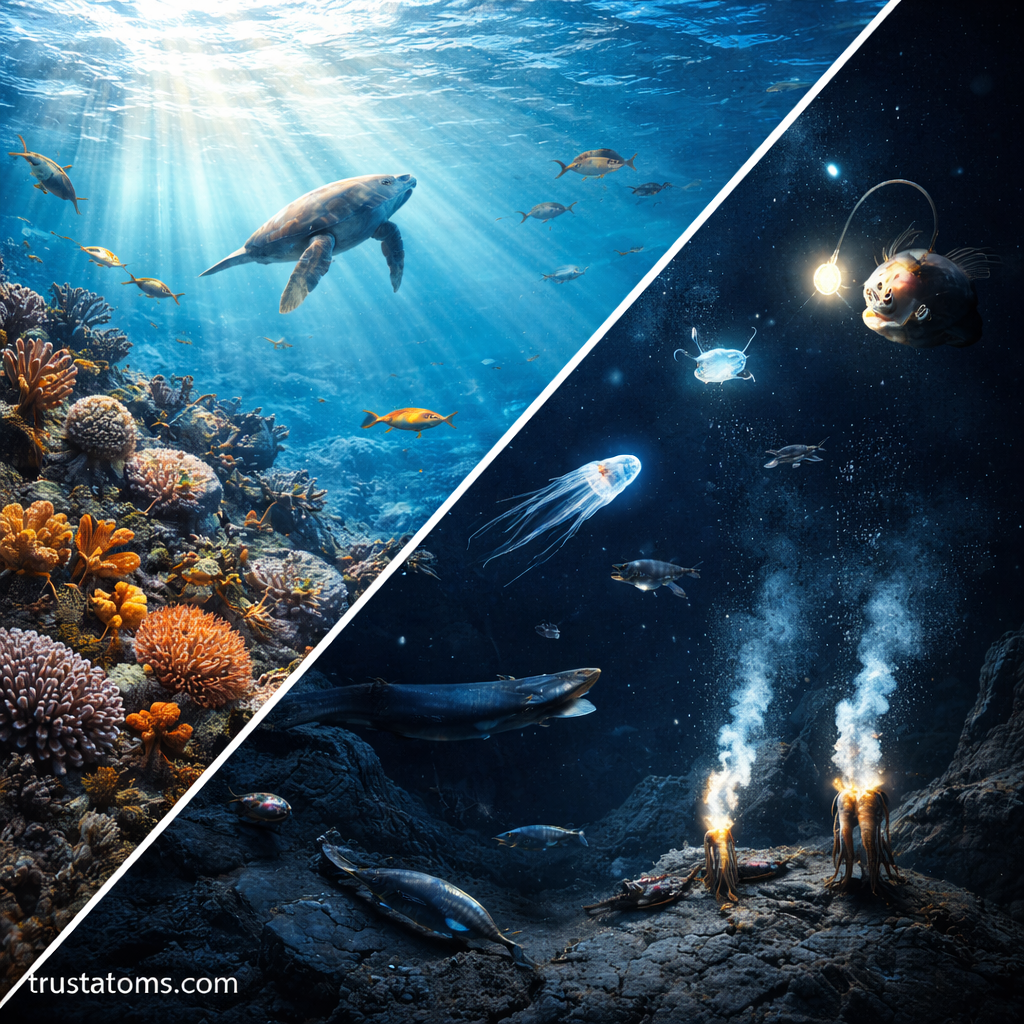
The ocean is divided into distinct vertical zones, each with unique environmental conditions and ecosystems.
Epipelagic Zone (Sunlight Zone)
Depth: 0–200 meters
This is the uppermost layer of the ocean where sunlight penetrates, allowing photosynthesis to occur.
Key features:
- Supports most marine life
- Home to phytoplankton, fish, and marine mammals
- Warmest and most oxygen-rich layer
Why it matters:
- Primary source of oceanic food chains
- Major contributor to global oxygen production
Mesopelagic Zone (Twilight Zone)
Depth: 200–1,000 meters
Light begins to fade in this zone, and photosynthesis is no longer possible.
Key features:
- Dim light conditions
- Bioluminescent organisms common
- Rapid temperature decrease
Examples of life:
- Lanternfish
- Squid
- Deep-sea shrimp
Bathypelagic Zone (Midnight Zone)
Depth: 1,000–4,000 meters
This zone is completely dark and extremely cold.
Key features:
- No sunlight
- High pressure
- Sparse food availability
Adaptations of organisms:
- Slow metabolism
- Large mouths and expandable stomachs
- Ability to produce light (bioluminescence)
Abyssopelagic Zone (Abyss)
Depth: 4,000–6,000 meters
Conditions become even more extreme in this deep ocean layer.
Key features:
- Near-freezing temperatures
- Crushing pressure
- Flat, muddy seafloor
Life forms:
- Sea cucumbers
- Brittle stars
- Deep-sea worms
Hadal Zone (Ocean Trenches)
Depth: 6,000–11,000 meters
This is the deepest part of the ocean, found in ocean trenches.
Key features:
- Extreme pressure (over 1,000 times surface pressure)
- Total darkness
- Isolated ecosystems
Famous example:
- The Mariana Trench, the deepest known part of the ocean
Horizontal Ocean Zones (By Distance from Shore)
In addition to depth, the ocean is also divided horizontally.
Intertidal Zone
- Located between high and low tide lines
- Organisms must survive changing conditions (wet and dry)
Neritic Zone
- Extends from the shoreline to the edge of the continental shelf
- Rich in nutrients and biodiversity
Oceanic Zone
- Open ocean beyond the continental shelf
- Less nutrient-rich but vast in size
Ocean Layers Based on Temperature
Temperature also plays a key role in ocean structure.
Surface Layer
- Warm and well-mixed
- Influenced by sunlight and wind
Thermocline
- Rapid temperature drop with depth
- Acts as a barrier between layers
Deep Ocean Layer
- Cold and stable
- Little variation in temperature
Pressure and Its Effects on Ocean Depth
As depth increases, pressure rises dramatically.
Key facts:
- Pressure increases by about 1 atmosphere every 10 meters
- Deep-sea organisms are specially adapted to survive extreme pressure
- Human exploration requires specialized submersibles
Effects on life:
- Limits size and movement
- Influences body structure (flexible, gelatinous forms)
- Reduces metabolic rates
Why Ocean Zones Matter
Understanding ocean structure is essential for multiple reasons:
Climate Regulation
- Oceans absorb heat and carbon dioxide
- Influence weather patterns and global temperatures
Marine Biodiversity
- Each zone supports unique ecosystems
- Helps scientists study evolution and adaptation
Resource Management
- Guides sustainable fishing practices
- Supports conservation of marine habitats
Human Exploration of Ocean Depths
Despite covering over 70% of Earth’s surface, much of the ocean remains unexplored.
Technologies used:
- Submersibles and remotely operated vehicles (ROVs)
- Sonar mapping
- Deep-sea sensors
Challenges:
- Extreme pressure
- Limited visibility
- High costs of exploration
Final Thoughts
The ocean is a layered and dynamic system, with each depth zone offering a unique environment shaped by light, pressure, and temperature. From the sunlit surface to the deepest trenches, these zones reveal the incredible adaptability of life on Earth.
By understanding ocean structure and depth zones, scientists can better protect marine ecosystems, predict climate changes, and explore one of the last great frontiers on our planet.