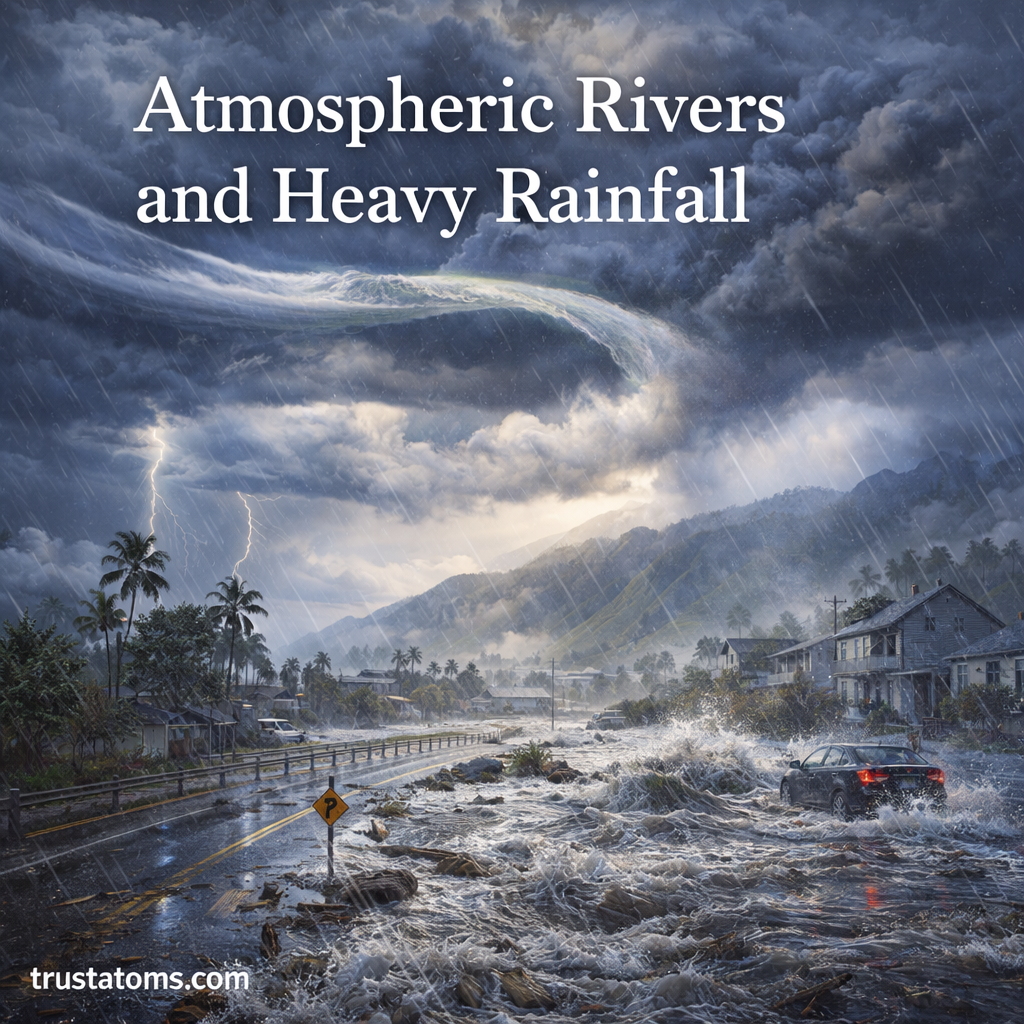
Atmospheric rivers are powerful weather systems that transport massive amounts of moisture through the atmosphere. When these “rivers in the sky” make landfall, they can release intense rainfall, leading to flooding, landslides, and water supply impacts.
Understanding atmospheric rivers is essential for predicting heavy rainfall events and managing water resources more effectively.
What Is an Atmospheric River?
An atmospheric river is a long, narrow band of concentrated moisture in the atmosphere that carries water vapor from tropical or ocean regions toward land.
Key Characteristics
- Can stretch hundreds to thousands of miles long
- Relatively narrow compared to their length
- Transport large volumes of water vapor
- Often associated with strong winds
These systems act like airborne rivers, moving moisture across the globe.
How Atmospheric Rivers Form
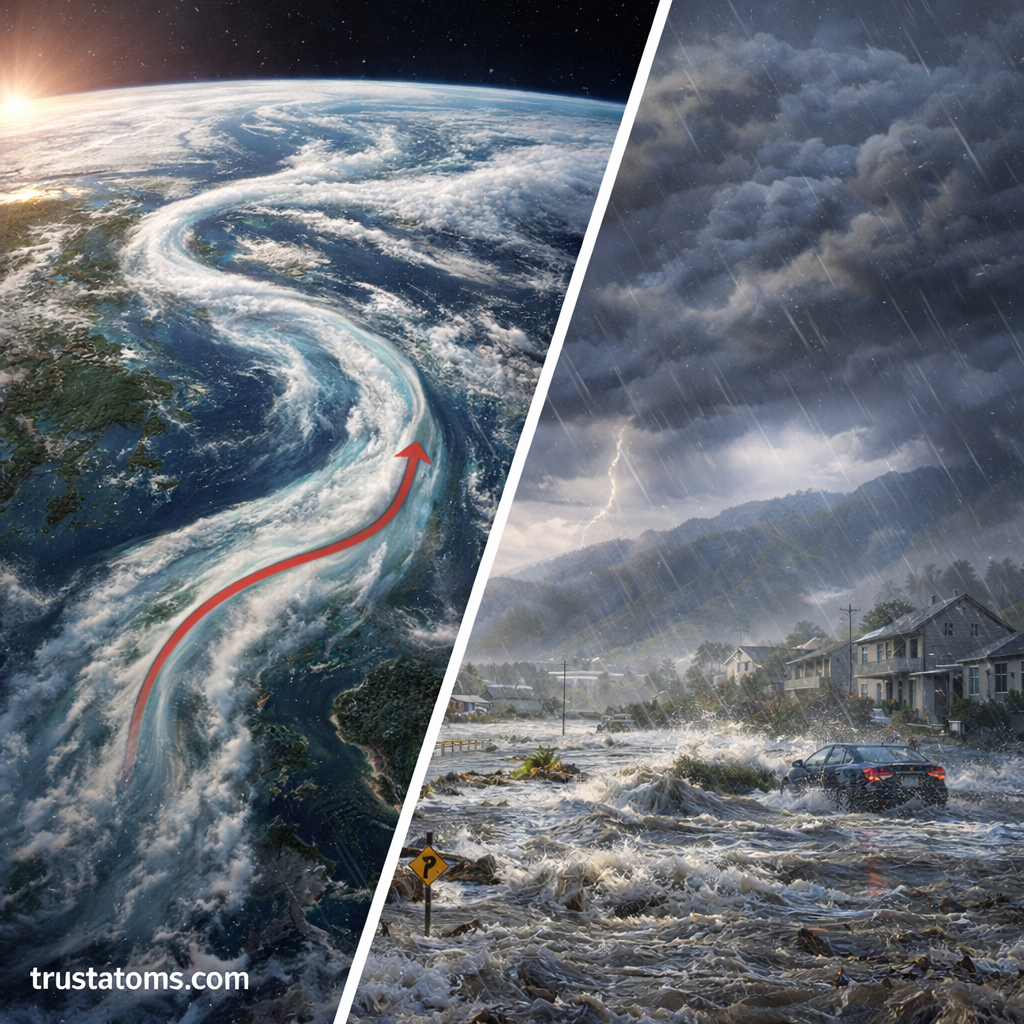
Atmospheric rivers develop through a combination of ocean evaporation, wind patterns, and atmospheric circulation.
The Process
- Evaporation Over Oceans
Warm ocean water evaporates, adding moisture to the atmosphere. - Wind Transport
Strong winds carry this moisture in a concentrated stream. - Landfall
When the system reaches land, especially mountainous areas, the air rises. - Condensation and Rainfall
As the air cools, the moisture condenses into clouds and falls as heavy rain or snow.
Why Atmospheric Rivers Cause Heavy Rainfall
Atmospheric rivers can release large amounts of precipitation in a short time.
Key Factors
- High Moisture Content
These systems carry more water vapor than typical storms. - Orographic Lift
Mountains force air upward, increasing rainfall intensity. - Slow Movement
When atmospheric rivers stall, rainfall can persist for extended periods.
Common Regions Affected
Atmospheric rivers occur worldwide but are especially impactful in certain regions.
West Coast of North America
Often referred to as “Pineapple Express” events when moisture originates near Hawaii.
South America
Affects regions along the Andes Mountains.
Europe
Impacts western coastal regions during winter storms.
New Zealand and Southeast Asia
Also experience frequent atmospheric river events.
Impacts of Atmospheric Rivers
These systems can have both beneficial and harmful effects.
Positive Impacts
- Replenish water supplies
- Fill reservoirs and snowpack
- Support agriculture in dry regions
Negative Impacts
- Flooding of rivers and urban areas
- Landslides and mudslides
- Infrastructure damage
Atmospheric Rivers and Flooding
Heavy rainfall from atmospheric rivers can overwhelm natural and man-made systems.
Flood Risks Increase When:
- Soil is already saturated
- Rivers are near capacity
- Urban drainage systems are overwhelmed
These conditions can quickly lead to flash flooding and river overflow.
Atmospheric Rivers and Snowfall
In colder regions, atmospheric rivers can produce heavy snowfall instead of rain.
- Contribute to mountain snowpack
- Provide long-term water storage
- Can increase avalanche risk
The type of precipitation depends on temperature conditions.
The Role of Climate Change
Climate change is affecting atmospheric river behavior in several ways.
Key Trends
- Warmer air holds more moisture, increasing rainfall intensity
- More frequent extreme precipitation events
- Greater risk of flooding and landslides
While atmospheric rivers are natural, their impacts are becoming more severe.
Forecasting Atmospheric Rivers
Advances in technology have improved the ability to predict these events.
Tools Used
- Satellite observations
- Weather models
- Atmospheric sensors
Early warnings help communities prepare for heavy rainfall and potential flooding.
How to Prepare for Heavy Rainfall Events
Preparation can reduce risks associated with atmospheric rivers.
Before the Event
- Monitor weather alerts
- Clear drainage systems
- Prepare emergency supplies
During Heavy Rainfall
- Avoid flood-prone areas
- Do not drive through flooded roads
- Follow evacuation instructions if necessary
After the Event
- Watch for landslides and debris
- Avoid contaminated water
- Inspect property for damage
Final Thoughts
Atmospheric rivers are powerful weather systems that play a critical role in Earth’s water cycle. While they provide essential moisture for many regions, they can also cause dangerous flooding and infrastructure damage when conditions are extreme.
By understanding how atmospheric rivers work and preparing for heavy rainfall, communities can better manage both the benefits and risks of these dynamic weather events.