The universe is not static—it is constantly expanding. One of the most important discoveries in modern astronomy is that galaxies are moving away from each other, stretching space itself. This phenomenon, known as cosmic expansion, is described by a fundamental principle called Hubble’s Law.
Understanding cosmic expansion helps explain the origin, evolution, and future of the universe.
What Is Cosmic Expansion?
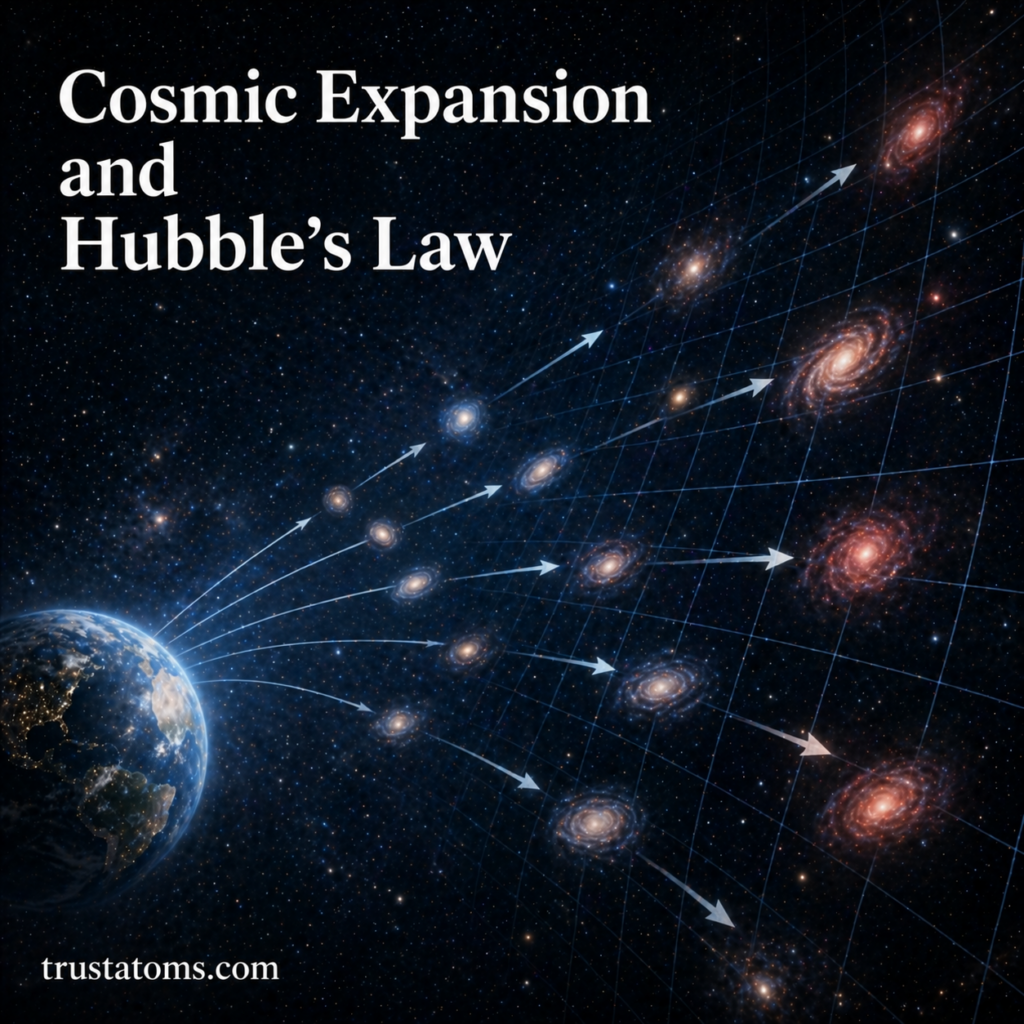
Cosmic expansion refers to the observation that space itself is growing, causing galaxies to move farther apart over time.
This idea emerged from observations showing that distant galaxies appear to be receding from Earth in all directions.
Key Points
- The universe is expanding in every direction
- Galaxies are not moving through space as much as space itself is expanding
- The farther a galaxy is, the faster it appears to move away
This discovery revolutionized our understanding of the universe.
What Is Hubble’s Law?
Hubble’s Law describes the relationship between a galaxy’s distance and its velocity moving away from us.
Where:
- v = velocity of the galaxy
- H₀ = Hubble constant
- d = distance from Earth
This equation shows that velocity increases with distance, meaning more distant galaxies recede faster.
The law is named after Edwin Hubble, who first confirmed this relationship in 1929.
How Hubble Discovered Cosmic Expansion
Before Hubble’s work, many scientists believed the universe was static.
The Breakthrough
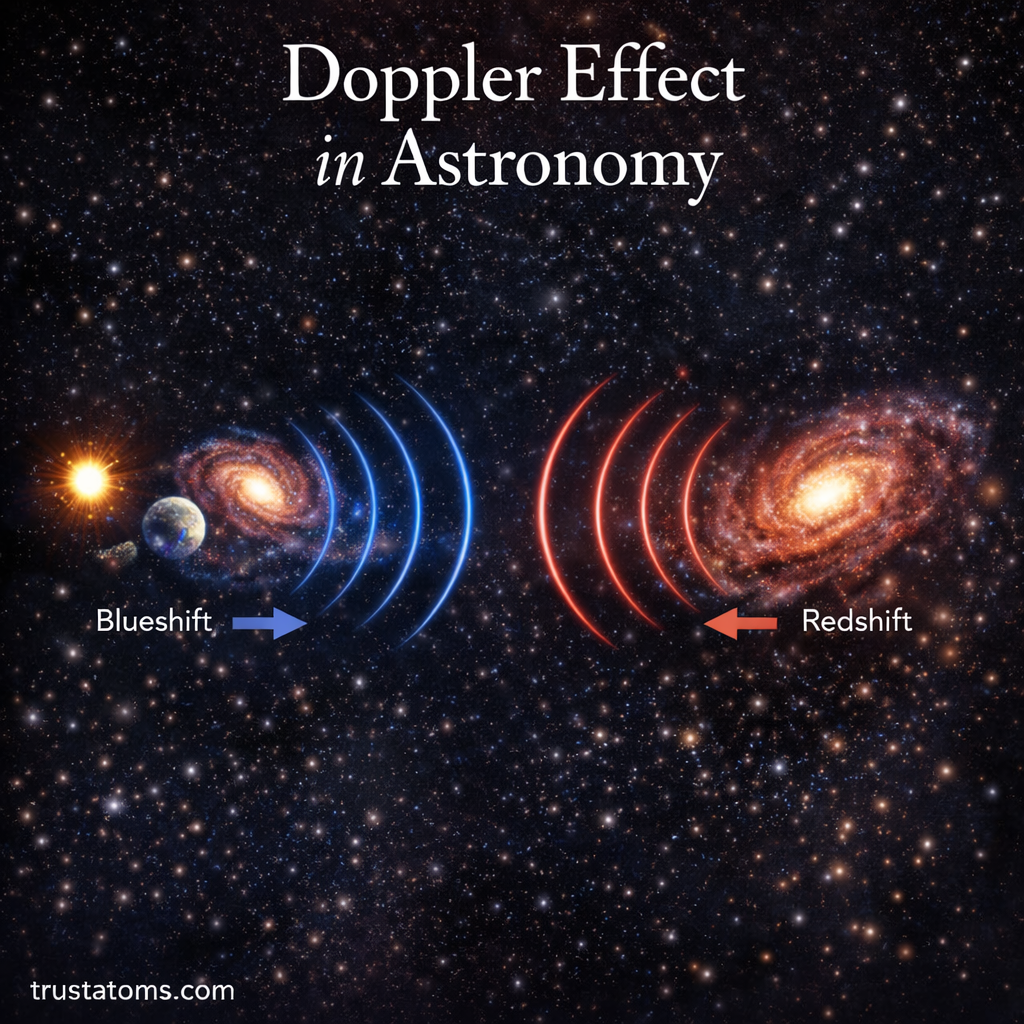
Hubble studied light from distant galaxies and observed a phenomenon called redshift.
- Light from distant galaxies shifts toward the red end of the spectrum
- This indicates the galaxies are moving away from us
By measuring both distance and redshift, Hubble found a consistent pattern: the farther the galaxy, the greater the redshift.
This provided strong evidence that the universe is expanding.
Understanding Redshift
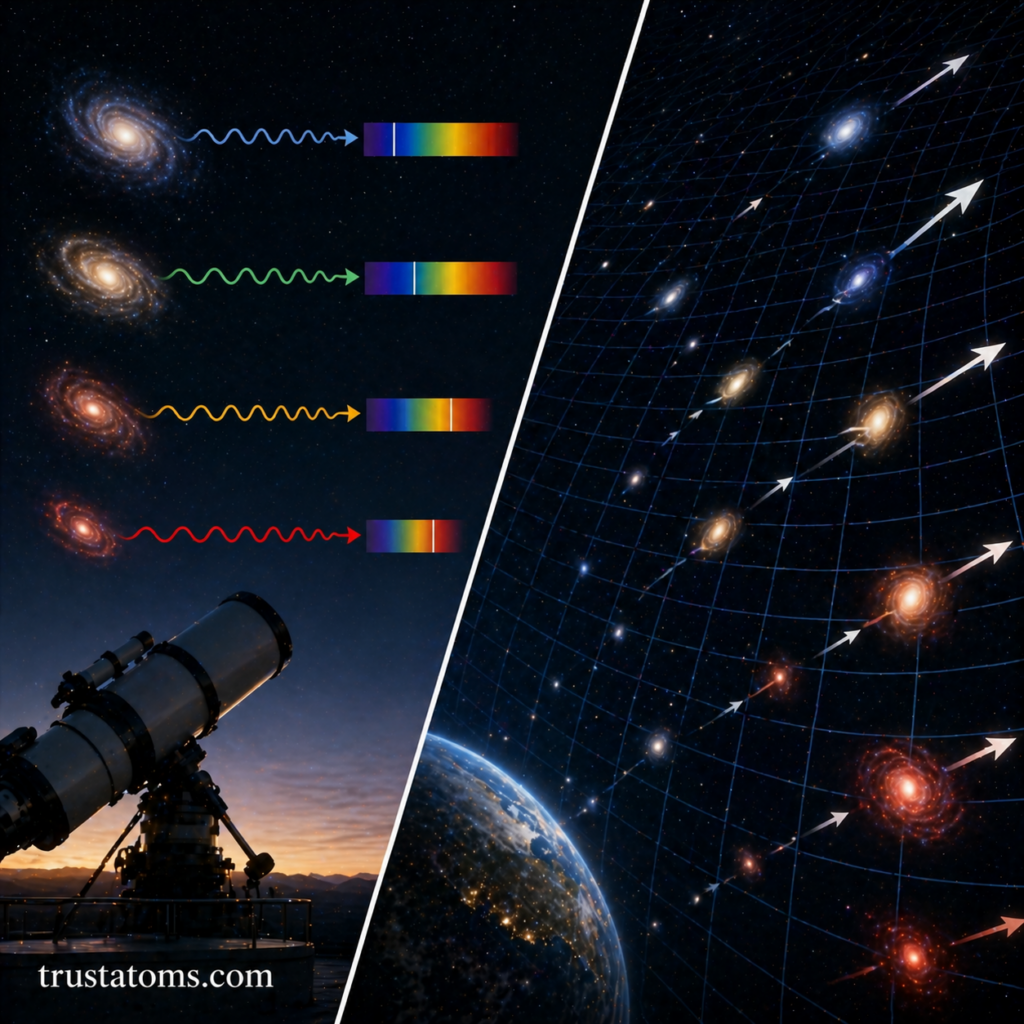
Redshift is a key concept in studying cosmic expansion.
What Causes Redshift?
- As space expands, light waves stretch
- This increases their wavelength, shifting them toward red
Types of Redshift
- Cosmological redshift (due to expansion of space)
- Doppler redshift (due to motion through space)
In cosmology, redshift is used to measure how fast objects are moving away and how far they are.
The Hubble Constant
The Hubble constant (H₀) represents the rate of expansion of the universe.
What It Tells Us
- How fast galaxies recede per unit distance
- The approximate age of the universe
- The scale of cosmic expansion
Modern measurements estimate H₀ to be around 70 km/s per megaparsec, though exact values vary depending on the method used.
Why Cosmic Expansion Matters
Cosmic expansion is central to our understanding of the universe.
Key Implications
- Supports the Big Bang Theory
- Helps estimate the age of the universe (~13.8 billion years)
- Explains large-scale structure formation
- Provides evidence for dark energy, which accelerates expansion
Without expansion, our current model of the universe would not hold.
Is the Expansion Accelerating?
Yes—modern observations show that the expansion of the universe is speeding up.
The Role of Dark Energy
- A mysterious force known as dark energy is driving acceleration
- It makes up about 68% of the universe
- Opposes gravity on large scales
This discovery, made in the late 1990s, changed our understanding of cosmic evolution.
Common Misconceptions About Expansion
Does Everything Expand?
No. Objects held together by gravity or other forces do not expand.
- Galaxies remain intact
- Solar systems are unaffected
- Atoms and planets do not stretch
Expansion only becomes noticeable on intergalactic scales.
Interesting Facts About Cosmic Expansion
- Every galaxy (on large scales) appears to move away from every other galaxy
- There is no central point of expansion
- The universe may continue expanding forever
- Light from very distant galaxies may never reach us
Final Thoughts
Cosmic expansion and Hubble’s Law reveal a dynamic, evolving universe. What once seemed like a static cosmos is now understood as a vast, expanding system shaped by gravity, energy, and time.
By studying how galaxies move and how space itself grows, astronomers continue to unlock the secrets of the universe’s origin—and its ultimate fate.