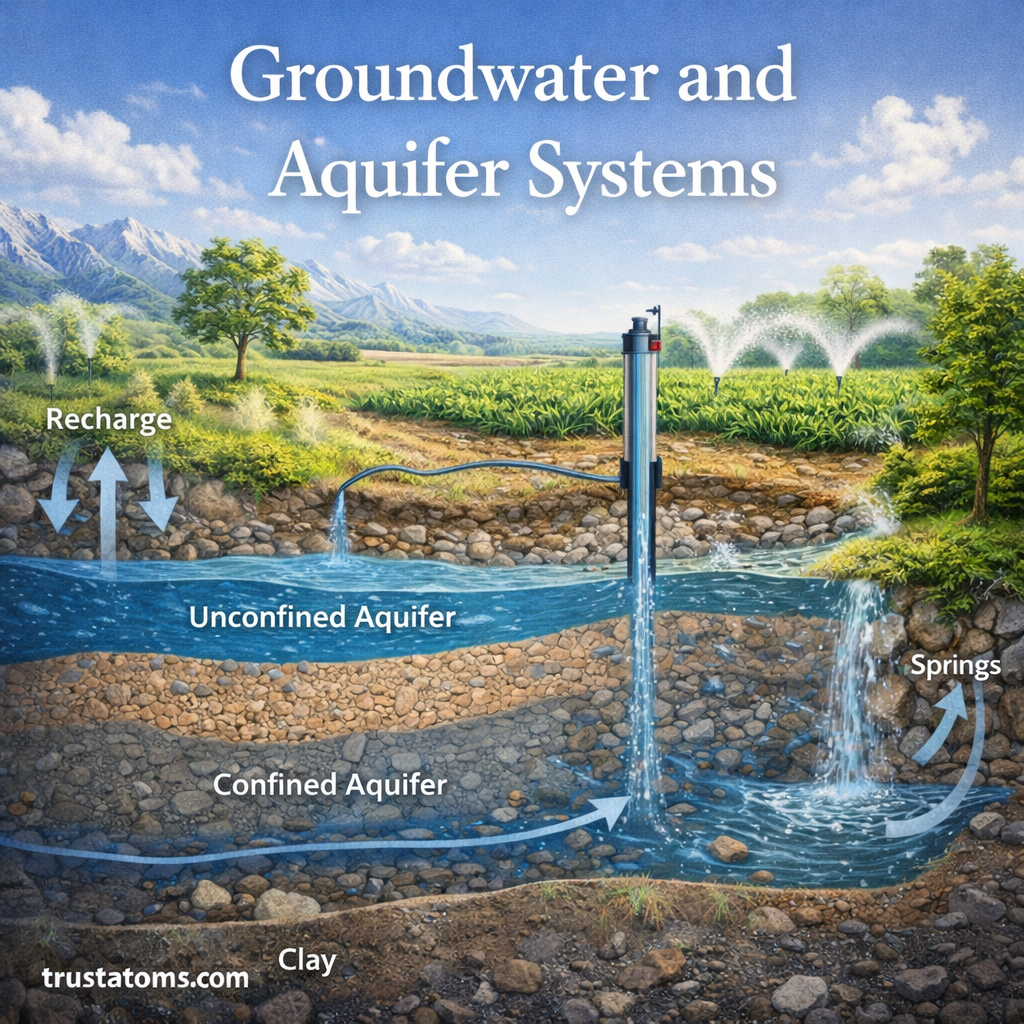
Beneath Earth’s surface lies a vast and essential water supply that supports ecosystems, agriculture, and human life. This hidden resource, known as groundwater, is stored in underground layers called aquifers.
Groundwater and aquifer systems play a critical role in the hydrologic cycle, providing fresh water for drinking, irrigation, and industry. Understanding how they work is key to managing water resources sustainably.
What Is Groundwater?
Groundwater is water that fills the spaces between soil particles and cracks in rocks below the Earth’s surface.
It originates primarily from:
- Rain and snowmelt that infiltrate the ground
- Surface water that seeps into soil and rock layers
Unlike rivers or lakes, groundwater moves slowly and is often stored for long periods.
What Are Aquifers?
Aquifers are underground layers of rock or sediment that can store and transmit groundwater.
To function as an aquifer, a material must be:
- Porous (able to hold water)
- Permeable (able to allow water to flow through it)
Common aquifer materials include:
- Sand
- Gravel
- Sandstone
- Fractured rock
Types of Aquifers
Aquifers vary depending on how they are structured and how water is stored.
Unconfined Aquifers
- Located near the surface
- Water seeps directly from the ground above
- Easily recharged by rainfall
- More vulnerable to contamination
Confined Aquifers
- Trapped between layers of impermeable rock (like clay)
- Water is under pressure
- Less exposed to surface contamination
- Recharge occurs slowly over time
Artesian Aquifers
- A type of confined aquifer
- Water pressure can push water upward without pumping
- Can create natural flowing wells
The Water Table
The water table is the upper surface of groundwater in an unconfined aquifer.
- Above the water table: soil contains air and water (unsaturated zone)
- Below the water table: all spaces are filled with water (saturated zone)
The water table can rise or fall depending on:
- Rainfall
- Drought conditions
- Water usage
How Groundwater Moves
Groundwater flows slowly through pores and fractures in rock and soil.
Key Characteristics of Groundwater Flow
- Moves from areas of high pressure to low pressure
- Flow speed is typically very slow (meters per year)
- Influenced by gravity and slope of the land
Recharge and Discharge
Groundwater systems depend on a balance between recharge and discharge.
Recharge occurs when water enters the aquifer:
- Rainfall infiltration
- Snowmelt
- Seepage from rivers and lakes
Discharge occurs when groundwater leaves the aquifer:
- Springs
- Rivers and streams
- Wells and pumping systems
Importance of Aquifer Systems
Groundwater and aquifers are vital for both natural and human systems.
Drinking Water Supply
- Provides nearly half of the world’s drinking water
- Essential in areas without surface water
Agriculture and Irrigation
- Supplies water for crops in dry regions
- Supports global food production
Ecosystem Support
- Feeds rivers and wetlands during dry periods
- Maintains habitats for plants and animals
Climate Stability
- Acts as a long-term water storage system
- Buffers against drought conditions
Groundwater Depletion
Overuse of groundwater can lead to depletion, where water is removed faster than it is replenished.
Causes of Depletion
- Excessive pumping for agriculture
- Urban water demand
- Industrial use
Effects of Depletion
- Lowering of the water table
- Drying of wells
- Reduced river and stream flow
- Land subsidence (ground sinking)
Groundwater Contamination
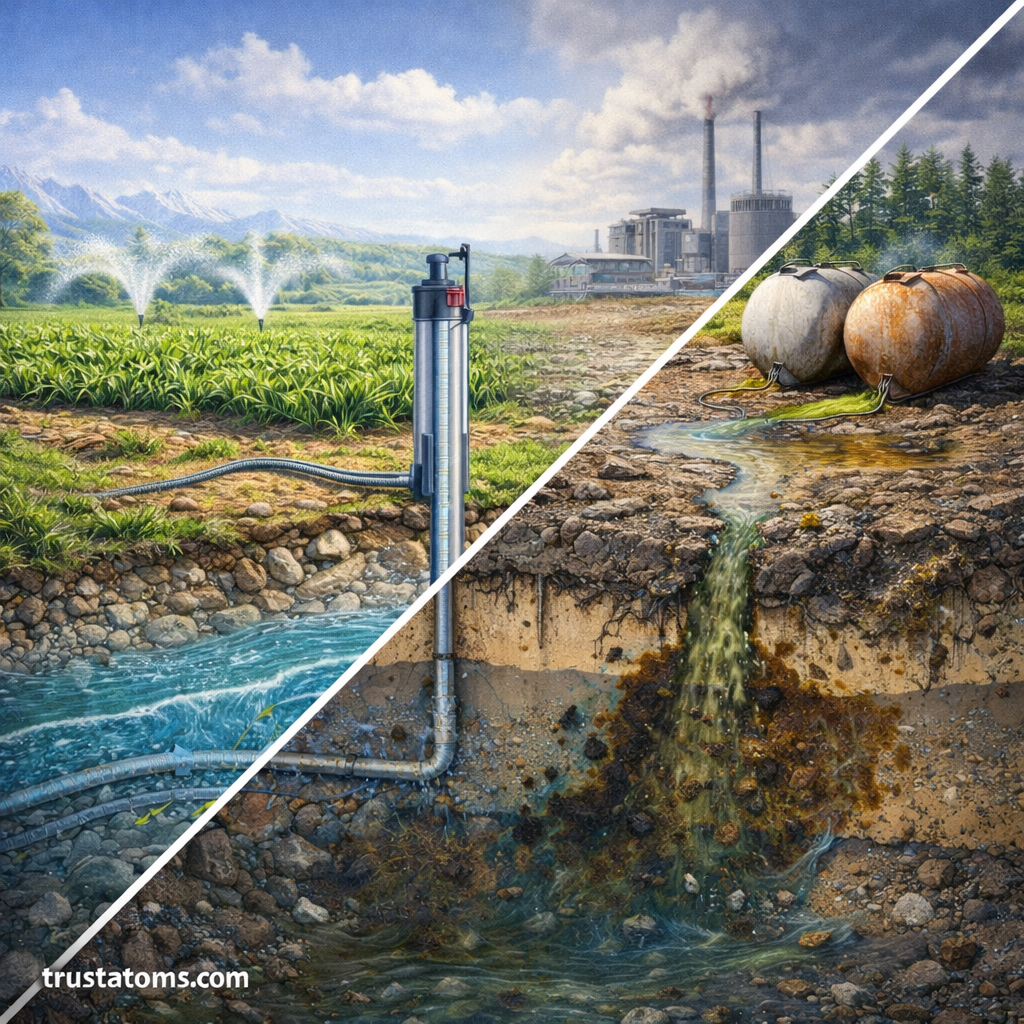
Because groundwater moves slowly, it is difficult to clean once polluted.
Common Sources of Contamination
- Agricultural chemicals (fertilizers, pesticides)
- Industrial waste
- Landfills
- Leaking underground storage tanks
Impacts of Contamination
- Unsafe drinking water
- Harm to ecosystems
- Long-term environmental damage
Protecting Groundwater Resources
Sustainable management is essential to preserve groundwater supplies.
Key Strategies
- Reduce Overuse
- Use water-efficient irrigation
- Limit unnecessary extraction
- Prevent Pollution
- Proper waste disposal
- Reduce chemical use
- Enhance Recharge
- Protect natural landscapes
- Use recharge basins
- Monitor Water Levels
- Track aquifer health
- Implement regulations when needed
Real-World Examples of Aquifer Systems
The Ogallala Aquifer (United States)
- One of the largest aquifers in the world
- Supports agriculture in the Great Plains
- Facing significant depletion due to overuse
Coastal Aquifers
- Located near oceans
- Vulnerable to saltwater intrusion when over-pumped
Karst Aquifers
- Found in limestone regions
- Characterized by caves and underground channels
- Water moves quickly, making them prone to contamination
Final Thoughts
Groundwater and aquifer systems are essential yet often overlooked components of Earth’s water system. They provide reliable freshwater, support ecosystems, and help stabilize water availability during dry periods.
However, these resources are not unlimited. Responsible use, protection from contamination, and sustainable management are critical to ensuring groundwater remains available for future generations.

Related Posts
 Precipitation Processes in the Atmosphere
 Weather-Related Disaster Preparedness: A Complete Guide to Staying Safe Before, During, and After Extreme Events
 Floodplain Mapping and Risk Management: Understanding Risk, Reducing Damage, and Planning Smarter
 Cyclone Tracking and Prediction: How Scientists Monitor and Forecast Powerful Storms