When people think of natural disasters, they often picture earthquakes, hurricanes, or volcanic eruptions. But beneath the ocean surface lies another powerful and often overlooked threat—seafloor landslides.
These underwater events can reshape the ocean floor, damage infrastructure, and even trigger devastating tsunamis. Understanding seafloor landslides is essential for assessing coastal risk and protecting vulnerable communities.
What Are Seafloor Landslides?
Seafloor landslides, also known as submarine landslides, occur when large volumes of sediment, rock, and debris suddenly move down slopes on the ocean floor.
They can happen along:
- Continental shelves and slopes
- Submarine canyons
- Volcanic island flanks
Unlike landslides on land, these events often go unnoticed—unless they trigger secondary hazards.
What Causes Seafloor Landslides?
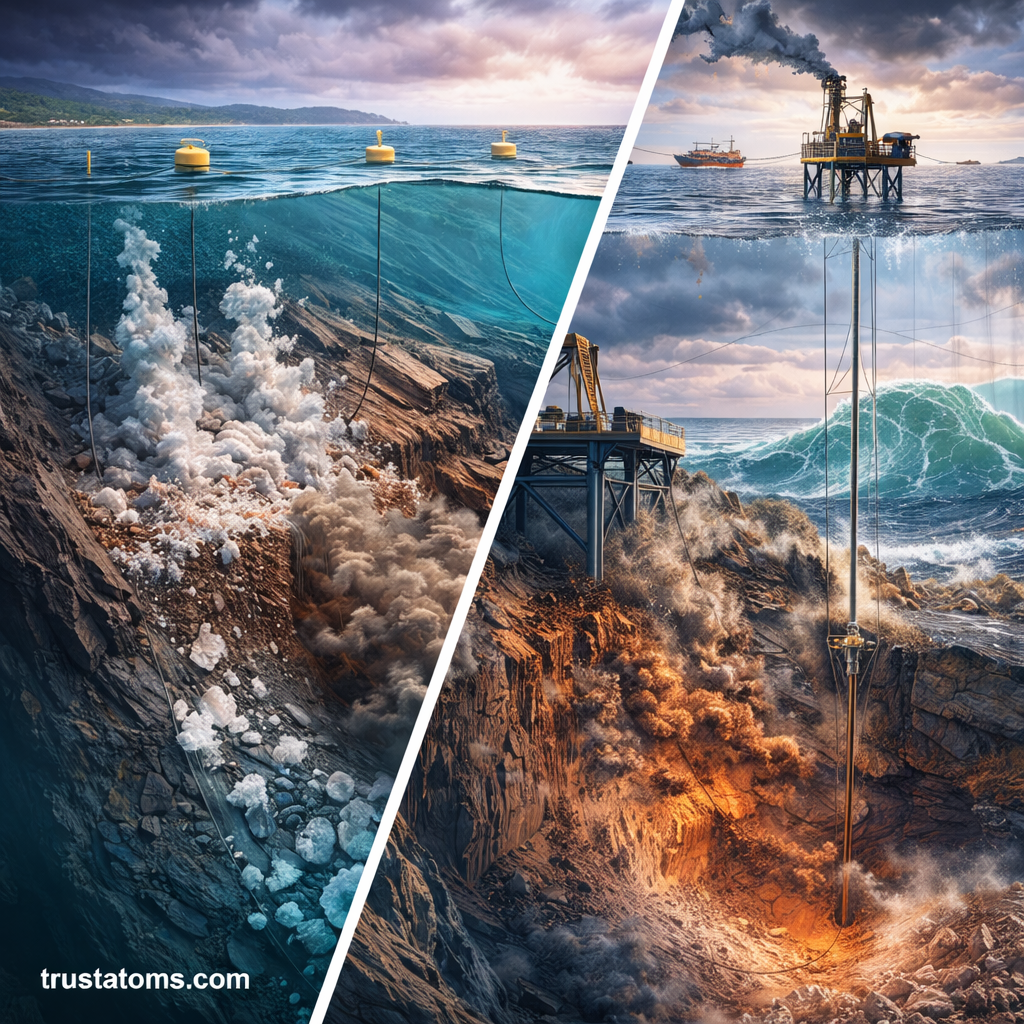
Several natural and human-related factors can destabilize sediments underwater.
1. Earthquakes
Strong seismic activity can shake loose sediments, causing them to collapse and slide downslope.
2. Rapid Sediment Buildup
Rivers constantly deposit sediment into the ocean. Over time, this material can become unstable, especially if layers are loosely packed.
3. Gas Hydrates
Frozen methane deposits beneath the seafloor can weaken sediment structures. When they melt or destabilize, landslides can occur.
4. Volcanic Activity
Eruptions or collapses of underwater volcanoes can trigger massive landslides.
5. Human Activities
Offshore drilling, construction, and seabed disturbance can increase instability in certain areas.
Why Seafloor Landslides Matter
Although hidden beneath the ocean, these landslides can have serious consequences.
Tsunami Generation
One of the biggest risks is the potential to generate tsunamis. When large volumes of material rapidly move, they displace water and create powerful waves.
For example, the 1929 Grand Banks Earthquake triggered a submarine landslide that caused a deadly tsunami along the coast of Newfoundland.
Damage to Infrastructure
Seafloor landslides can:
- Break underwater communication cables
- Damage oil and gas pipelines
- Disrupt global internet and energy networks
Coastal Erosion and Flooding
Tsunamis and shifting sediments can:
- Erode coastlines
- Flood low-lying areas
- Alter marine ecosystems
How Seafloor Landslides Trigger Tsunamis
Not all tsunamis are caused by earthquakes. Seafloor landslides can also displace large amounts of water.
Here’s how it works:
- Sediment collapses and moves rapidly downslope
- Water above the slide is displaced
- Energy transfers into wave motion
- Waves travel across the ocean
- Coastal areas experience sudden flooding
These tsunamis can be especially dangerous because they may occur with little warning.
High-Risk Areas Around the World
Certain regions are more vulnerable to seafloor landslides due to geological conditions.
Continental Margins
Areas where continents meet the deep ocean often have steep slopes and heavy sediment buildup.
Volcanic Islands
Island chains formed by volcanoes are prone to flank collapses and underwater slides.
Arctic Regions
Melting ice and changing temperatures can destabilize sediments, increasing landslide risk.
Historical Examples of Seafloor Landslides
Studying past events helps scientists understand future risks.
Storegga Slide (Norway)
The Storegga Slide occurred around 8,000 years ago.
- One of the largest known submarine landslides
- Triggered a massive tsunami affecting northern Europe
- Impacted areas as far as Scotland
1929 Grand Banks Event
Revisiting the 1929 Grand Banks Earthquake:
- Earthquake triggered a submarine landslide
- Resulted in a tsunami that killed dozens
- Provided key evidence linking landslides to tsunamis
How Scientists Study Seafloor Landslides
Because these events occur underwater, researchers rely on advanced technology.
Key Methods Include:
- Seismic imaging to map subsurface structures
- Sonar mapping to study the ocean floor
- Sediment core sampling to analyze past events
- Monitoring sensors to detect movement
These tools help scientists identify unstable areas and assess potential risks.
Reducing Coastal Risk
While seafloor landslides cannot be prevented, their impact can be reduced through planning and preparedness.
Key Strategies:
- Develop early warning systems for tsunamis
- Map high-risk underwater slopes
- Strengthen coastal infrastructure
- Limit risky offshore activities in unstable areas
- Educate communities about evacuation procedures
Common Misconceptions
There are several misunderstandings about seafloor landslides.
“They only happen after earthquakes”
While earthquakes are a major trigger, landslides can also occur due to sediment buildup or gas hydrate instability.
“They are too deep to matter”
Even deep-sea landslides can generate tsunamis that travel long distances.
“They are rare and insignificant”
Although less visible, these events can have global consequences, especially for infrastructure and coastal populations.
Lessons for the Future
As coastal populations grow and offshore infrastructure expands, understanding seafloor landslides becomes increasingly important.
Key takeaways:
- Hidden hazards can have major surface impacts
- Coastal risk is influenced by both land and ocean processes
- Scientific monitoring plays a critical role in risk reduction
Final Thoughts
Seafloor landslides are a powerful reminder that not all natural hazards are visible. Beneath the ocean surface, massive geological forces are constantly shaping the Earth.
By studying these events and preparing for their potential impacts, we can better protect coastal communities and critical infrastructure—turning hidden risks into manageable challenges.