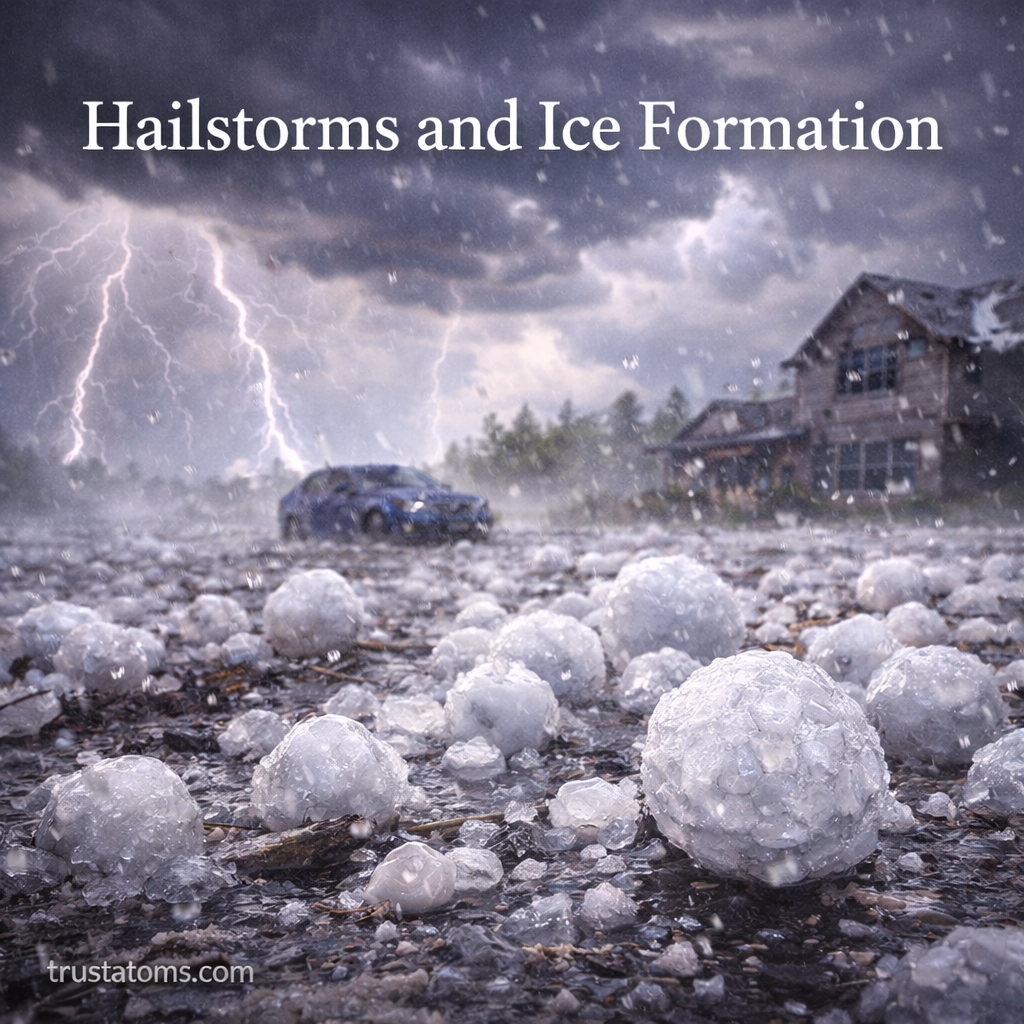
Hailstorms are among the most fascinating and destructive weather events associated with thunderstorms. These storms produce solid ice stones—known as hail—that can vary in size from small pellets to large, damaging chunks capable of causing serious harm to property, agriculture, and people.
This guide explains how hail forms, the conditions that lead to hailstorms, and the impacts these icy events can have.
What Is Hail?
Hail is a form of precipitation made of solid ice. Unlike snow, which forms in cold clouds and falls gently, hail develops in strong thunderstorm systems where powerful updrafts keep ice particles suspended in the air.
Hailstones can vary greatly in size:
- Pea-sized (about ¼ inch)
- Marble-sized (about ½ inch)
- Golf ball-sized (about 1.75 inches)
- Larger than baseballs in extreme cases
The size of hail depends on the strength of the storm and the duration of ice growth inside the cloud.
How Hail Forms
Hail forms inside large storm clouds called cumulonimbus clouds, which are capable of producing severe weather.
The Formation Process
- Warm air rises rapidly (updraft) into colder regions of the atmosphere
- Water droplets freeze into small ice particles
- These particles collide with supercooled water droplets (liquid water below freezing)
- Additional layers of ice form around the particle
- The hailstone grows larger as it cycles up and down within the cloud
- Once it becomes too heavy, it falls to the ground as hail
This repeated movement inside the cloud creates the layered structure seen when hailstones are cut open.
The Role of Updrafts
Updrafts are the key driver of hail formation.
- Strong updrafts keep hailstones suspended longer
- Longer suspension allows more ice layers to form
- Weak updrafts produce smaller hail or none at all
Severe thunderstorms with intense vertical motion are the most likely to produce large hail.
Types of Hailstones
Hailstones can differ in structure depending on how they form.
Clear Ice Hailstones
- Form slowly with steady freezing
- Appear transparent
- Usually smoother in texture
Opaque (Milky) Hailstones
- Form quickly with trapped air bubbles
- Appear cloudy or white
- Often more irregular in shape
Layered Hailstones
- Alternate between clear and opaque layers
- Indicate multiple growth cycles within the storm
Conditions That Lead to Hailstorms
Not all thunderstorms produce hail. Specific atmospheric conditions are required.
Key Factors
- Strong updrafts (intense rising air)
- High moisture levels
- Cold temperatures in the upper atmosphere
- Wind shear (changes in wind with height)
These conditions are commonly found in severe storms, especially supercells.
Where Hailstorms Are Most Common
Hailstorms occur worldwide but are more frequent in certain regions.
- Central United States (often called “Hail Alley”)
- Parts of Canada
- Northern India and Bangladesh
- Central Europe
- Argentina and southern Brazil
These regions often combine strong storms with favorable atmospheric conditions for hail formation.
Impacts of Hailstorms
Hailstorms can cause significant damage in a short amount of time.
Property Damage
- Dented vehicles
- Broken windows
- Roof damage
Agricultural Losses
- Destroyed crops
- Damage to orchards and vineyards
- Economic losses for farmers
Personal Injury
- Risk of injury from large hailstones
- Dangerous outdoor conditions
Infrastructure Damage
- Power outages from damaged lines
- Disruption to transportation systems
Hail vs Other Frozen Precipitation
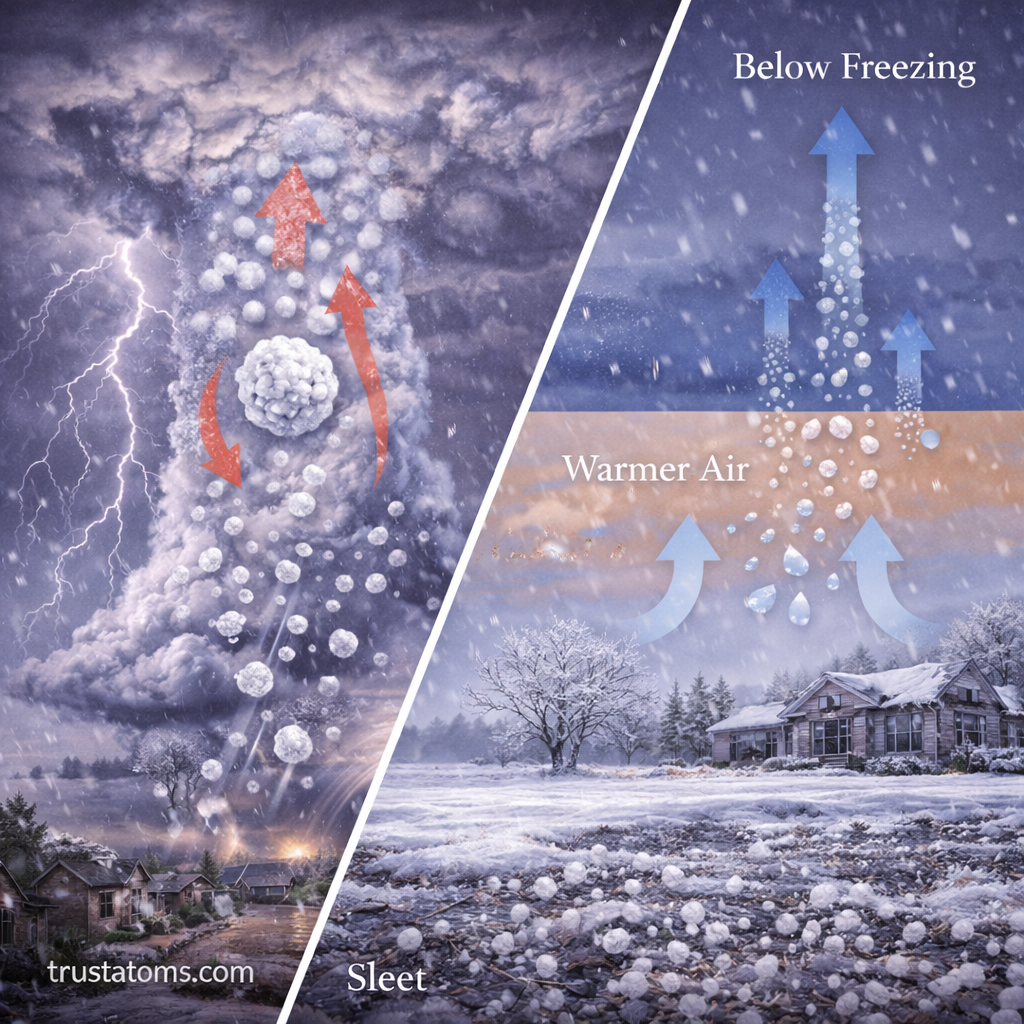
Hail is often confused with other forms of frozen precipitation.
Hail
- Forms in thunderstorms
- Larger and harder
- Associated with strong updrafts
Sleet
- Small ice pellets formed from freezing rain
- Occurs in colder, non-thunderstorm conditions
Snow
- Forms from ice crystals in cold clouds
- Falls gently and accumulates
Understanding these differences helps clarify how unique hailstorms are.
How Meteorologists Predict Hailstorms
Forecasting hail involves monitoring storm conditions and atmospheric data.
Tools Used
- Weather radar to detect hail signatures
- Satellites to track storm development
- Weather models to predict instability and wind shear
Warning Signs
- Rapid cloud growth
- Strong thunderstorm development
- Radar indications of large precipitation cores
Meteorologists issue severe thunderstorm warnings when hail is likely.
Safety Tips During Hailstorms
Hailstorms can develop quickly, so preparation is important.
Before the Storm
- Park vehicles in covered areas
- Secure outdoor items
- Monitor weather alerts
During the Storm
- Stay indoors and away from windows
- Avoid driving if possible
- Take shelter immediately if caught outside
After the Storm
- Check for property damage
- Be cautious of broken glass and debris
- Report significant damage if necessary
Why Hailstorms Matter
Hailstorms are important in Earth science because they:
- Reveal how strong storm systems operate
- Impact agriculture and food supply
- Contribute to weather-related economic losses
Studying hail helps improve forecasting and risk management strategies.
Final Thoughts
Hailstorms and ice formation are driven by powerful atmospheric processes inside thunderstorms. From small pellets to large destructive hailstones, these events demonstrate the complexity of weather systems and the role of temperature, moisture, and air movement.
By understanding how hail forms and the conditions that produce it, we can better prepare for and respond to these sudden and often damaging weather events.