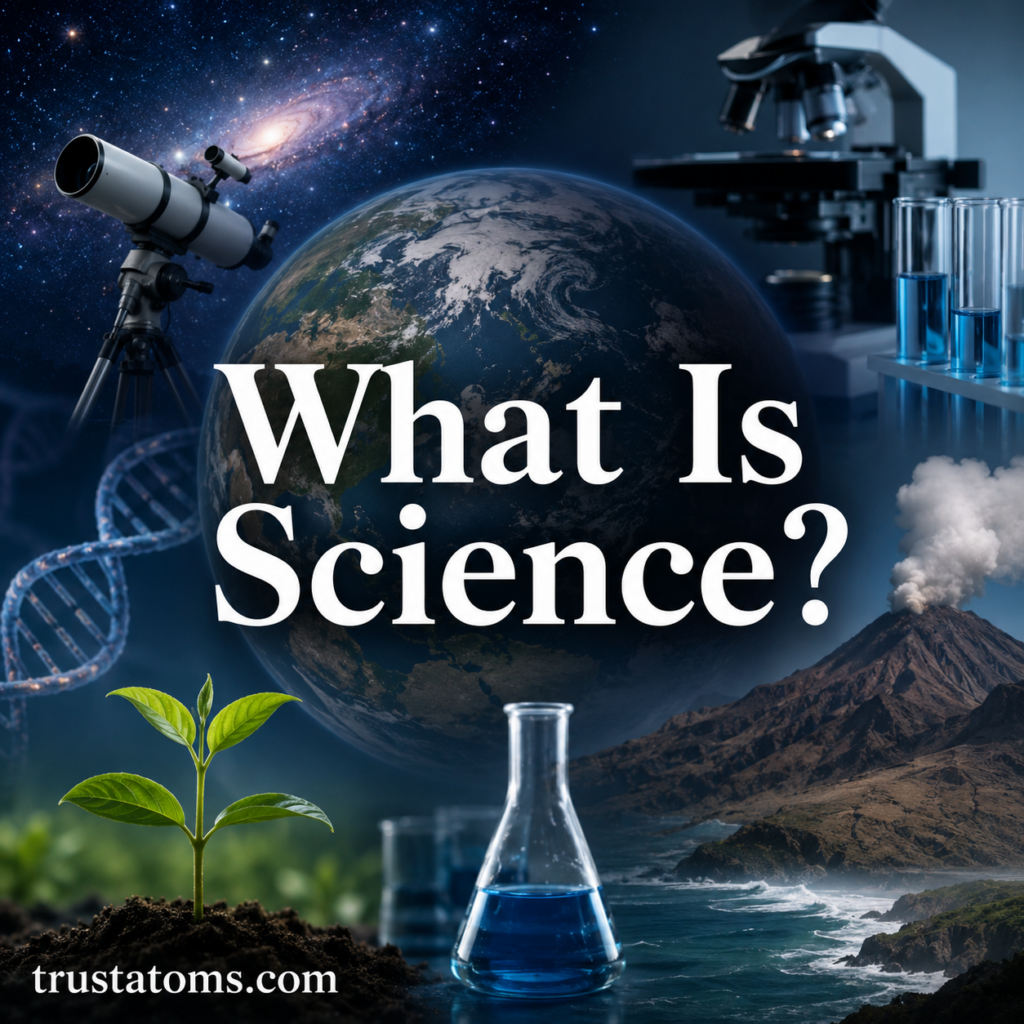
Science is the systematic study of the natural world through observation, experimentation, evidence, and analysis. It seeks to understand how the universe works by exploring patterns, testing ideas, and developing explanations based on measurable evidence.
From microscopic cells to distant galaxies, science helps explain the structure of matter, the behavior of living organisms, the forces of nature, and the processes that shape our planet and universe.
Science is not limited to laboratories or textbooks. It influences medicine, technology, transportation, communication, environmental research, and countless aspects of everyday life.
Trust Atoms explores science through multiple disciplines including Astronomy, Biology, Chemistry, Earth Science, Human Anatomy, and Physics.
What Does Science Study?
Science studies the natural world and attempts to explain how systems, objects, and processes behave.
Scientists investigate questions involving:
- Matter and energy
- Living organisms
- Earth systems
- Space and the universe
- Physical laws
- Biological processes
- Environmental interactions
Science seeks evidence-based explanations and continually improves understanding through new discoveries and research.
Science relies on observation, evidence, experimentation, and analysis to better understand the natural world. Through scientific investigation, researchers test ideas, identify patterns, and continually improve our understanding as new discoveries emerge.
Whether studying living organisms, Earth systems, matter, or the universe, scientific methods help explain how natural processes work and how different fields of science connect together.
Major Branches of Science
Science includes many specialized fields. While disciplines often overlap, several major branches form the foundation of scientific study.
Physical Science
Physical science studies matter, energy, and the laws governing the universe.
Major fields include:
- Physics
- Chemistry
Continue exploring:
Physics helps explain forces, motion, and energy, while chemistry examines matter, atoms, and chemical interactions.
Life Science
Life science focuses on living organisms and biological systems.
Fields include:
- Biology
- Human Anatomy
- Genetics
- Ecology
Explore:
Life sciences help scientists understand cells, evolution, ecosystems, and the human body.
Earth and Space Science
Earth and space sciences examine Earth, planetary systems, and the universe.
Topics include:
- Geology
- Weather and climate
- Oceans
- Astronomy
Continue with:
These fields help explain earthquakes, planetary systems, weather patterns, and cosmic structures.
The Scientific Method
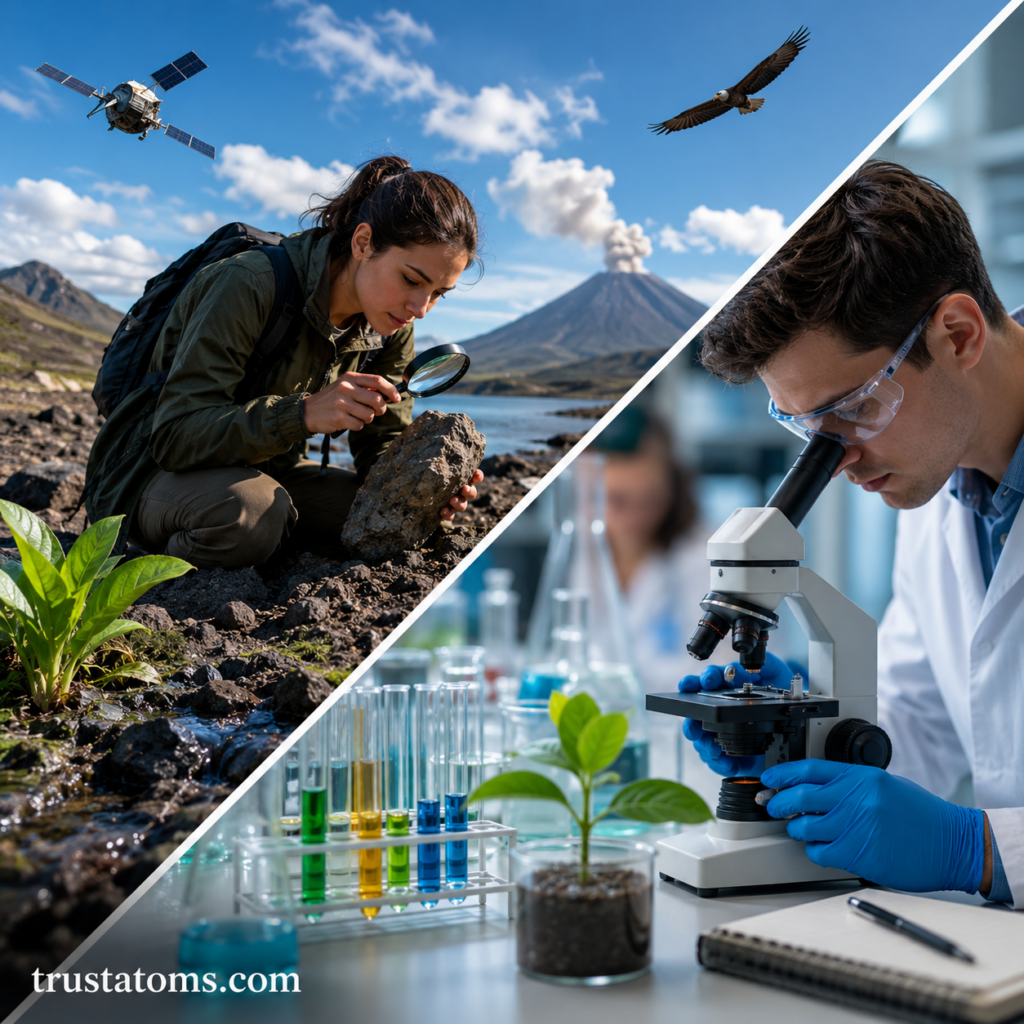
Science relies on structured investigation.
The scientific method generally includes:
- Observation
- Asking questions
- Forming hypotheses
- Conducting experiments
- Analyzing results
- Drawing conclusions
Scientific understanding evolves as evidence improves. As scientists gather new information through observation, experimentation, and research, explanations and models may be refined over time.
This process allows science to continually expand knowledge, improve accuracy, and develop better understanding across fields such as astronomy, biology, chemistry, Earth science, physics, and human anatomy.
Why Science Matters
Science helps explain natural processes and supports advances that shape modern society.
Scientific discoveries contribute to:
- Medical treatments
- Communication technologies
- Space exploration
- Environmental protection
- Agriculture
- Engineering
- Transportation systems
Scientific research also influences many fields simultaneously.
For example:
- Space discoveries often rely on Physics and Astronomy
- Biological research frequently intersects with Chemistry and Human Anatomy
- Climate and planetary systems connect with Earth Science
Science in Everyday Life
Science affects everyday experiences in ways people often overlook.
Examples include:
- Weather forecasting
- Smartphones and computers
- Transportation systems
- Food production
- Healthcare
- GPS navigation
- Energy systems
Even activities such as cooking, exercising, or checking a weather forecast involve scientific principles.
Continue Exploring Science
Explore foundational science guides:
- What Is Astronomy?
- What Is Biology?
- What Is Chemistry?
- What Is Earth Science?
- What Is Human Anatomy?
- What Is Physics?
Final Thoughts
Science is the process of exploring, understanding, and explaining the natural world through evidence and investigation.
From life on Earth to the farthest reaches of space, science provides tools for understanding reality and expanding human knowledge.
As research and technology continue to evolve, science remains one of humanity’s most powerful ways of discovering how the universe works.