Biomass distribution describes how the total mass of living organisms is divided among species, groups of organisms, or different parts of an ecosystem. Scientists study these patterns to understand how ecosystems store biological material, support populations, and transfer energy through feeding relationships.
In the study of biology, biomass provides a useful way to compare organisms beyond simply counting individuals. A forest might contain thousands of insects but store far more living mass in a relatively small number of trees. Understanding this difference helps explain ecosystem structure and productivity.
By examining biomass distribution, ecologists can gain insight into ecosystem stability, productivity, and energy flow. Biomass patterns reveal which organisms dominate an ecosystem, how resources are used, and how environmental changes affect living communities.
What Is Biomass in an Ecosystem?
Biomass is the mass of living biological material within a defined area, volume, or ecological group. It includes organisms such as plants, animals, fungi, and microorganisms.
Ecologists commonly measure biomass using dry mass because the water content of living organisms varies considerably. Removing water makes comparisons more consistent. Researchers may also express biomass as the amount of carbon contained in living material.
Common measurement units include grams of dry biomass per square meter (g/m²), kilograms per hectare (kg/ha), and tonnes of carbon. The appropriate unit depends on the ecosystem and research question.
Biomass differs from abundance, which describes the number of organisms. Ten large trees can have more biomass than thousands of small plants, even though the smaller plants are more numerous.
How Biomass Moves Through Ecosystem Food Chains
Biomass within ecosystems is often organized into trophic levels, which represent different positions in a food chain. Each level groups organisms according to how they obtain energy and nutrients.
Energy captured by producers moves through food webs and supports life at higher trophic levels. However, only a portion of the energy obtained at one level becomes new biomass available to the next.
Primary Producers
Primary producers create organic matter using sunlight or chemical energy. Plants, algae, phytoplankton, and certain bacteria belong to this group.
In most terrestrial ecosystems, producers account for the greatest share of living biomass because plants accumulate substantial material in stems, leaves, trunks, and roots.
Primary Consumers
Primary consumers feed directly on producers. Examples include rabbits, deer, grasshoppers, and many species of zooplankton.
These organisms convert some of the organic matter they consume into their own tissues. Much of the consumed energy is instead used for metabolism or lost through waste and heat.
Secondary and Tertiary Consumers
Secondary consumers feed on primary consumers, while tertiary consumers feed on organisms at lower consumer levels. Hawks, wolves, predatory fish, and sharks illustrate different positions within these feeding relationships.
Because energy becomes less available at successive trophic levels, ecosystems generally support less predator biomass than producer biomass. Actual patterns depend on feeding relationships, productivity, and organism turnover.
Decomposers
Fungi and bacteria decompose dead organisms and organic waste, releasing nutrients that producers can reuse. Decomposers process material originating from multiple trophic levels rather than occupying a single position in a simple feeding pyramid.
Understanding Upright and Inverted Biomass Pyramids
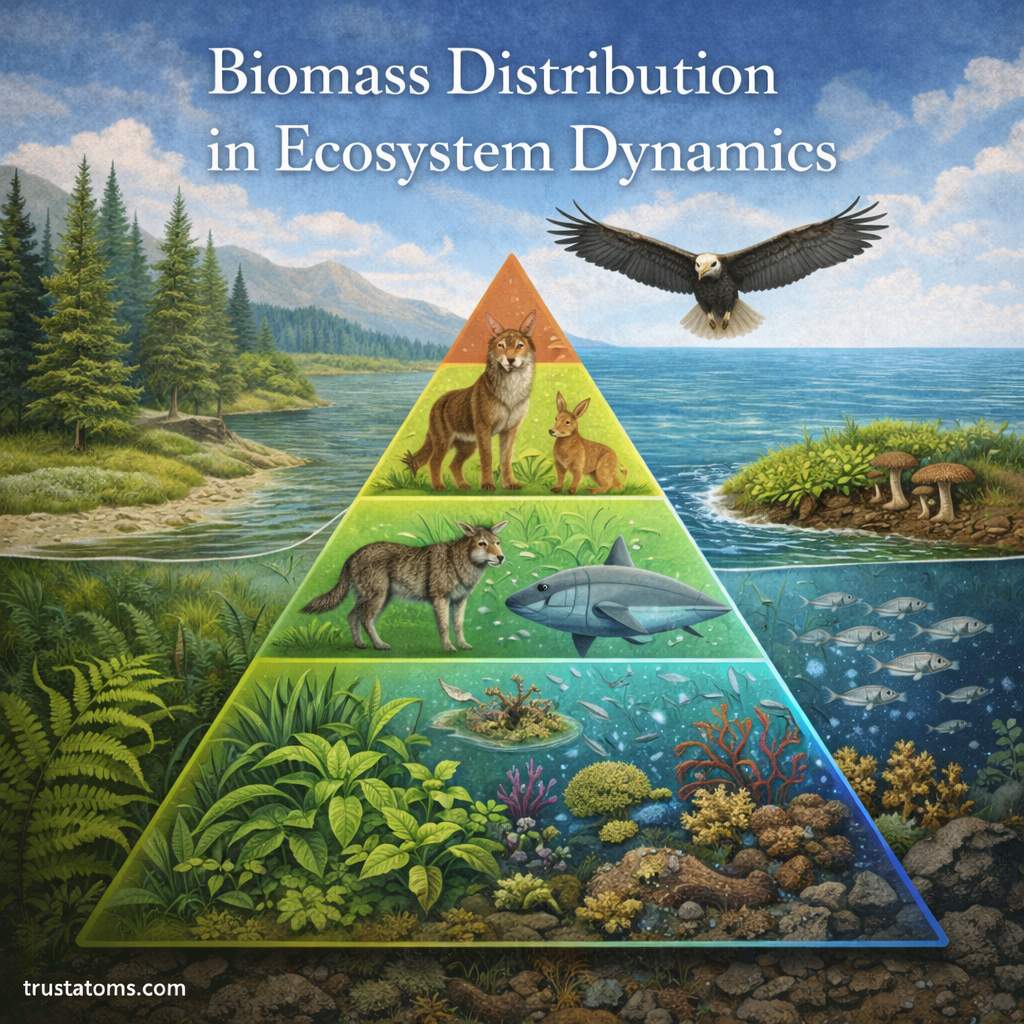
A biomass pyramid compares the amount of living material present at different trophic levels at a particular time. Its shape reveals how biomass is distributed, but it does not directly measure the rate of energy transfer.
Upright Biomass Pyramids on Land
Most terrestrial ecosystems have upright biomass pyramids. Producers form a broad base, primary consumers occupy a smaller level, and predators generally account for progressively less biomass.
Consider a simplified grassland with the following hypothetical biomass measurements:
| Trophic Level | Example Organisms | Dry Biomass (g/m²) |
|---|---|---|
| Producers | Grasses | 1,000 |
| Primary consumers | Grasshoppers | 100 |
| Secondary consumers | Insect-eating birds | 10 |
| Tertiary consumers | Predatory birds | 1 |
These illustrative values show biomass decreasing at each successive level. The grasshopper biomass is one-tenth of the grass biomass, while the secondary consumer biomass is one-tenth of the grasshopper biomass.
This pattern resembles the familiar ecological rule that roughly 10% of energy may pass between trophic levels. However, the rule describes an approximate energy-transfer efficiency, not a fixed biomass ratio. Real biomass measurements can differ substantially.
Inverted Biomass Pyramids in Water
Some aquatic ecosystems have inverted biomass pyramids, meaning consumers temporarily contain more standing biomass than producers.
This can occur because phytoplankton reproduce rapidly but are also consumed quickly. Their standing biomass remains relatively small even while they continuously produce enough organic material to support substantial zooplankton populations.
The distinction is between biomass, which measures material present at a given moment, and productivity, which measures how quickly new biomass is produced. An inverted biomass pyramid does not mean energy increases as it moves through the food chain.
Environmental Factors That Control Biomass Distribution
Biomass patterns depend on environmental conditions, resource availability, interactions between organisms, and disturbances.
- Sunlight: Light availability influences photosynthesis and the amount of organic material producers can create.
- Water: Adequate moisture supports plant growth, while drought can restrict biomass production.
- Nutrients: Nitrogen, phosphorus, and other essential nutrients can limit biological growth when supplies are insufficient.
- Temperature: Temperature affects metabolic activity, growth rates, and the distribution of species.
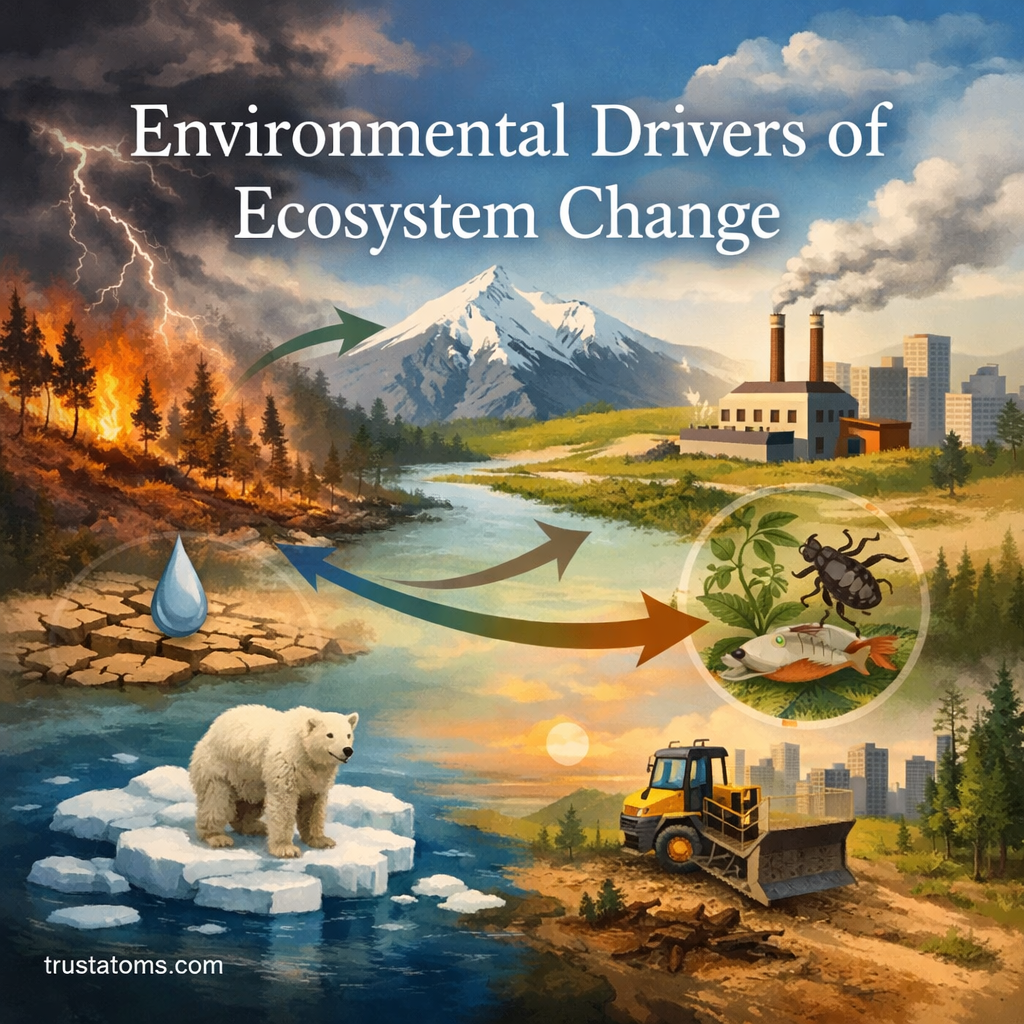
- Disturbances: Wildfires, storms, disease outbreaks, and human land use can rapidly change biomass distribution.
These factors interact. For example, abundant sunlight cannot sustain high plant productivity when water or essential nutrients are severely limited.
How Biomass Distribution Differs Across Ecosystems
Forests and Grasslands
Forests accumulate substantial biomass in woody trunks, branches, and roots. Trees can retain this material for many years, producing large stores of standing biomass.
Grasslands generally store less aboveground biomass than forests, but their extensive root systems can represent a considerable share of total plant biomass. These underground structures help grasses recover after grazing, drought, and seasonal changes.
Oceans and Coastal Waters
Marine ecosystems depend heavily on microscopic producers such as phytoplankton. Unlike trees, these organisms usually accumulate little long-lived structural material, yet their rapid reproduction supports marine consumers.
Coastal environments may also contain substantial biomass in seaweeds, seagrasses, and other organisms. Nutrient availability, light penetration, and water movement influence these patterns.
Soils and Microbial Communities
Soils contain living biomass in roots, fungi, bacteria, and small animals. Microorganisms break down organic material and help release nutrients that support plant growth.
Although individual microbes are extremely small, their combined biomass and activity can substantially influence ecosystem processes. Living microbial biomass should be distinguished from nonliving soil organic matter, which also stores considerable carbon.
How Changes in Biomass Affect Ecosystem Stability
Changes in biomass can influence population sizes and feeding relationships. For example, a decline in plant biomass may reduce the energy available to herbivores, which can then affect predator populations.
Such changes can spread through interconnected food webs. However, biomass alone cannot establish whether an ecosystem is healthy. Species diversity, population trends, nutrient cycling, and environmental conditions also matter.
Biomass is also connected to the carbon cycle. Plants absorb carbon dioxide during photosynthesis and incorporate carbon into living tissues. Respiration, decomposition, and disturbances return some of that carbon to the environment.
Deforestation can reduce carbon stored in living vegetation, while forest recovery can gradually increase it. The overall climate effect also depends on soil carbon, emissions, and other ecosystem processes.
How Scientists Measure Biomass
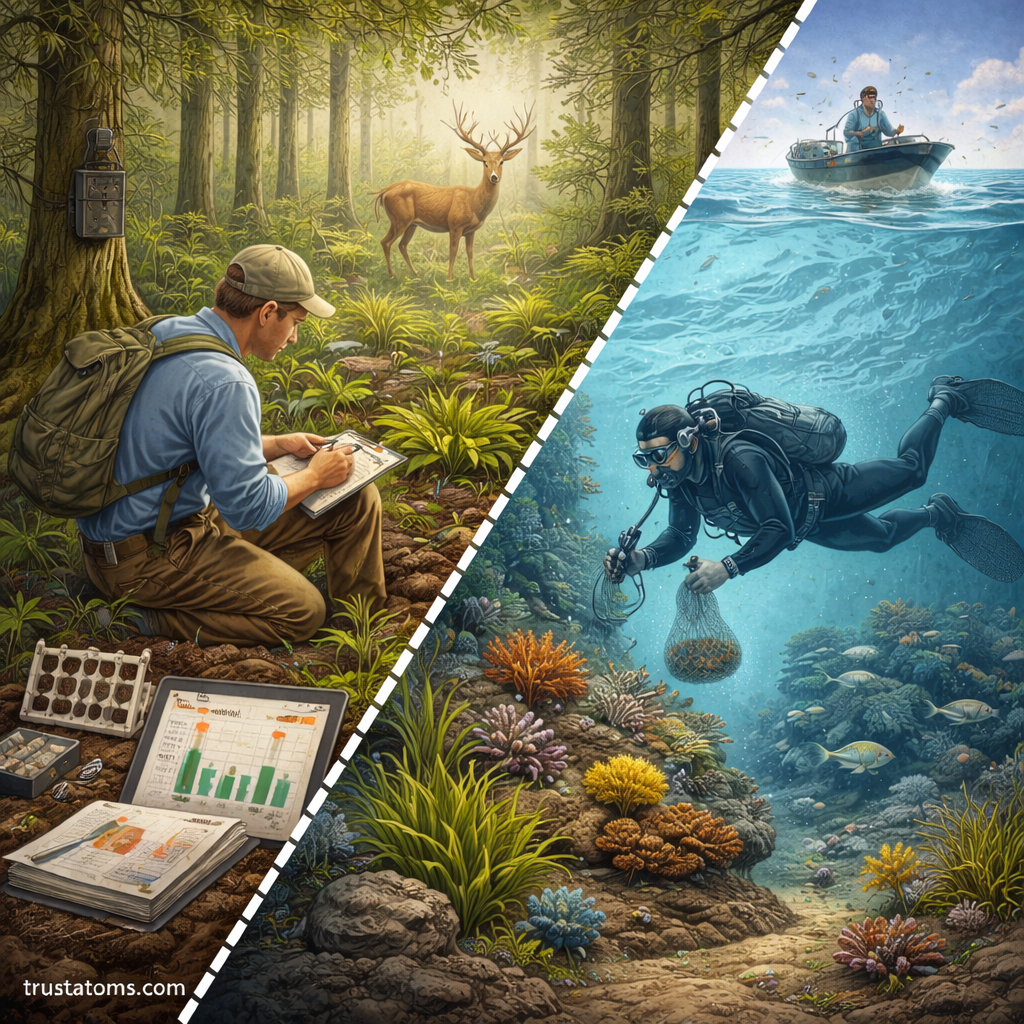
Ecologists select measurement methods according to the organisms, ecosystem size, and accuracy required.
- Direct sampling: Researchers collect representative biological material, dry it, and measure its mass.
- Field estimates: Tree diameter, height, and established mathematical relationships help estimate forest biomass without cutting down every tree.
- Remote sensing: Satellite observations, airborne instruments, and lidar provide information used to estimate vegetation structure and biomass over large areas.
- Carbon measurements: Scientists estimate the carbon contained in biological material to investigate ecosystem carbon storage.
Every method has limitations. Field sampling covers relatively small areas, while remote sensing estimates require calibration and validation. Combining methods can improve the reliability of biomass assessments.
Frequently Asked Questions
What is the difference between biomass and productivity?
Biomass measures the amount of living material present at a particular time. Productivity measures the rate at which organisms produce new biological material. An ecosystem can have low standing biomass but high productivity when organisms grow and reproduce rapidly.
Why does biomass usually decrease at higher trophic levels?
Organisms use much of the energy they obtain for metabolism and other biological activities. Only part becomes new tissue available to consumers. Consequently, less energy is generally available to support biomass at higher trophic levels.
Can biomass distribution indicate ecosystem health?
Biomass distribution can reveal changes in vegetation, consumer populations, and ecological productivity. However, scientists must interpret these measurements alongside biodiversity, environmental conditions, and historical trends before drawing conclusions about ecosystem health.
Biomass distribution helps scientists understand how living material is organized across ecosystems and feeding relationships. Comparing biomass with productivity, biodiversity, and environmental conditions provides a more complete picture of ecological change and can inform conservation and resource management.
Sources: OpenStax, Biology 2e; Odum and Barrett, Fundamentals of Ecology; NASA Earth Observatory.