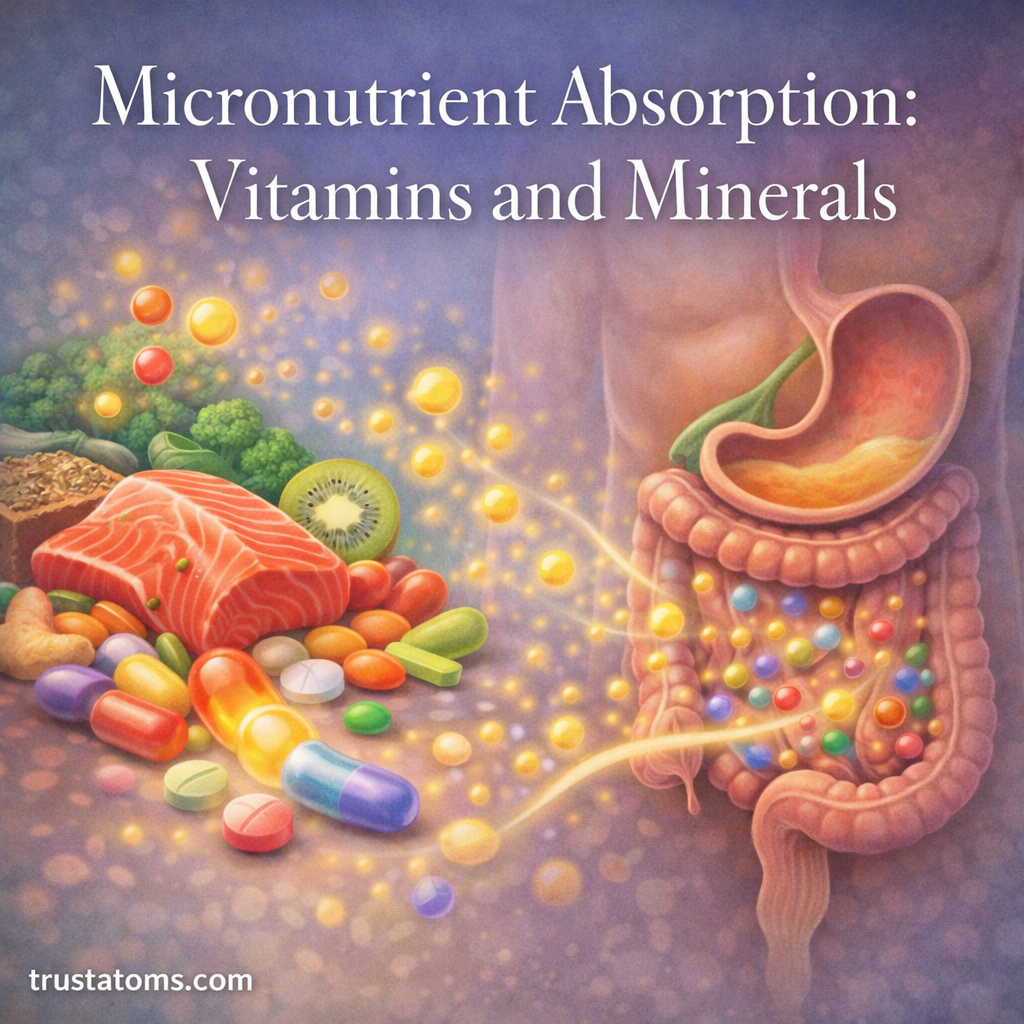
Micronutrients—vitamins and minerals—are essential for maintaining health, supporting metabolism, and enabling countless biological processes. Although they are required in small amounts, their impact on the body is enormous.
Before these nutrients can be used, they must be properly absorbed through the digestive system. Micronutrient absorption is a complex process influenced by nutrient type, digestive health, and interactions with other substances.
Understanding how vitamins and minerals are absorbed can help you optimize your diet and prevent deficiencies.
What Are Micronutrients?
Micronutrients are nutrients required in small quantities but are critical for normal body function.
Two Main Categories
- Vitamins – Organic compounds needed for processes like energy production and immune function
- Minerals – Inorganic elements that support structure, fluid balance, and nerve signaling
Types of Vitamins
Vitamins are divided into two major groups based on how they are absorbed and stored.
Fat-Soluble Vitamins
- Vitamins A, D, E, and K
- Absorbed along with dietary fats
- Stored in the liver and fatty tissues
Water-Soluble Vitamins
- Vitamin C and B-complex vitamins
- Absorbed directly into the bloodstream
- Not stored extensively, so regular intake is required
Where Micronutrient Absorption Occurs
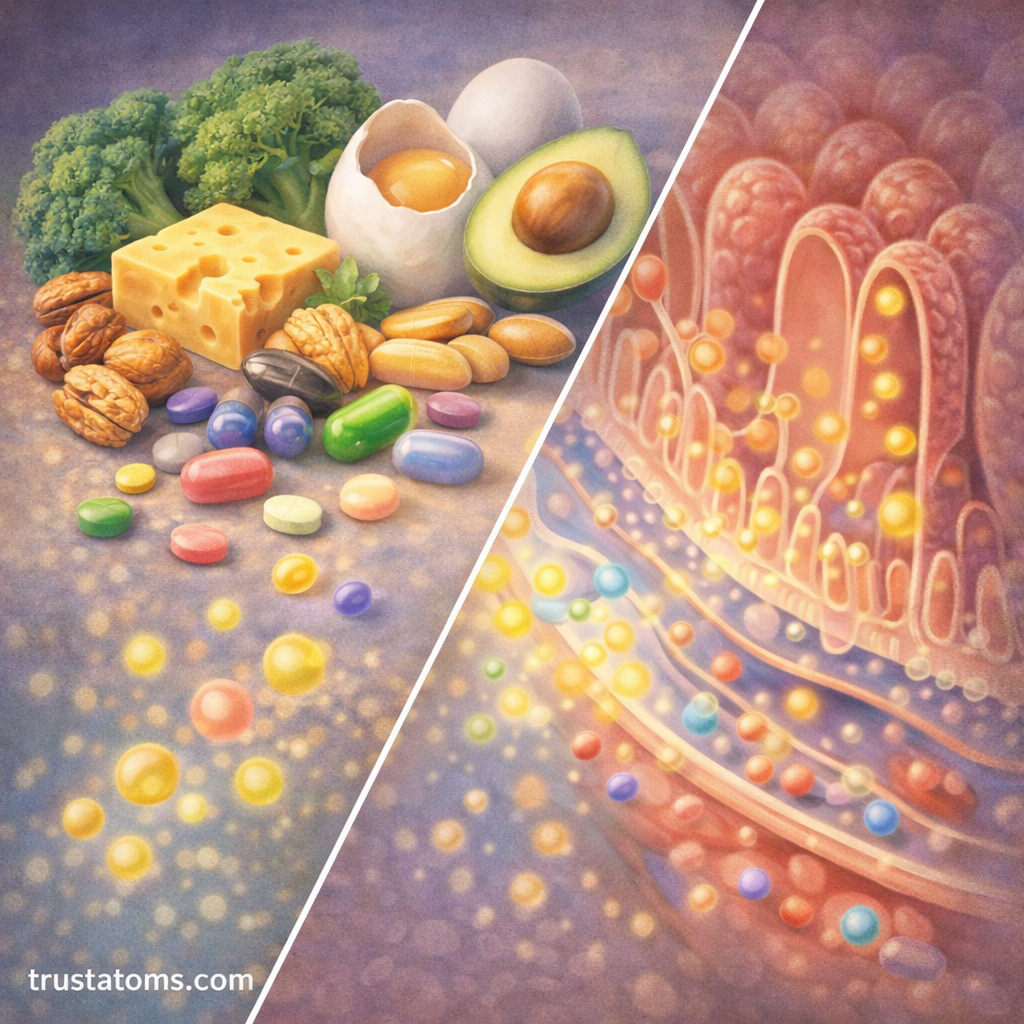
Most vitamin and mineral absorption takes place in the small intestine, although some nutrients begin absorption earlier.
Key Absorption Sites
- Stomach – Limited absorption (e.g., some minerals like iron begin here)
- Small intestine (duodenum and jejunum) – Primary site for most nutrients
- Ileum – Important for vitamin B12 and bile-related absorption
Each section of the intestine has specialized roles in absorbing specific nutrients.
How Vitamins Are Absorbed
The absorption process differs significantly between fat-soluble and water-soluble vitamins.
Fat-Soluble Vitamin Absorption
Fat-soluble vitamins require dietary fat and bile for proper absorption.
Steps include:
- Emulsification of fats by bile
- Formation of micelles
- Absorption into intestinal cells
- Packaging into chylomicrons for transport
These vitamins follow the same pathway as dietary fats through the lymphatic system.
Water-Soluble Vitamin Absorption
Water-soluble vitamins are absorbed more directly.
Key features:
- Dissolve in water within the digestive tract
- Absorbed via diffusion or active transport
- Enter the bloodstream directly
Because they are not stored in large amounts, excess quantities are usually excreted in urine.
How Minerals Are Absorbed
Mineral absorption depends on factors like solubility, body needs, and interactions with other nutrients.
Common Absorption Mechanisms
- Passive diffusion – Moves minerals along concentration gradients
- Active transport – Requires energy and carrier proteins
- Facilitated transport – Uses specific transporters without direct energy use
Examples of Mineral Absorption
- Calcium – Requires vitamin D for efficient absorption
- Iron – Absorbed more effectively in its heme form (from animal sources)
- Magnesium – Absorbed in the small intestine through both passive and active processes
Factors That Affect Micronutrient Absorption
Micronutrient absorption is influenced by a variety of internal and external factors.
1. Nutrient Interactions
Some nutrients enhance or inhibit absorption.
Examples:
- Vitamin C enhances iron absorption
- Calcium can interfere with iron absorption when consumed together
2. Digestive Health
A healthy digestive system is essential for proper absorption.
Issues that can impair absorption include:
- Inflammation of the intestinal lining
- Reduced enzyme production
- Imbalances in gut bacteria
3. Presence of Dietary Fat
Fat is necessary for absorbing fat-soluble vitamins.
Low-fat diets may reduce absorption of:
- Vitamin A
- Vitamin D
- Vitamin E
- Vitamin K
4. Age and Lifestyle
- Aging can reduce nutrient absorption efficiency
- Alcohol consumption can interfere with vitamin uptake
- Certain medications may block or reduce absorption
Special Case: Vitamin B12 Absorption
Vitamin B12 has a unique and complex absorption process.
Key Steps
- B12 binds to proteins in food
- Stomach acid releases B12
- B12 binds to intrinsic factor (a protein produced in the stomach)
- The complex is absorbed in the ileum
Without intrinsic factor, B12 absorption is severely impaired.
Common Signs of Poor Micronutrient Absorption
When the body cannot absorb vitamins and minerals effectively, deficiencies may develop.
Possible Symptoms
- Fatigue and weakness
- Brittle hair or nails
- Frequent infections
- Bone weakness or pain
- Neurological symptoms (e.g., tingling or numbness)
These signs can vary depending on which nutrient is lacking.
Tips to Improve Micronutrient Absorption
Optimizing absorption can help ensure your body gets the nutrients it needs.
Practical Strategies
- Eat a balanced diet with a variety of whole foods
- Pair nutrients strategically (e.g., vitamin C with iron-rich foods)
- Include healthy fats for fat-soluble vitamin absorption
- Avoid excessive intake of competing nutrients at the same time
- Maintain gut health through fiber and fermented foods
Final Thoughts
Micronutrient absorption is a critical part of human physiology, allowing the body to utilize essential vitamins and minerals for optimal function. From fat-dependent vitamin uptake to mineral transport systems, each process is finely tuned to meet the body’s needs.
By understanding how these nutrients are absorbed, you can make more informed dietary choices and support long-term health.