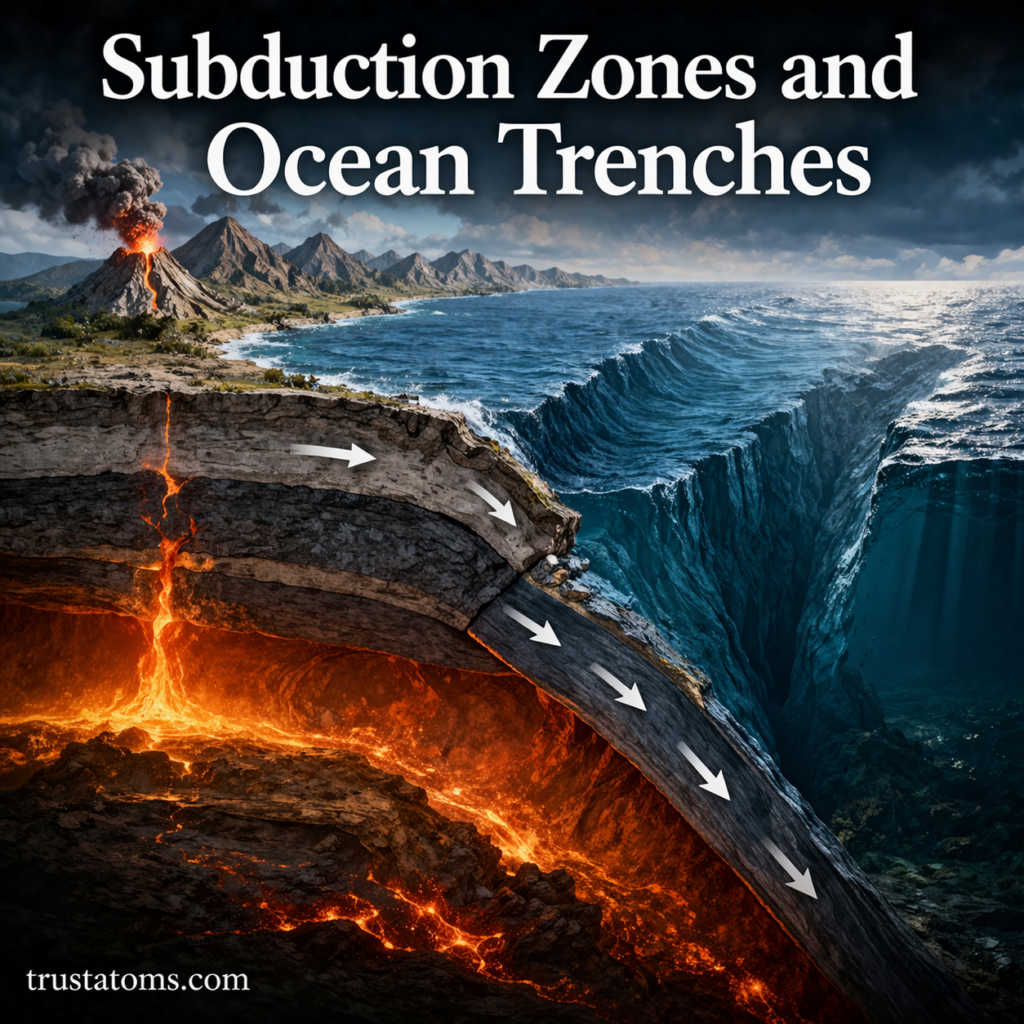
Deep beneath the oceans, powerful forces are constantly reshaping Earth’s surface. One of the most important of these processes occurs at subduction zones—regions where one tectonic plate is forced beneath another. These zones are closely linked to ocean trenches, the deepest parts of the ocean.
Understanding subduction zones and ocean trenches helps explain earthquakes, volcanic activity, and the recycling of Earth’s crust.
What Is a Subduction Zone?
A subduction zone forms where two tectonic plates collide, and one plate is pushed beneath the other into the mantle.
Key characteristics
- Occurs at convergent plate boundaries
- Typically involves a denser oceanic plate sinking beneath a less dense plate
- Creates intense pressure, heat, and geological activity
This process is a major driver of Earth’s internal dynamics.
How Subduction Works
Subduction is a gradual but powerful process.
Step-by-step process
- Two tectonic plates move toward each other
- The denser plate bends and begins to sink
- The descending plate moves into the mantle
- Heat and pressure cause partial melting
- Magma rises, often forming volcanoes
This continuous cycle plays a key role in shaping Earth’s surface.
What Are Ocean Trenches?
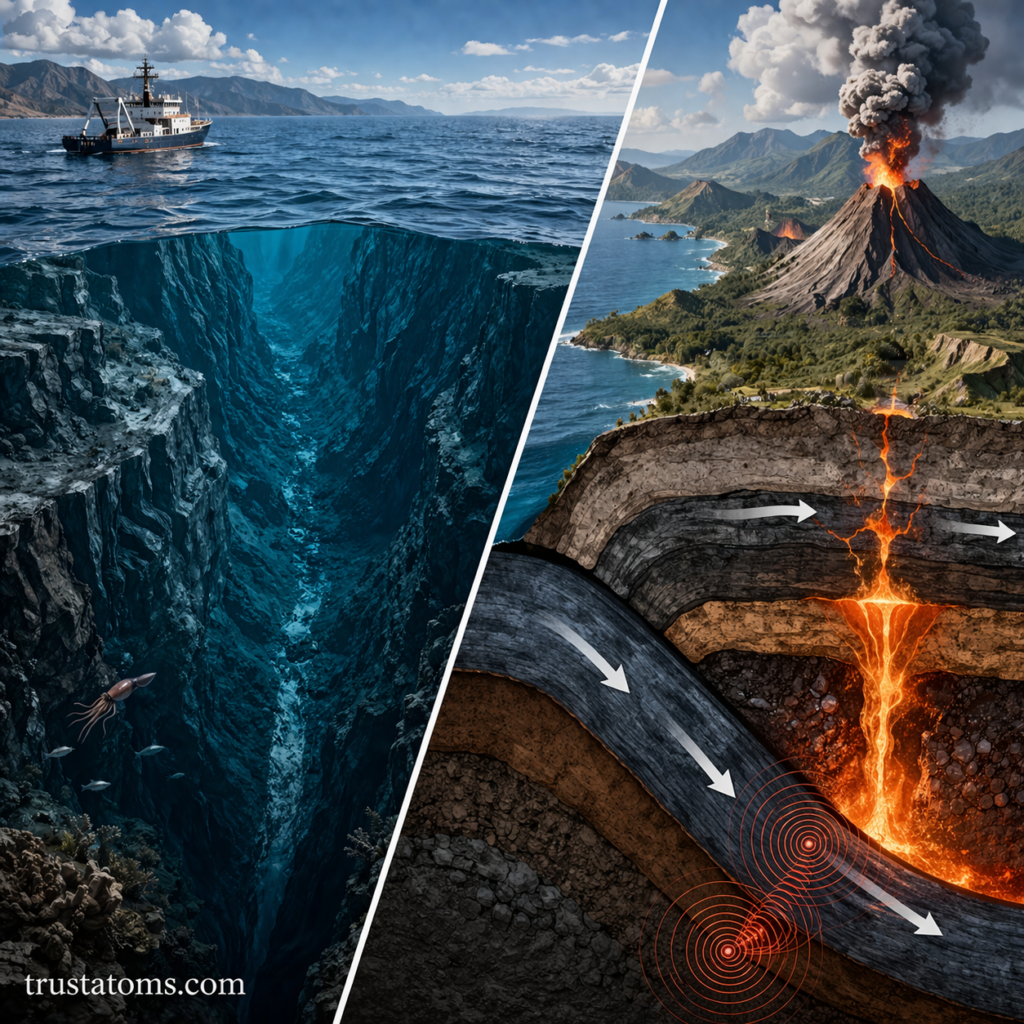
Ocean trenches are long, narrow depressions in the seafloor formed at subduction zones.
Key features
- Among the deepest places on Earth
- Typically located where one plate dives beneath another
- Can extend for thousands of miles
These trenches mark the boundary where subduction begins.
Why Ocean Trenches Form
As one plate bends downward, it creates a deep trough in the ocean floor.
Formation process
- The subducting plate pulls downward
- The edge of the overriding plate is dragged slightly
- This creates a steep, narrow trench
The depth of trenches depends on the angle and speed of subduction.
Volcanic Activity in Subduction Zones
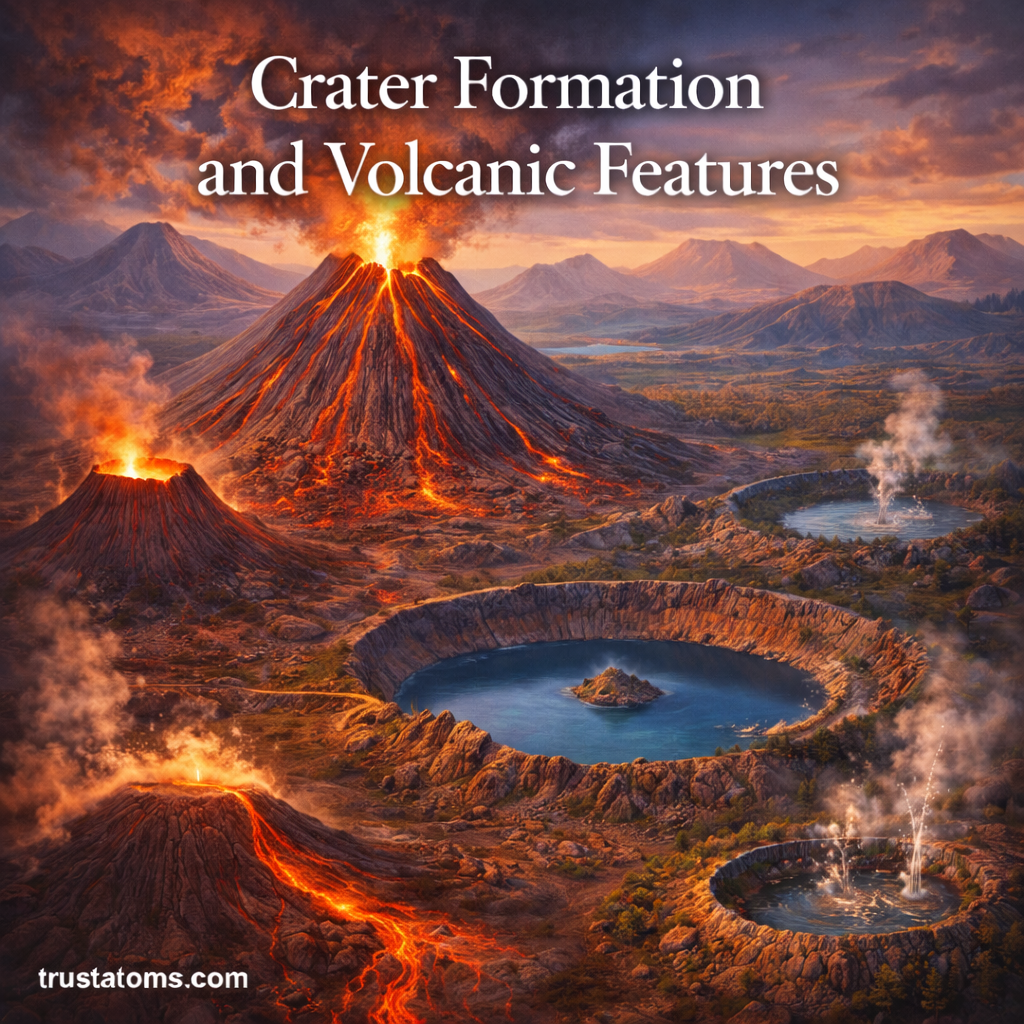
Subduction zones are closely associated with volcanoes.
How volcanoes form
- Water from the subducting plate lowers the melting point of mantle rock
- Partial melting produces magma
- Magma rises through the crust and erupts
This leads to the formation of volcanic arcs.
Types of Volcanic Arcs
Subduction zones create different types of volcanic chains.
Continental volcanic arcs
- Form on continents
- Example: volcanic mountain ranges
Island arcs
- Form in the ocean
- Chains of volcanic islands
Both are the result of magma rising above subduction zones.
Earthquakes and Subduction Zones
Subduction zones are some of the most earthquake-prone regions on Earth.
Why earthquakes occur
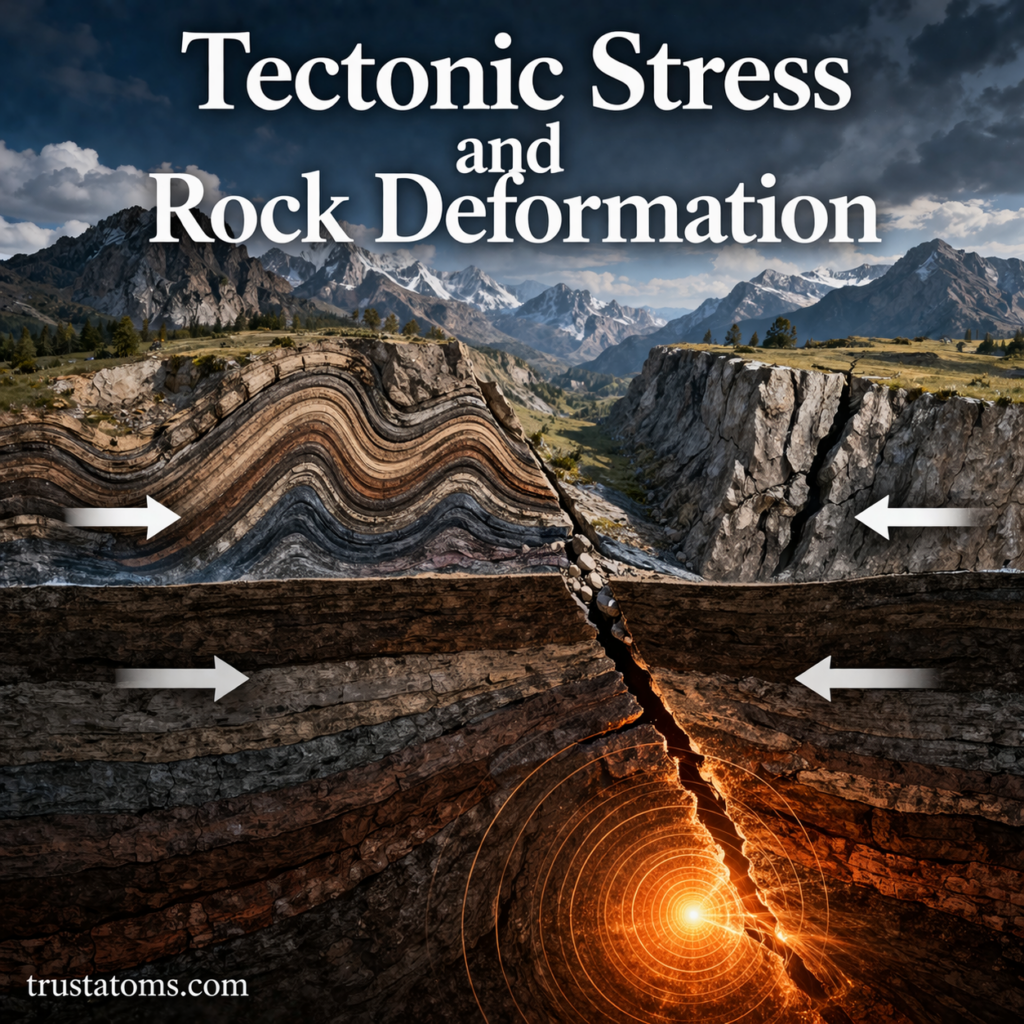
- Plates become locked due to friction
- Stress builds up over time
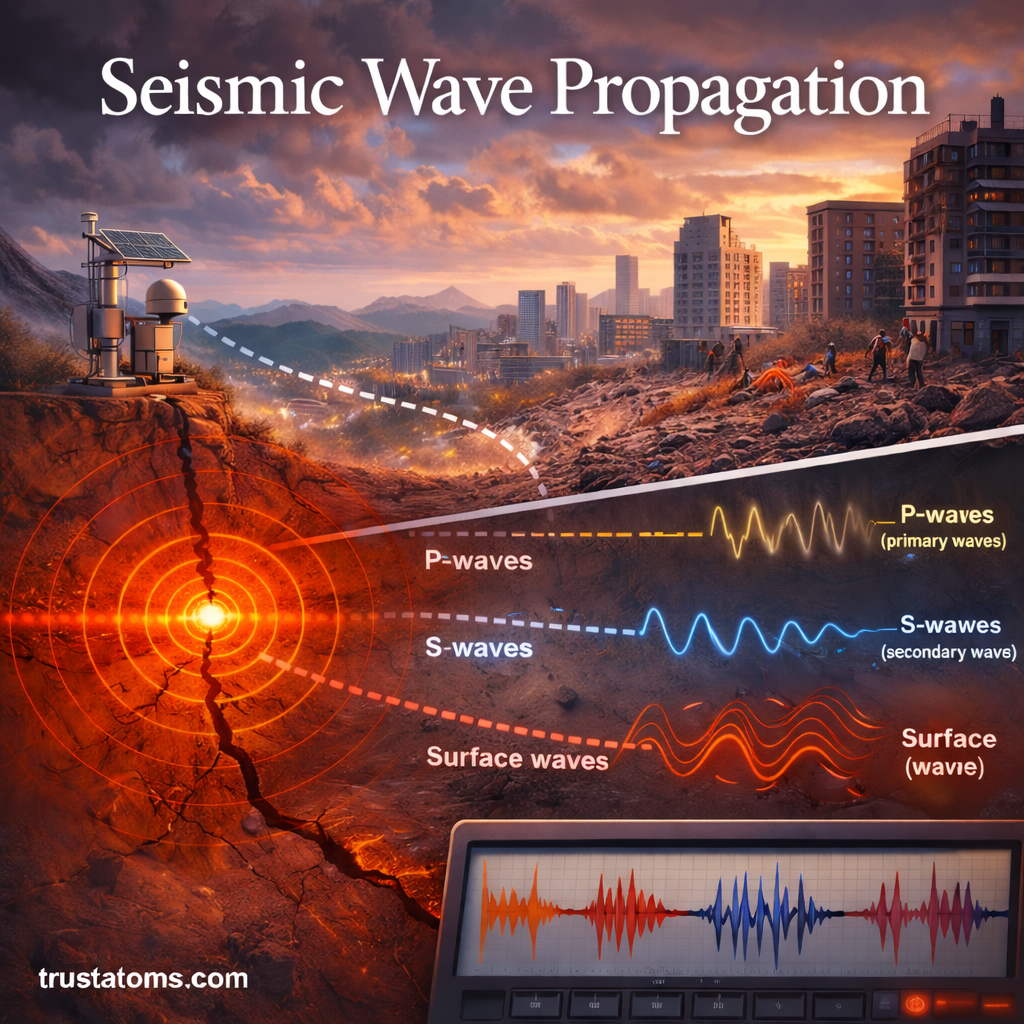
- Sudden release of energy causes earthquakes
These earthquakes can be extremely powerful.
Deep Earthquakes
Subduction zones are unique because they produce earthquakes at great depths.
Key points
- Can occur hundreds of kilometers below the surface
- Caused by movement within the sinking plate
- Provide insight into Earth’s interior
Ocean Trenches and Extreme Environments
Ocean trenches are not only geologically significant—they are also unique ecosystems.
Conditions in trenches
- Extreme pressure
- Low temperatures
- Complete darkness
Despite these harsh conditions, life exists in these deep environments.
Why Subduction Zones Matter
Subduction zones are essential to Earth’s long-term processes.
Their importance
- Recycle oceanic crust back into the mantle
- Drive volcanic activity
- Generate earthquakes and shape landscapes
- Influence the formation of mountain ranges
They are a key part of plate tectonics.
Key Takeaways
- Subduction zones occur where one tectonic plate sinks beneath another
- Ocean trenches form at the point where subduction begins
- Subduction leads to volcanic activity and earthquake generation
- Trenches are the deepest parts of the ocean
- These processes play a major role in Earth’s geological cycle
Final Thoughts
Subduction zones and ocean trenches reveal the powerful forces operating beneath Earth’s surface. While these processes are often hidden deep underwater, their effects are felt across the planet—from volcanic eruptions to major earthquakes.
By studying these features, scientists gain a better understanding of how Earth recycles its crust and continues to evolve over time.