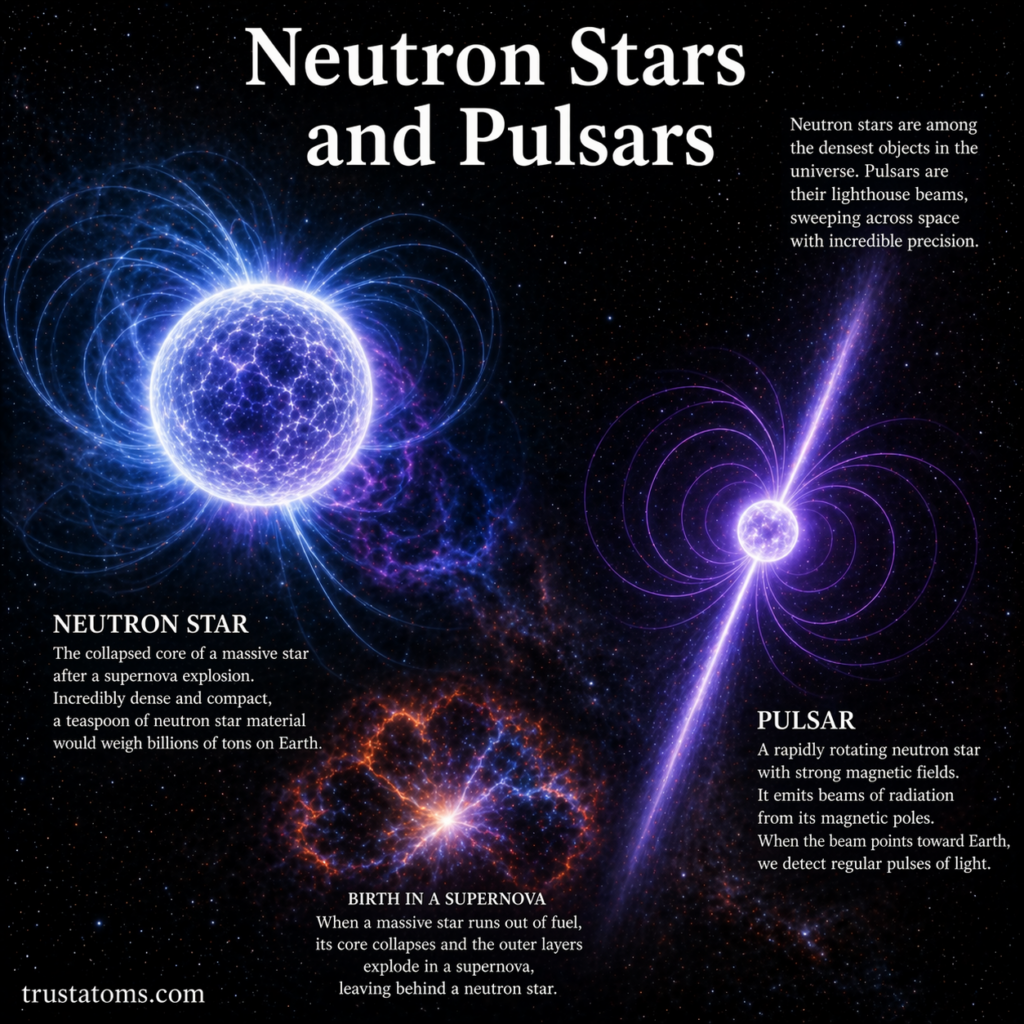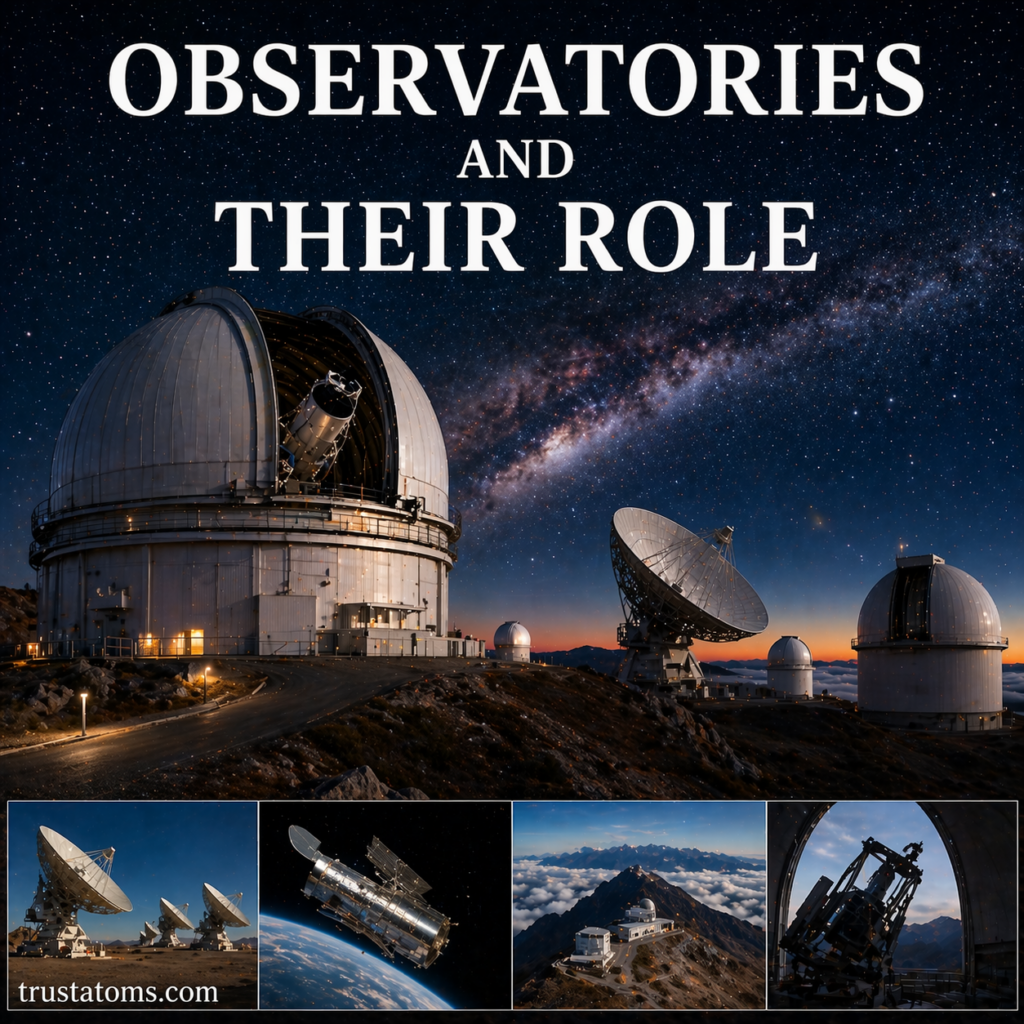
Observatories are the backbone of modern astronomy. They are the places where scientists gather data, test theories, and explore the universe beyond our planet. From mountaintop telescopes to space-based instruments, observatories allow us to see deeper into space than ever before.
Understanding how observatories work reveals how we study everything from nearby planets to distant galaxies.
What Is an Observatory?
An observatory is a facility equipped with instruments designed to observe celestial objects such as stars, planets, and galaxies.
These facilities can be located:
- On Earth (ground-based observatories)
- In orbit around Earth (space observatories)
Their primary purpose is to collect and analyze light and other forms of energy coming from space.
Types of Observatories
Different observatories are designed to detect different parts of the electromagnetic spectrum.
Optical Observatories
- Observe visible light
- Use large mirrors or lenses
- Similar to traditional telescopes
Example:
- Hubble Space Telescope
Radio Observatories
- Detect radio waves from space
- Use large dish antennas
- Can operate day or night
Example:
- Arecibo Observatory
Infrared Observatories
- Detect heat radiation (infrared light)
- Useful for observing dust clouds and star formation
Example:
- James Webb Space Telescope
X-ray and Gamma-ray Observatories
- Detect high-energy radiation
- Study extreme events like black holes and supernovae
These observatories are typically placed in space because Earth’s atmosphere blocks these wavelengths.
Ground-Based vs Space-Based Observatories
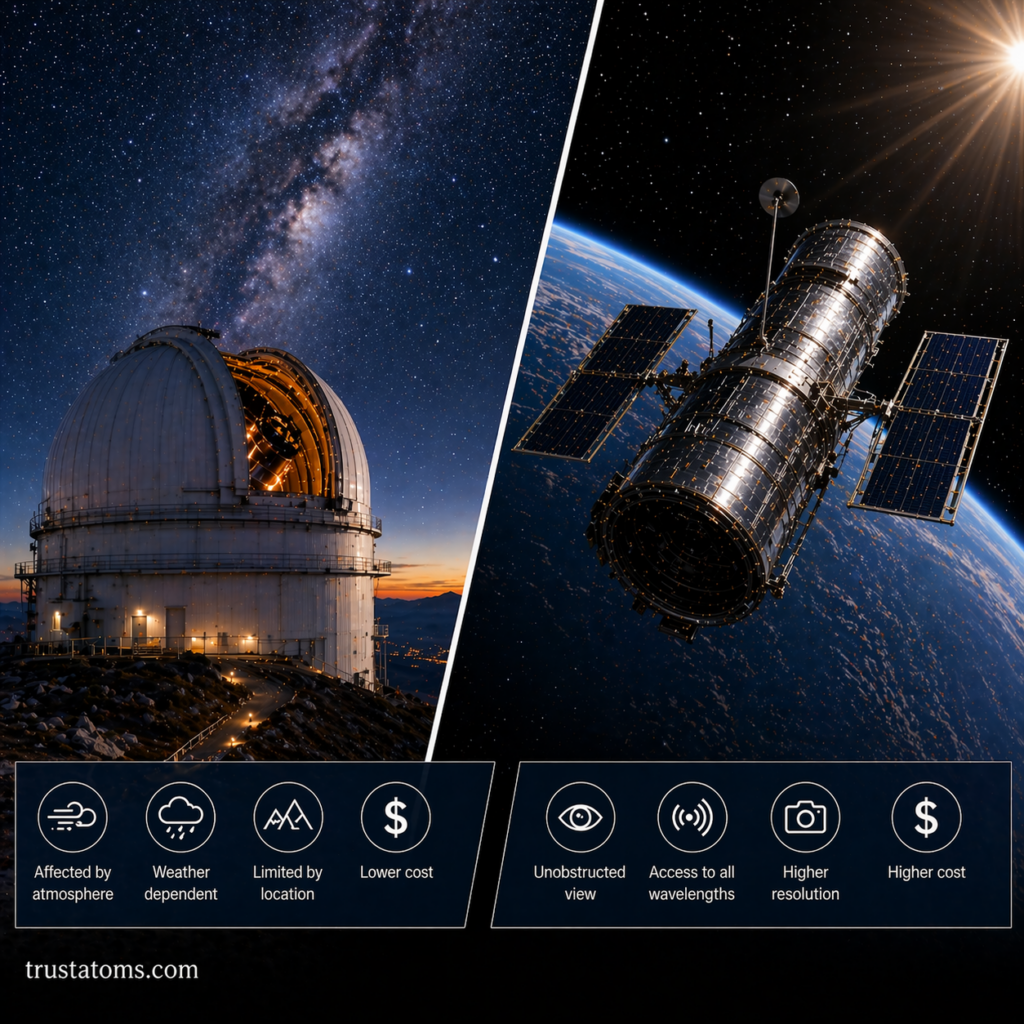
Both types have advantages and limitations.
Ground-Based Observatories
Advantages:
- Easier to build and maintain
- Larger telescopes possible
- Lower cost
Challenges:
- Atmospheric distortion
- Weather interference
- Light pollution
Space-Based Observatories
Advantages:
- No atmospheric interference
- Clearer and more detailed images
- Access to all wavelengths of light
Challenges:
- Expensive to launch and maintain
- Difficult to repair
How Observatories Work
Observatories collect light or other signals from space and convert them into data.
Basic process:
- Collection
- Telescopes gather light or radiation
- Detection
- Sensors convert signals into digital data
- Processing
- Computers analyze and enhance the data
- Interpretation
- Scientists study the results to draw conclusions
This process allows astronomers to study objects that are millions or billions of light-years away.
Why Location Matters
Observatories are often placed in remote or extreme environments to improve observation quality.
Common locations include:
- High mountains (thin atmosphere)
- Deserts (clear skies)
- Remote regions (low light pollution)
Examples:
- Mauna Kea Observatories
- Atacama Large Millimeter Array
These locations provide clearer, more stable viewing conditions.
Major Discoveries Made by Observatories
Observatories have led to some of the most important discoveries in science.
Examples include:
- The expansion of the universe
- The discovery of exoplanets
- Detailed images of distant galaxies
- Evidence of black holes
Modern observatories continue to push the boundaries of what we can observe and understand.
The Future of Observatories
Astronomy is advancing rapidly, and new observatories are pushing technology even further.
Future developments include:
- Larger ground-based telescopes
- More advanced space telescopes
- Improved imaging and data processing
- Global telescope networks
These innovations will allow scientists to:
- Look deeper into the universe
- Study the earliest galaxies
- Search for signs of life beyond Earth
Why Observatories Are Essential
Observatories are not just tools—they are gateways to discovery.
They allow us to:
- Observe objects we cannot visit
- Test scientific theories
- Expand our understanding of the universe
Without observatories, modern astronomy would not exist.
Final Thoughts
From ancient sky-watching platforms to advanced space telescopes, observatories have always been central to our exploration of the cosmos. They transform faint signals from distant space into meaningful insights about how the universe works.
As technology continues to evolve, observatories will remain at the forefront of discovery, helping humanity answer some of its biggest questions.