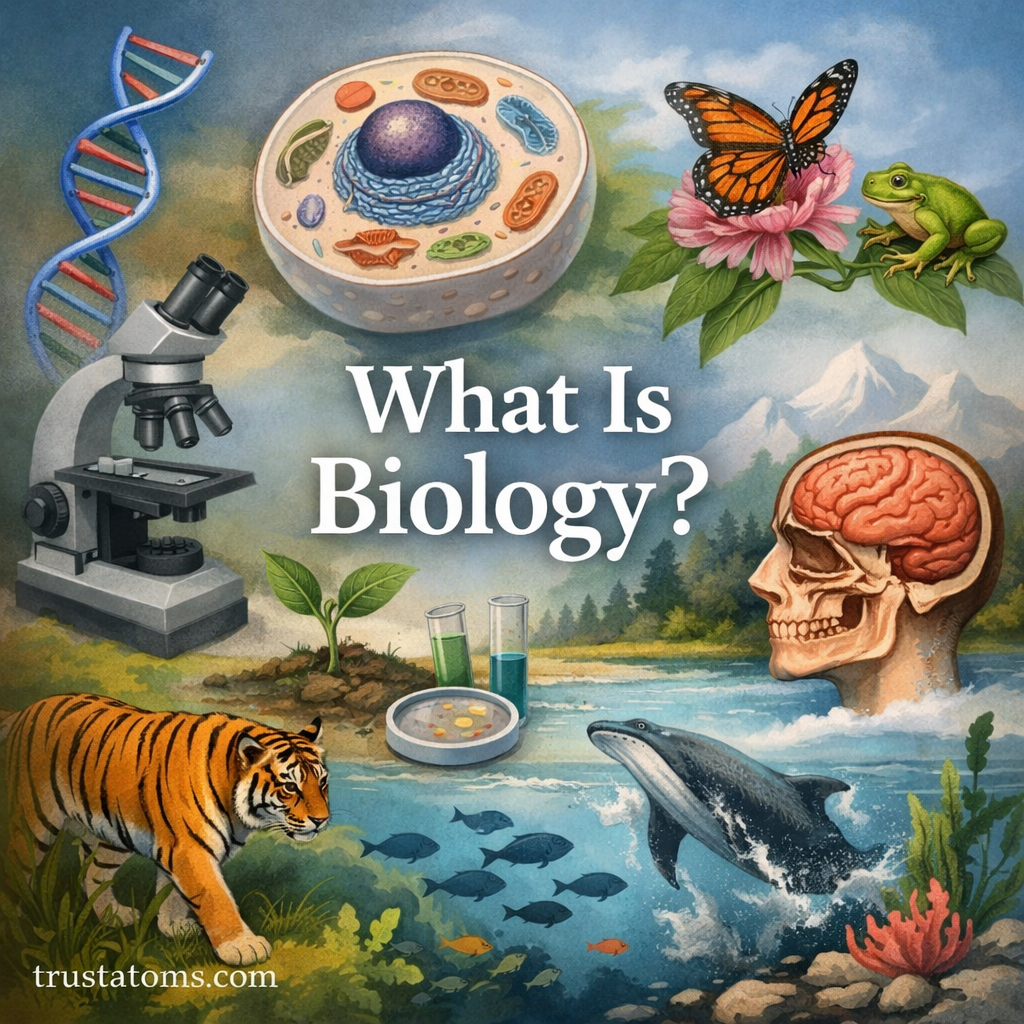
Biology is the scientific study of life and living organisms. It explores how living things function, grow, reproduce, evolve, and interact with their environments. From microscopic bacteria to giant whales and complex ecosystems, biology seeks to understand the processes that make life possible on Earth.
Because life exists at many levels—from molecules and cells to organisms and ecosystems—biology is one of the broadest scientific disciplines. It often overlaps with topics explored in What Is Chemistry?, especially when studying molecules and chemical reactions inside cells, and with What Is Human Anatomy? when examining the structure and function of living systems.
Biology helps scientists answer questions about health, genetics, ecosystems, evolution, and the future of life itself.
What Does Biology Study?
Biology examines living systems across many different scales.
Major areas of study include:
- Cells and cellular processes
- DNA and genetics
- Human and animal physiology
- Ecosystems and environmental interactions
- Evolution and adaptation
- Plants and microorganisms
- Biological systems and biodiversity
For example, understanding cellular structures helps explain broader biological concepts involving how living organisms function and develop. Readers can continue exploring topics such as Prokaryotic vs Eukaryotic Cells and Structure and Function of Cell Organelles.
The Characteristics of Life
One of biology’s main goals is understanding what separates living organisms from nonliving matter.
Most living things share several characteristics:
Cellular Organization
All living things consist of one or more cells. Cells serve as the basic units of life.
You can learn more in Cell Membrane Structure and Function and Levels of Cellular Organization.
Metabolism
Living organisms perform chemical reactions to obtain energy and maintain life.
Many biological reactions depend heavily on principles covered in What Is Chemistry?, especially when examining molecules, enzymes, and biochemical reactions.
Growth and Development
Living organisms grow and develop according to genetic instructions stored within DNA.
Related topics include DNA Structure and Function, Genes and Traits Explained, and Protein Synthesis Overview.
Reproduction
Organisms reproduce and pass genetic information to future generations.
Readers interested in heredity and inheritance can continue with Mendelian Genetics Basics and Dominant vs Recessive Traits.
Evolution and Adaptation
Over time, species change and adapt through processes such as mutation and natural selection.
Explore related topics including Natural Selection Explained and <a href=”/adaptation-and-survival/”>Adaptation and Survival</a>.
Major Branches of Biology
Biology contains many specialized fields.
Molecular Biology
Molecular biology examines DNA, proteins, and biological molecules.
This field frequently overlaps with chemistry and can connect with concepts discussed in What Is Chemistry?.
Related reading:
Cell Biology
Cell biology studies cell structure and function.
Explore:
Genetics
Genetics examines how traits are inherited and expressed.
Related topics:
Ecology
Ecology studies how organisms interact with their environments.
Explore:
Anatomy and Physiology
These branches examine body structures and biological systems.
Readers interested in body systems can continue with What Is Human Anatomy?.
Levels of Biological Organization
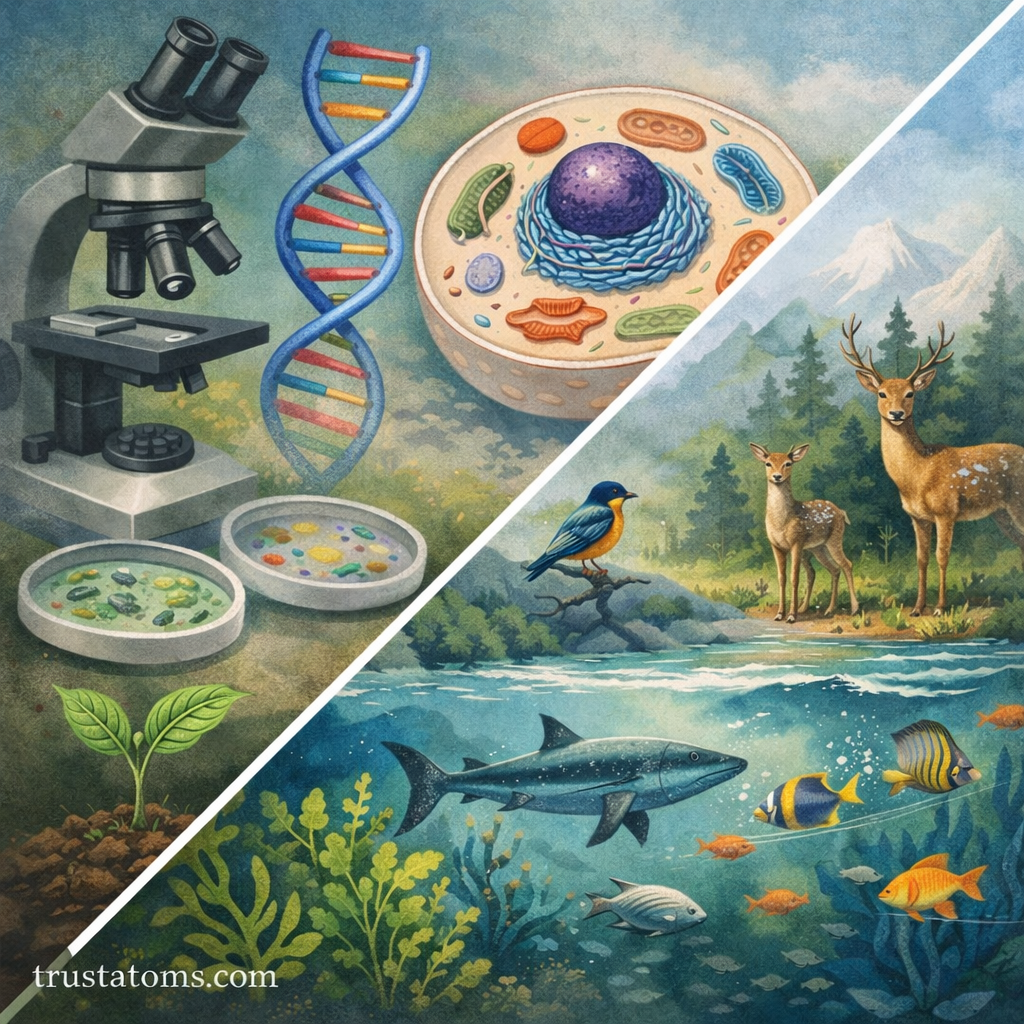
Biology studies life at multiple levels:
- Molecules
- Cells
- Tissues
- Organs
- Organ systems
- Organisms
- Populations
- Communities
- Ecosystems
- Biosphere
Each level builds on the previous one and helps explain how life functions as a connected system.
Topics such as Organization of Life Levels Explained and Ecosystems and Biological Interactions expand on these ideas.
Why Biology Matters
Biology plays an important role in everyday life and scientific progress.
Biological discoveries contribute to:
- Medical treatments
- Vaccines
- Agriculture
- Biotechnology
- Environmental conservation
- Disease research
Biology also connects closely with fields like chemistry and anatomy. Understanding how molecules interact can support learning in What Is Chemistry?, while studying organs and body systems can lead naturally into What Is Human Anatomy?.
Continue Exploring Biology
Continue building your understanding with:
- DNA Structure and Function
- Natural Selection Explained
- Food Chains and Food Webs
- Biodiversity Explained
Related science guides:
Final Thoughts
Biology explores life in all its complexity—from molecules and cells to organisms and ecosystems.
By studying biology, scientists continue expanding our understanding of health, evolution, genetics, and the natural world.