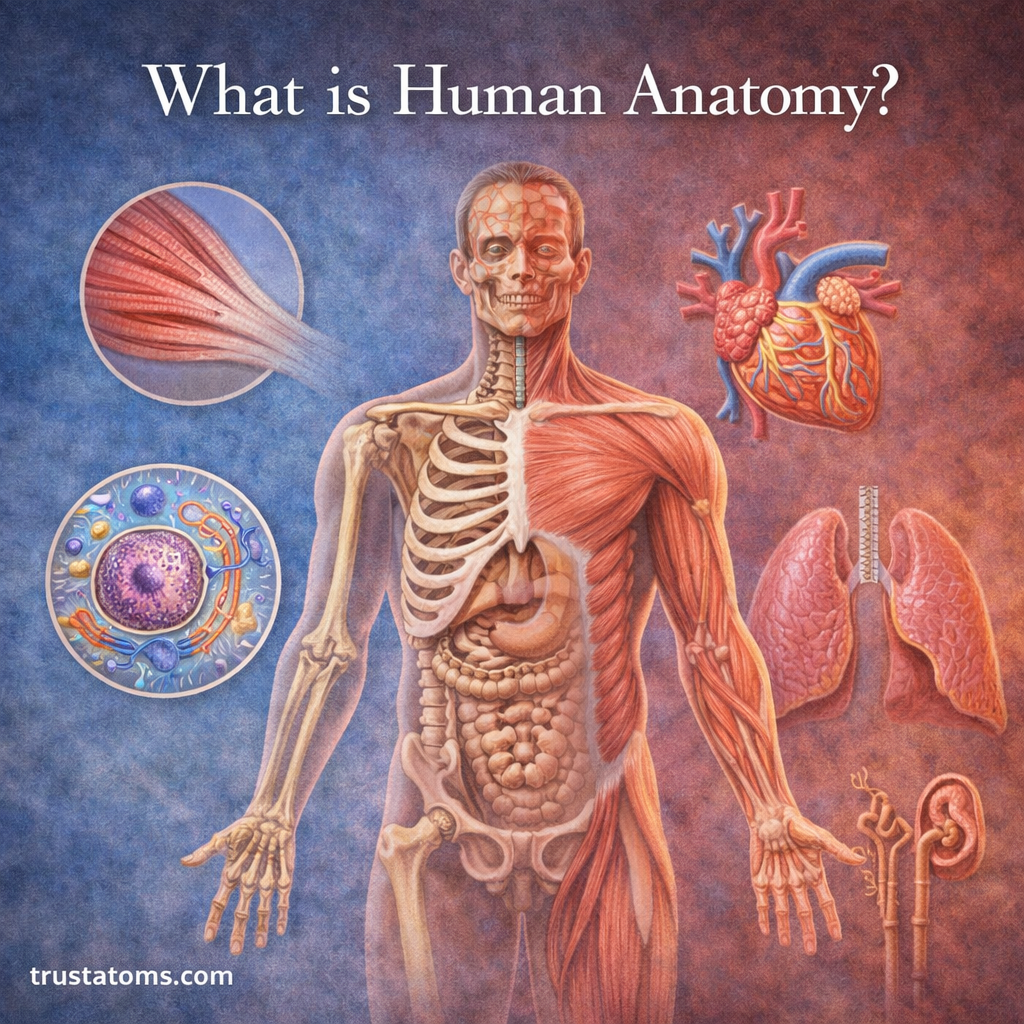
Human anatomy is the scientific study of the structure of the human body. It examines how body parts are organized, how they relate to one another, and how structure supports function.
From cells and tissues to organs and body systems, anatomy provides a framework for understanding how the human body is built. It serves as a foundation for medicine, biology, healthcare, fitness, and scientific research.
Human anatomy also overlaps heavily with What Is Biology?, especially when studying cells and living systems, while many body processes rely on molecular interactions explored in What Is Chemistry?.
What Does Human Anatomy Study?
Human anatomy focuses on the physical structures that make up the body.
Major areas include:
- Cells
- Tissues
- Organs
- Organ systems
- Body regions
- Structural relationships
Anatomy helps answer questions such as:
- Where is a structure located?
- How is it organized?
- What is it connected to?
- How does its structure support function?
Foundational anatomy topics include:
Anatomy vs Physiology
Human anatomy is often paired with physiology, but they focus on different aspects of the body.
Anatomy
- Focuses on structure
- Studies form and organization
- Examines physical relationships
Physiology
- Focuses on function
- Explains how systems operate
- Studies processes occurring inside the body
Simple comparison:
Anatomy = what something is
Physiology = what something does
Together, anatomy and physiology provide a complete understanding of the body.
Levels of Organization in the Human Body
The body is organized into several levels of complexity.
Chemical Level
Atoms and molecules form the building blocks of cells.
These molecular concepts connect with topics in What Is Chemistry?
Related reading:
Cellular Level
Cells are the smallest living units of the body.
Explore:
This level also connects closely with concepts in What Is Biology?.
Tissue Level
Groups of cells work together to create tissues.
Major tissue categories include:
- Epithelial tissue
- Connective tissue
- Muscle tissue
- Nervous tissue
Continue with:
Connective Tissue in Structural Support
Organ Level
Multiple tissues combine to create organs.
Examples include:
- Heart
- Liver
- Brain
- Lungs
Related topics:
Organ System Level
Organ systems work together to maintain body function.
Major Systems of the Human Body
The body contains multiple systems with specialized functions.
Key systems include:
Skeletal System
Provides support and protection.
Explore:
Muscular System
Enables movement and posture.
Related reading:
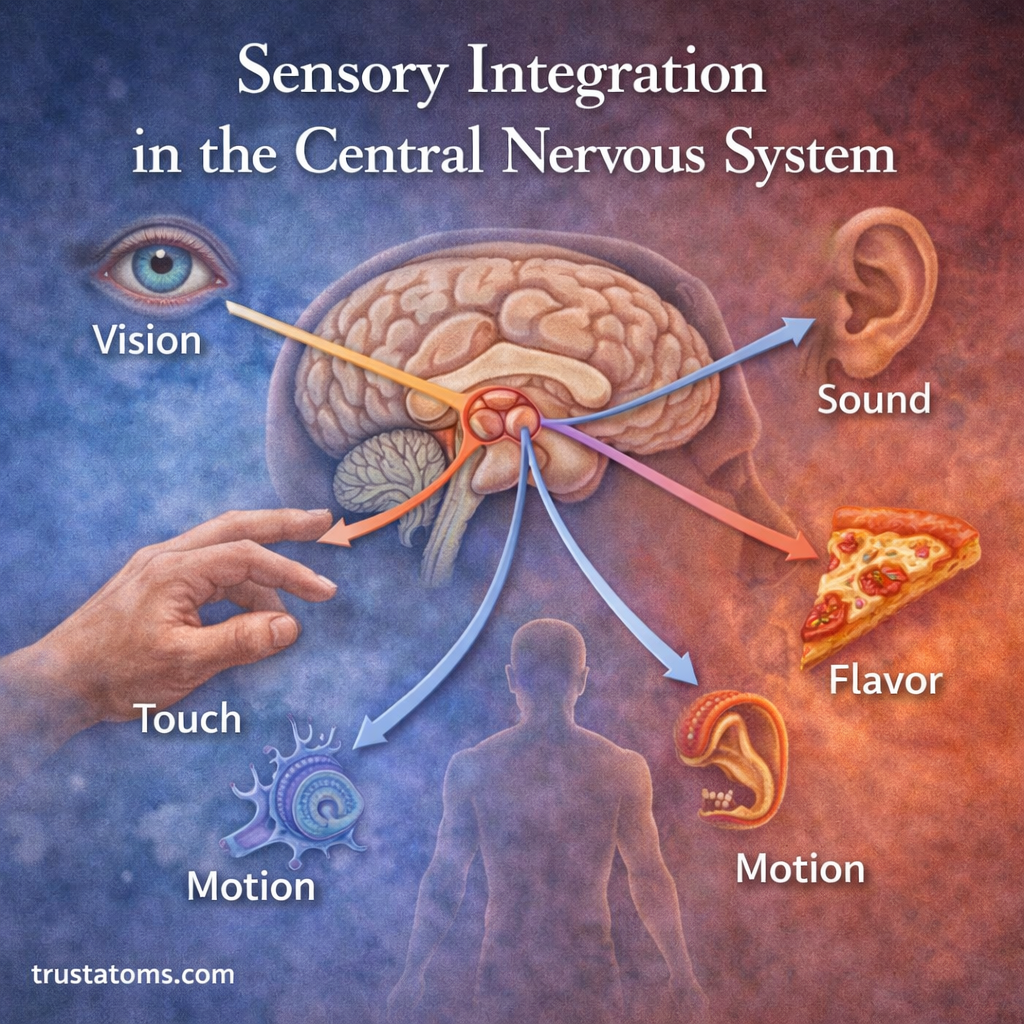
Nervous System
Coordinates communication throughout the body.
Explore:
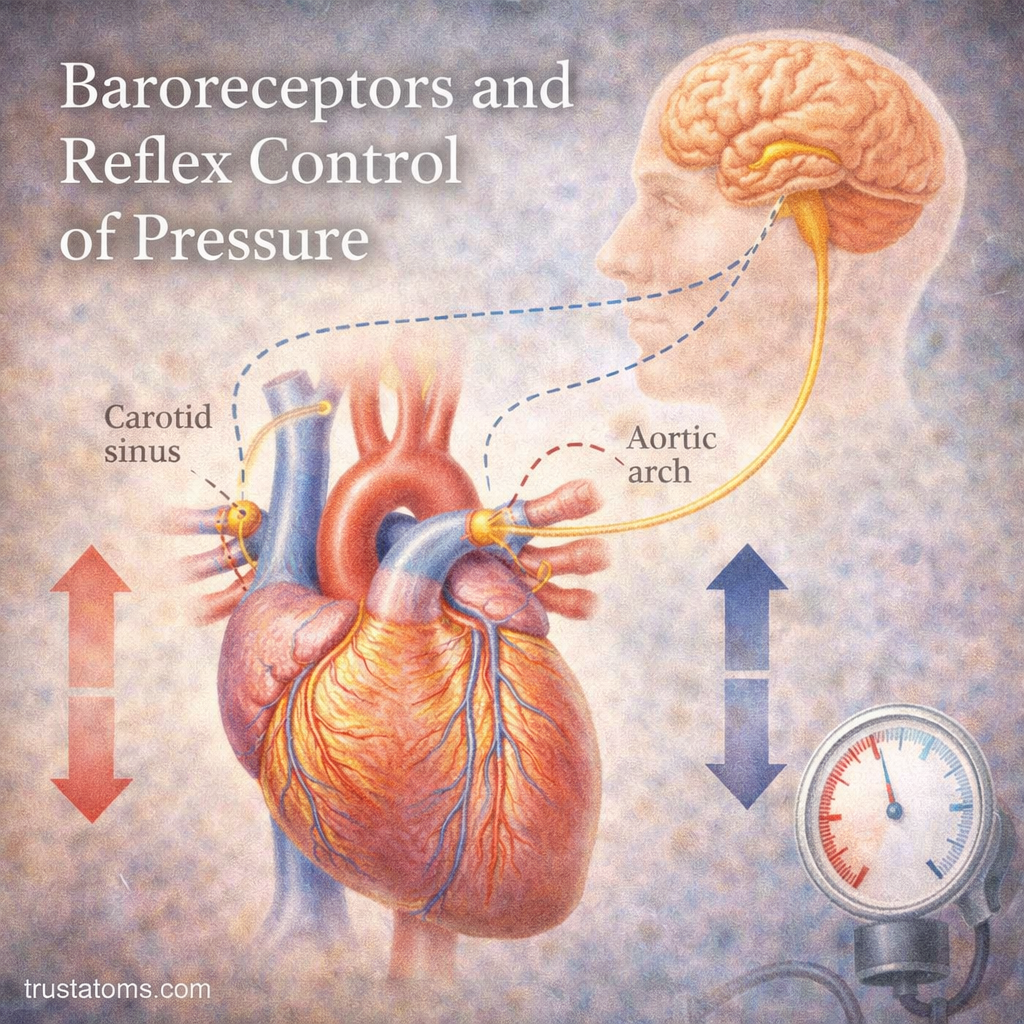
Circulatory System
Transports oxygen and nutrients.
Continue with:
Respiratory System
Supports breathing and gas exchange.
Topics include:
Why Human Anatomy Matters
Human anatomy has many practical applications.
It helps:
- Diagnose diseases
- Support healthcare and medicine
- Improve fitness understanding
- Advance biological research
- Guide medical procedures
Because anatomy builds upon biological concepts, readers interested in life sciences can continue with What Is Biology?.
How Human Anatomy Is Studied
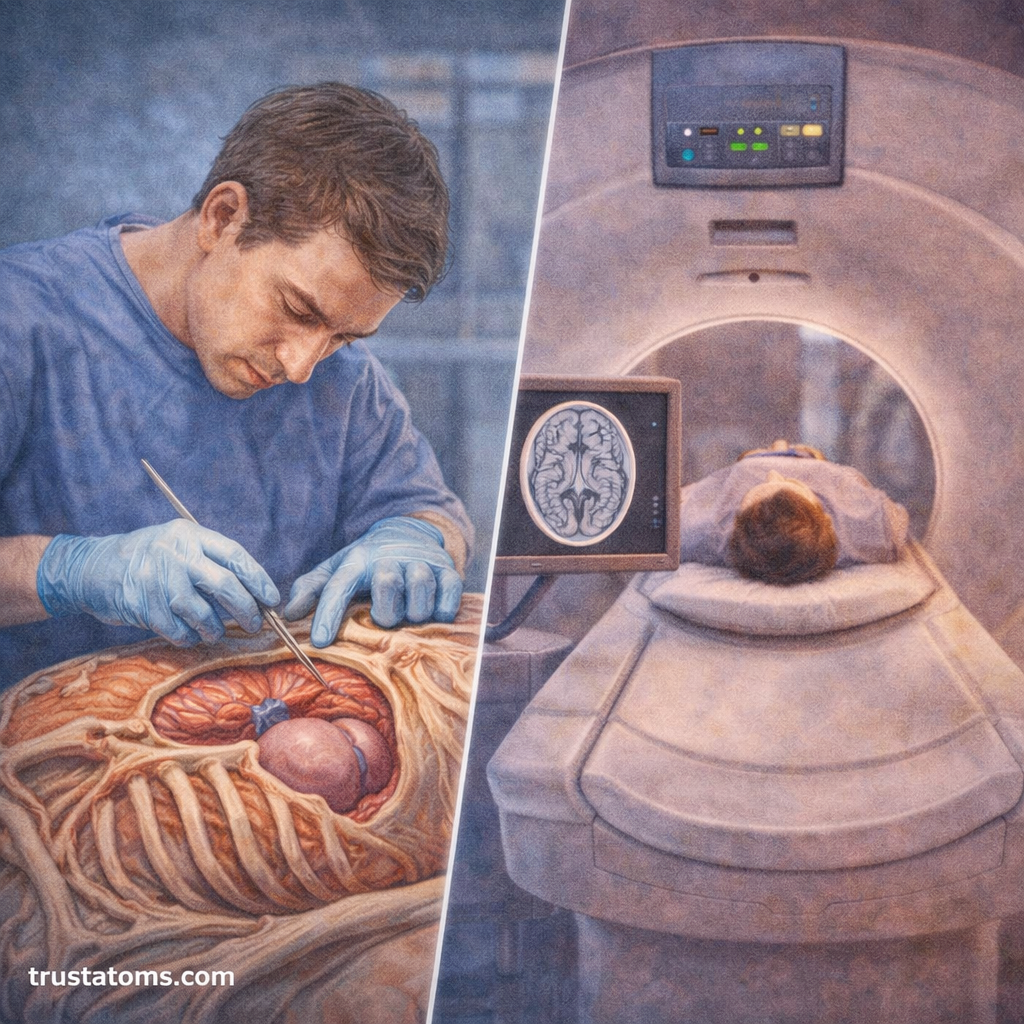
Anatomists use multiple approaches to study body structures.
Common methods include:
- Dissection
- Medical imaging
- Anatomical models
- Digital anatomy tools
- Virtual simulations
Continue Exploring Human Anatomy
Continue learning with:
Related science guides:
Final Thoughts
Human anatomy provides the structural foundation for understanding the body. By studying cells, tissues, organs, and systems, anatomy helps explain how the human body is organized and how its parts work together.
Whether your interests involve medicine, healthcare, fitness, or science, anatomy provides essential knowledge for understanding life itself.