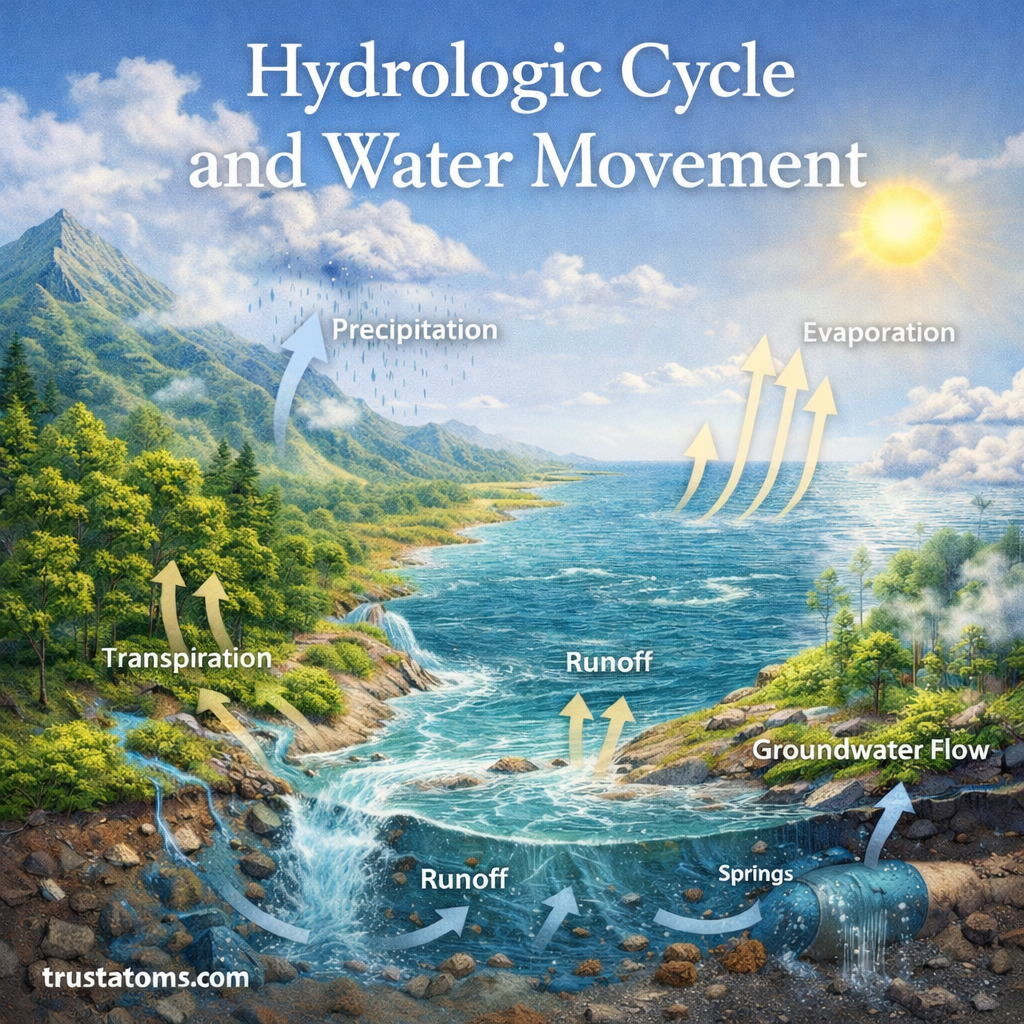
Water is constantly moving, transforming, and cycling through Earth’s systems. This continuous process, known as the hydrologic cycle, connects the atmosphere, land, and oceans in a dynamic loop that sustains life.
From evaporation over the ocean to rainfall on land and groundwater flow beneath the surface, the movement of water shapes weather, ecosystems, and global climate.
What Is the Hydrologic Cycle?
The hydrologic (or water) cycle is the continuous movement of water through different parts of Earth, including:
- The atmosphere
- The oceans
- The land surface
- Underground reservoirs
Water changes between solid, liquid, and gas forms as it moves through the cycle.
Key Processes in the Hydrologic Cycle
Several core processes drive water movement around the planet.
Evaporation
Evaporation occurs when liquid water is heated by the sun and turns into water vapor.
- Happens mainly over oceans, lakes, and rivers
- Transfers water into the atmosphere
- Leaves salts and impurities behind
Transpiration
Transpiration is the release of water vapor from plants.
- Water absorbed by roots travels to leaves
- Evaporates through tiny pores called stomata
- Plays a major role in moving water from land to atmosphere
Together, evaporation and transpiration are often called evapotranspiration.
Condensation
Condensation occurs when water vapor cools and changes back into liquid droplets.
- Forms clouds in the atmosphere
- Requires cooling of air masses
- Essential for precipitation to occur
Precipitation
Precipitation is water falling from clouds to Earth’s surface.
Forms include:
- Rain
- Snow
- Sleet
- Hail
Precipitation replenishes freshwater sources and supports ecosystems.
Infiltration
Infiltration is the process of water soaking into the ground.
- Recharges groundwater supplies
- Depends on soil type and vegetation
- Slower in compact or urban surfaces
Runoff
Runoff occurs when water flows over the land surface.
- Happens when soil is saturated or impermeable
- Moves water into rivers, lakes, and oceans
- Can carry sediments and pollutants
Water Storage in the Hydrologic Cycle
Water is stored in various reservoirs, each playing a role in the cycle.
Major Water Reservoirs
- Oceans (largest storage, ~97% of Earth’s water)
- Glaciers and ice caps
- Groundwater
- Lakes and rivers
- Atmosphere
Each reservoir exchanges water at different rates, from days (atmosphere) to thousands of years (ice sheets).
Movement of Water Between Systems
The hydrologic cycle connects Earth’s major systems:
Atmosphere ↔ Surface
- Evaporation moves water upward
- Precipitation returns it to the surface
Surface ↔ Groundwater
- Infiltration moves water underground
- Springs and seepage bring it back to the surface
Land ↔ Oceans
- Rivers transport water to oceans
- Evaporation returns it to the atmosphere
This constant exchange keeps water circulating globally.
Factors That Influence Water Movement
Water movement is affected by environmental and human factors.
Climate
- Temperature affects evaporation rates
- Humidity influences condensation
- Wind moves water vapor across regions
Topography
- Mountains influence rainfall patterns
- Steep slopes increase runoff
- Valleys collect water
Soil and Vegetation
- Porous soils increase infiltration
- Dense vegetation slows runoff
- Roots help retain water in the soil
Human Activity
Human actions can significantly alter the hydrologic cycle:
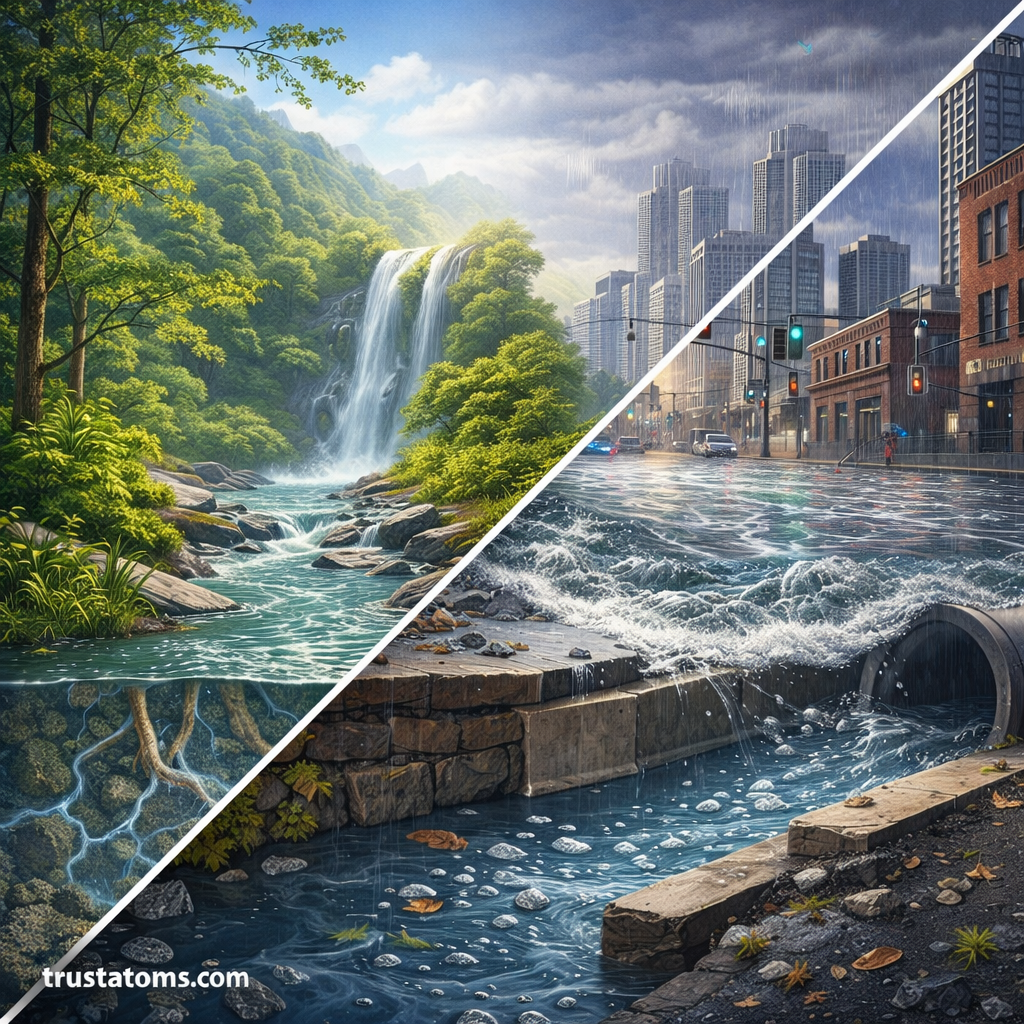
- Urbanization reduces infiltration and increases runoff
- Deforestation decreases transpiration
- Irrigation redistributes water resources
- Dams change natural water flow
Importance of the Hydrologic Cycle
The hydrologic cycle is essential for life and Earth’s systems.
Supports Ecosystems
- Provides water for plants and animals
- Maintains habitats such as wetlands and rivers
- Drives nutrient transport
Regulates Climate
- Transfers heat through evaporation and condensation
- Influences weather patterns
- Distributes moisture globally
Supplies Freshwater
- Replenishes drinking water sources
- Maintains rivers, lakes, and aquifers
- Supports agriculture and industry
Real-World Examples of Water Movement
Tropical Rainforests
- High evapotranspiration
- Frequent rainfall
- Rapid cycling of water
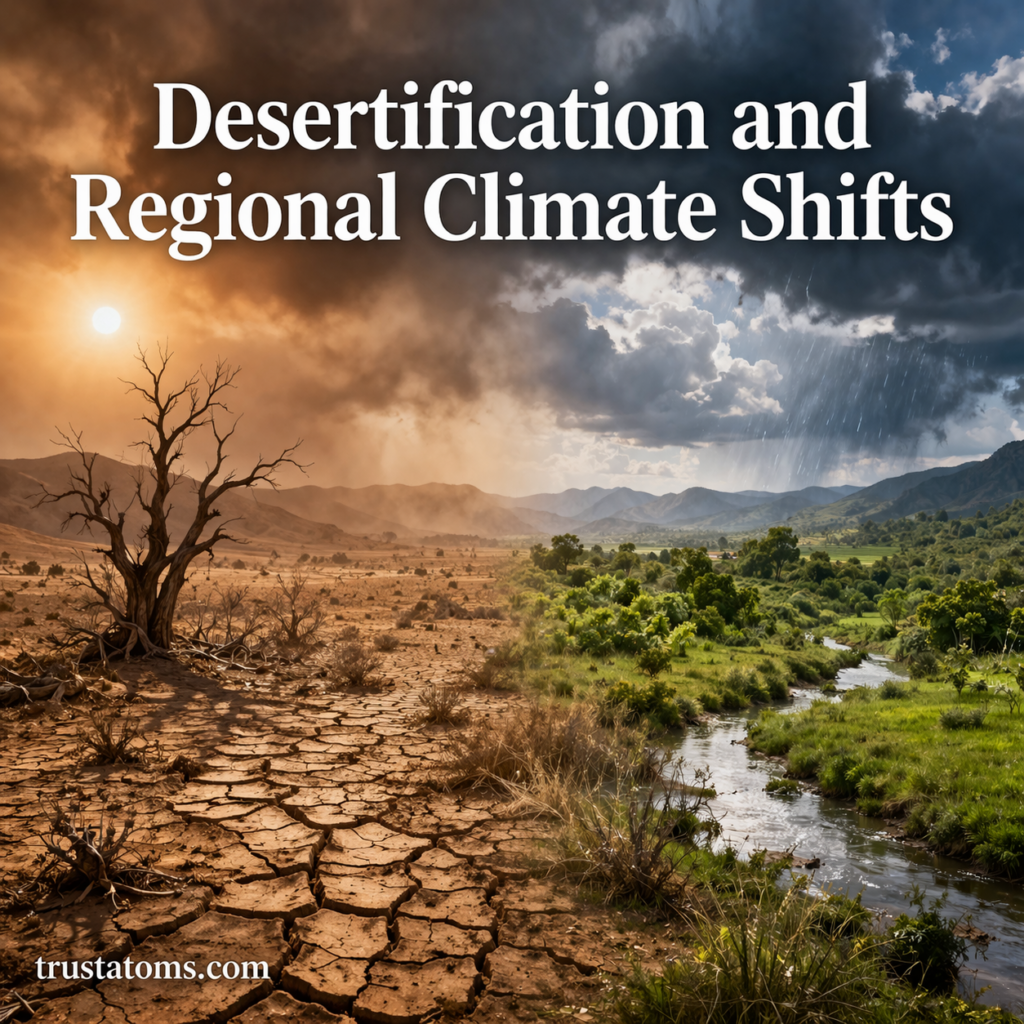
Deserts
- Low precipitation
- High evaporation
- Limited surface water
Urban Areas
- Increased runoff due to paved surfaces
- Reduced groundwater recharge
- Greater risk of flooding
Challenges and Changes in the Hydrologic Cycle
Human-driven climate change is affecting water movement worldwide.
Key Impacts
- More intense storms and flooding
- Increased drought frequency
- Melting glaciers altering water supply
- Changes in precipitation patterns
Understanding these changes is critical for managing water resources.
Final Thoughts
The hydrologic cycle is one of Earth’s most vital systems, continuously moving water through the environment and supporting life at every level.
By understanding how water moves—from evaporation to precipitation and beyond—we gain insight into weather, climate, ecosystems, and the challenges facing our planet.