Wildfires and Climate Conditions: Causes, Behavior, and Prevention

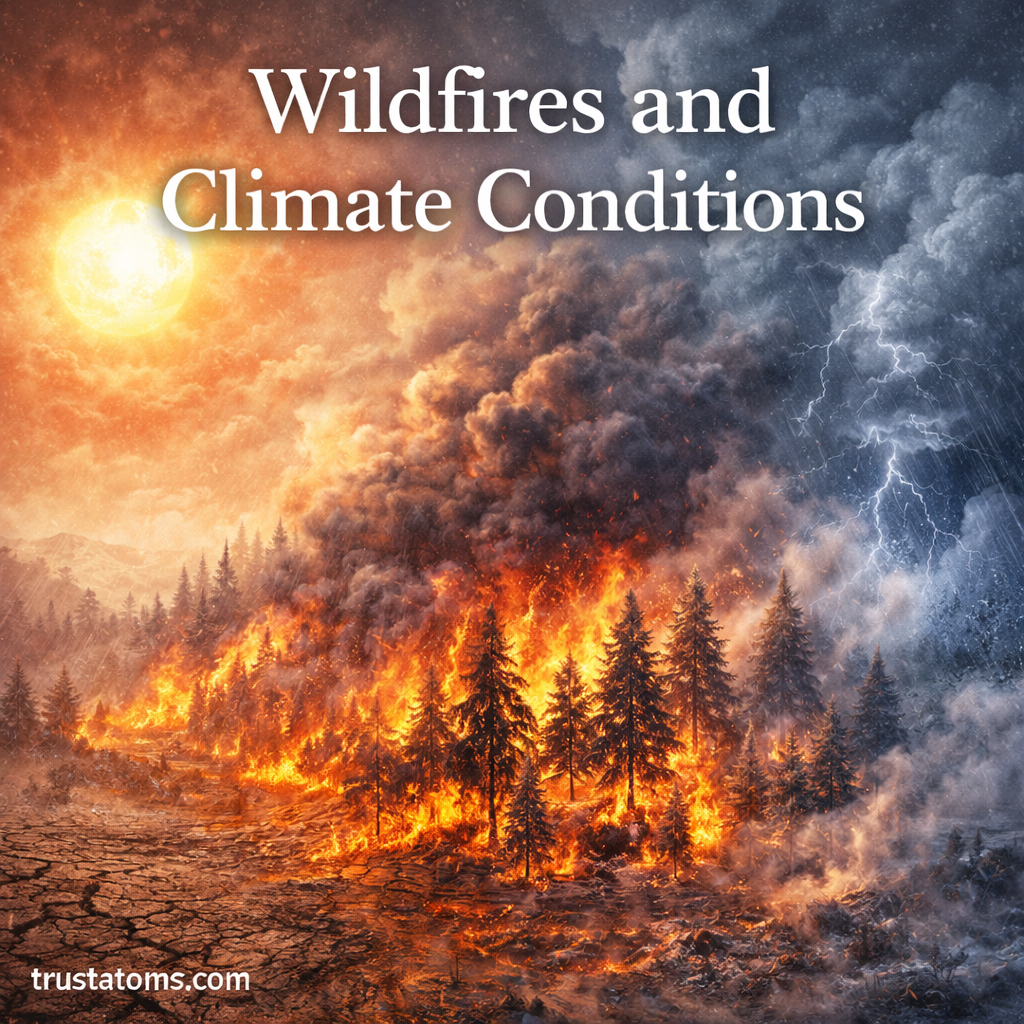
Illustration showing a wildfire spreading through a forest with dry conditions, intense heat, and storm activity in the background.
Illustration of wildfires influenced by climate conditions including heat, drought, and changing weather patterns.

Wildfires are uncontrolled fires that spread through vegetation, with their behavior influenced by fuel availability, temperature, humidity, wind, and terrain. Hot, dry conditions can make vegetation easier to ignite, while strong winds and accumulated fuels can accelerate fire spread and increase the difficulty of controlling it.

Climate change is altering fire-weather conditions in many regions, although wildfire trends also depend on land management, ignition sources, and vegetation. Studying these relationships connects wildfire behavior with Earth science, particularly atmospheric processes, ecosystems, and environmental change.

Continue reading “Wildfires and Climate Conditions: Causes, Behavior, and Prevention”
Ice Storms and Freezing Rain: Formation, Impacts, and Safety

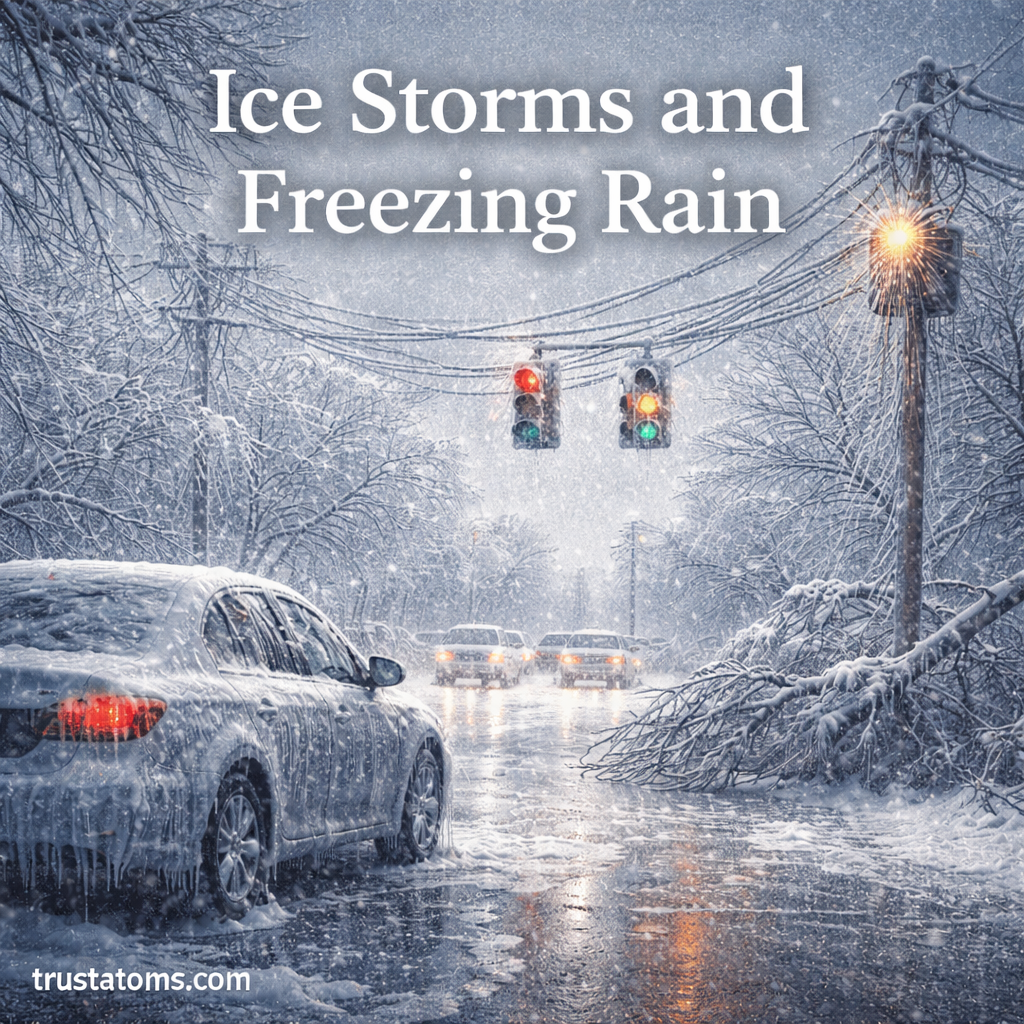
Illustration showing an ice storm with freezing rain coating roads, cars, trees, and power lines in thick ice.
Illustration of ice storm conditions with freezing rain causing ice buildup on roads, vehicles, and power lines.

Ice storms form when freezing rain coats exposed surfaces with ice, creating dangerous travel conditions and potentially damaging trees, buildings, and electrical infrastructure. Freezing rain develops when liquid precipitation passes through shallow, below-freezing air near the ground and freezes upon contact with sufficiently cold surfaces.

Unlike snowfall, freezing rain can create a nearly invisible layer of ice on roads and sidewalks. Understanding this winter weather hazard through Earth science helps explain why temperature differences within the atmosphere can produce dramatically different conditions at ground level.

Continue reading “Ice Storms and Freezing Rain: Formation, Impacts, and Safety”

Blizzards and Snowstorm Dynamics: Causes, Conditions, and Impacts

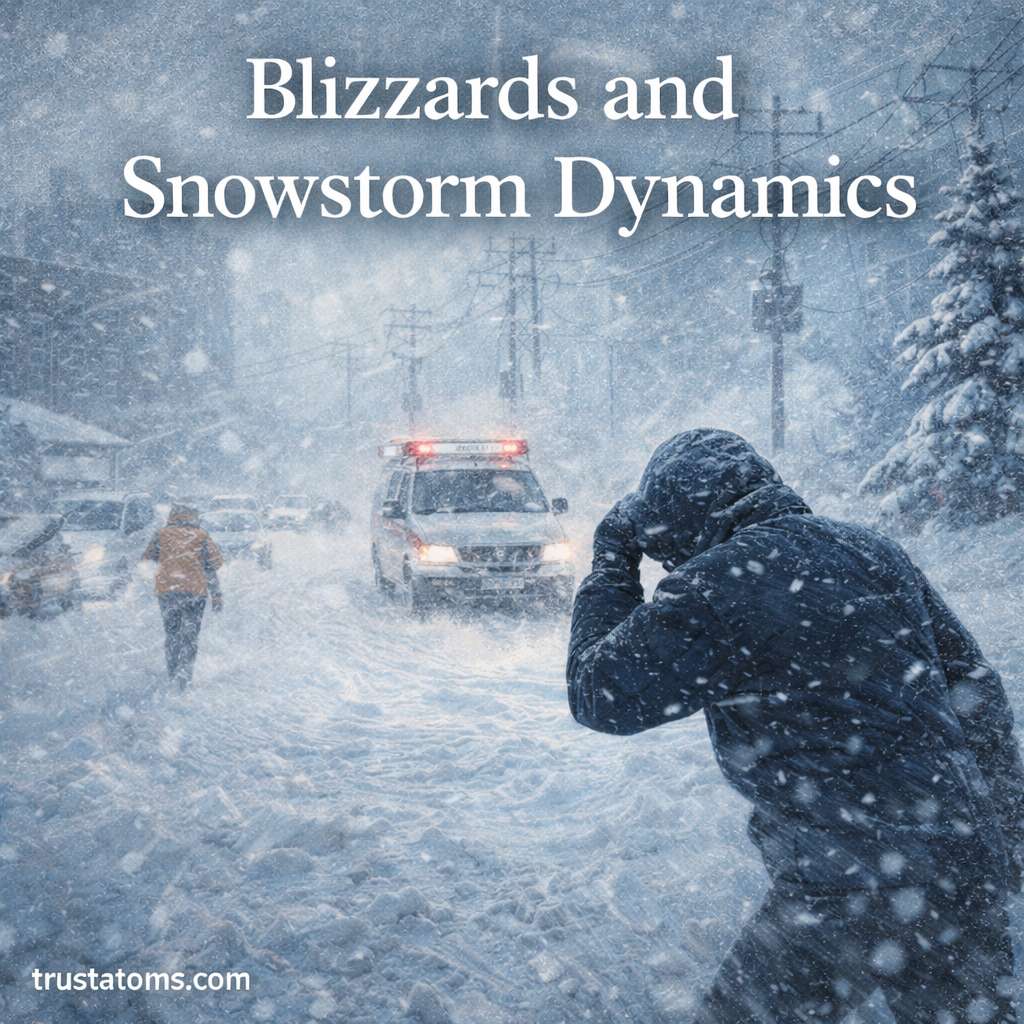
Illustration showing a severe blizzard with heavy snow, strong winds, low visibility, and emergency vehicles in a snow-covered city.
Illustration of blizzard conditions with intense snowfall, strong winds, and reduced visibility in an urban environment.

A blizzard is a severe winter weather event defined by strong winds and prolonged, dangerously reduced visibility caused by falling or blowing snow. Snowstorms develop when moist air rises into sufficiently cold atmospheric layers, while blizzard conditions occur when powerful winds lift and transport snow, making travel hazardous even without heavy new snowfall.

Blizzards can close highways, interrupt electricity supplies, and expose people to dangerous cold. Understanding their formation is part of Earth science, connecting atmospheric pressure, temperature differences, moisture, and wind to the winter weather experienced at the surface.

Continue reading “Blizzards and Snowstorm Dynamics: Causes, Conditions, and Impacts”

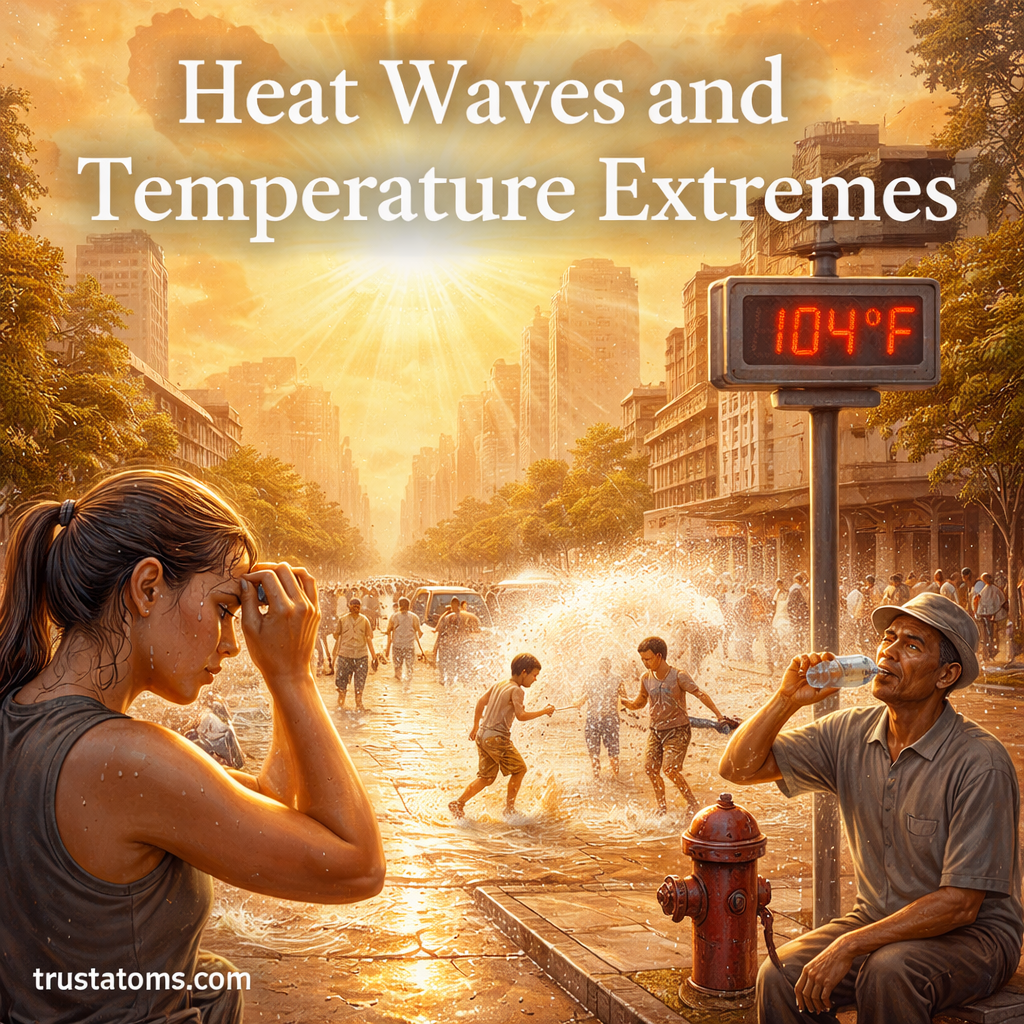
Heat Waves and Temperature Extremes: Causes, Impacts, and How to Stay Safe

Illustration showing extreme heat wave in a city with people cooling off, bright sun, and a digital temperature reading of 104°F.
A heat wave can expose urban communities to dangerously high temperatures, increasing the need for shade, hydration, and effective cooling.

Heat waves are prolonged periods of unusually high temperatures, often caused by persistent high-pressure systems, intense solar heating, and weather patterns that limit the arrival of cooler air. These events can cause heat-related illness, strain electricity and water supplies, damage crops, and increase environmental hazards, especially when temperatures remain elevated overnight.

Heat waves and temperature extremes are becoming more frequent and intense across many regions as the climate warms. Understanding how atmospheric circulation, land surfaces, and human activity influence extreme temperatures is an important application of Earth science.

Continue reading “Heat Waves and Temperature Extremes: Causes, Impacts, and How to Stay Safe”

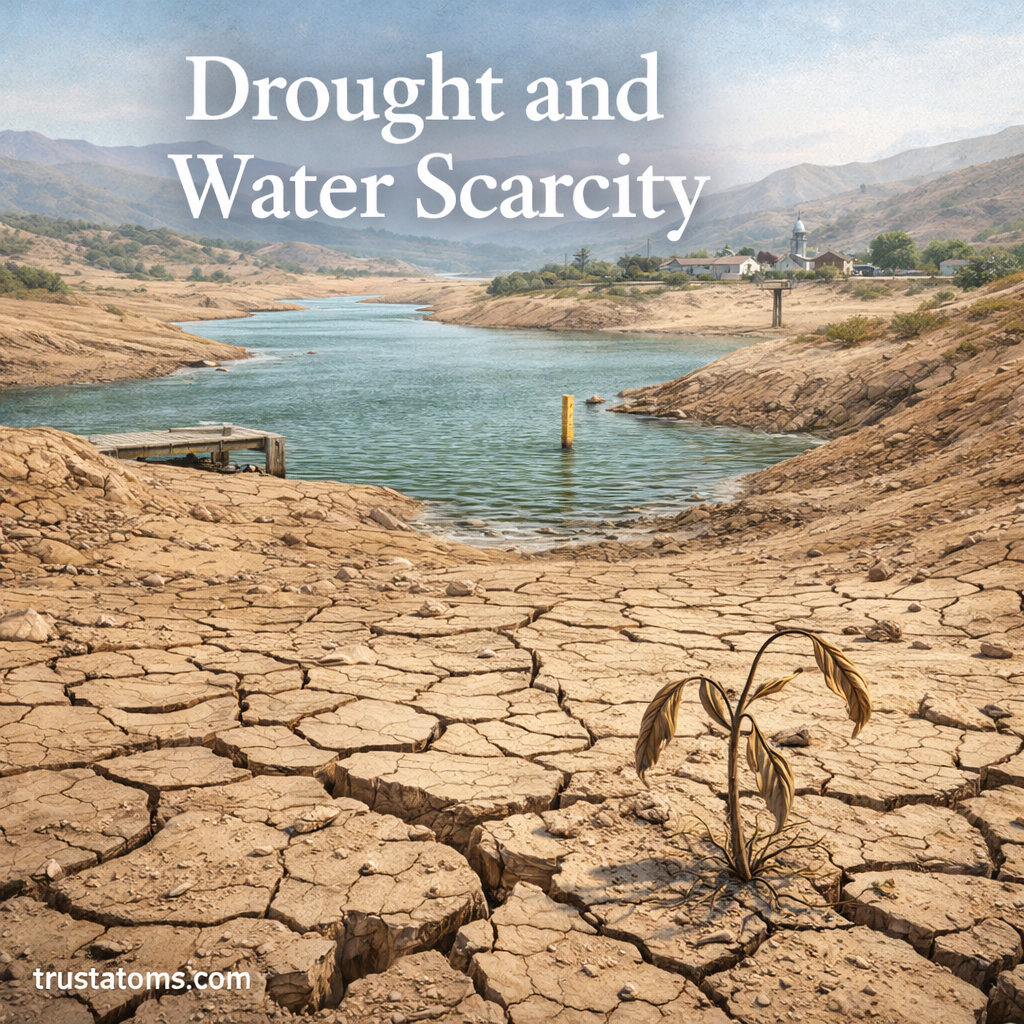
Drought and Water Scarcity: Causes, Impacts, and Solutions

Illustration showing drought and water scarcity with cracked dry land, a shrinking reservoir, and a withered plant.
Illustration of drought conditions and water scarcity with dry land and reduced water levels.

Drought occurs when unusually dry conditions persist long enough to create water shortages, while water scarcity develops when available, accessible water cannot meet the needs of people and ecosystems. Both can affect drinking water supplies, agriculture, rivers, and wildlife, but water scarcity can also occur without drought when demand exceeds sustainable supplies.

Understanding these differences is part of Earth science, which examines how climate, water, land, and human activities interact. Rainfall patterns, rising temperatures, groundwater use, and water management all influence how severely a community experiences shortages.

Continue reading “Drought and Water Scarcity: Causes, Impacts, and Solutions”

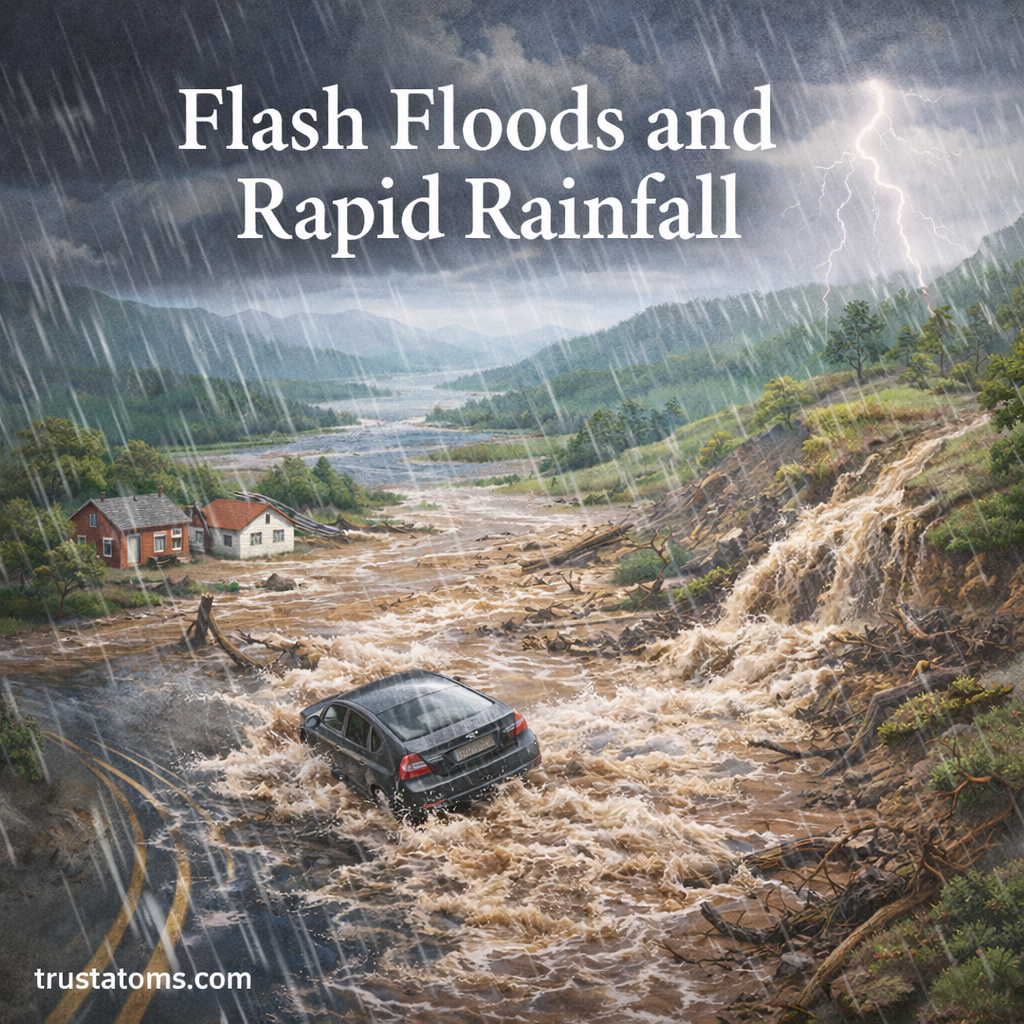
Flash Floods and Rapid Rainfall: Causes, Risks, and Prevention

Illustration showing flash flooding caused by rapid rainfall with fast-moving water submerging a road, car, and nearby homes during a storm.
Intense rainfall can generate fast-moving floodwater that overwhelms roads, drainage systems, and nearby homes within a short period.

Flash floods are sudden floods that develop within minutes or hours, often when intense rainfall produces more runoff than the ground, streams, or drainage systems can handle. They can rapidly inundate roads, neighborhoods, and narrow valleys, sometimes before people nearby receive a warning.

Understanding how rapid rainfall leads to flash flooding can help individuals and communities stay safer and better prepared. Studying rainfall, runoff, and drainage is also part of Earth science, which examines how the atmosphere, water, land, and human environments interact.

Continue reading “Flash Floods and Rapid Rainfall: Causes, Risks, and Prevention”

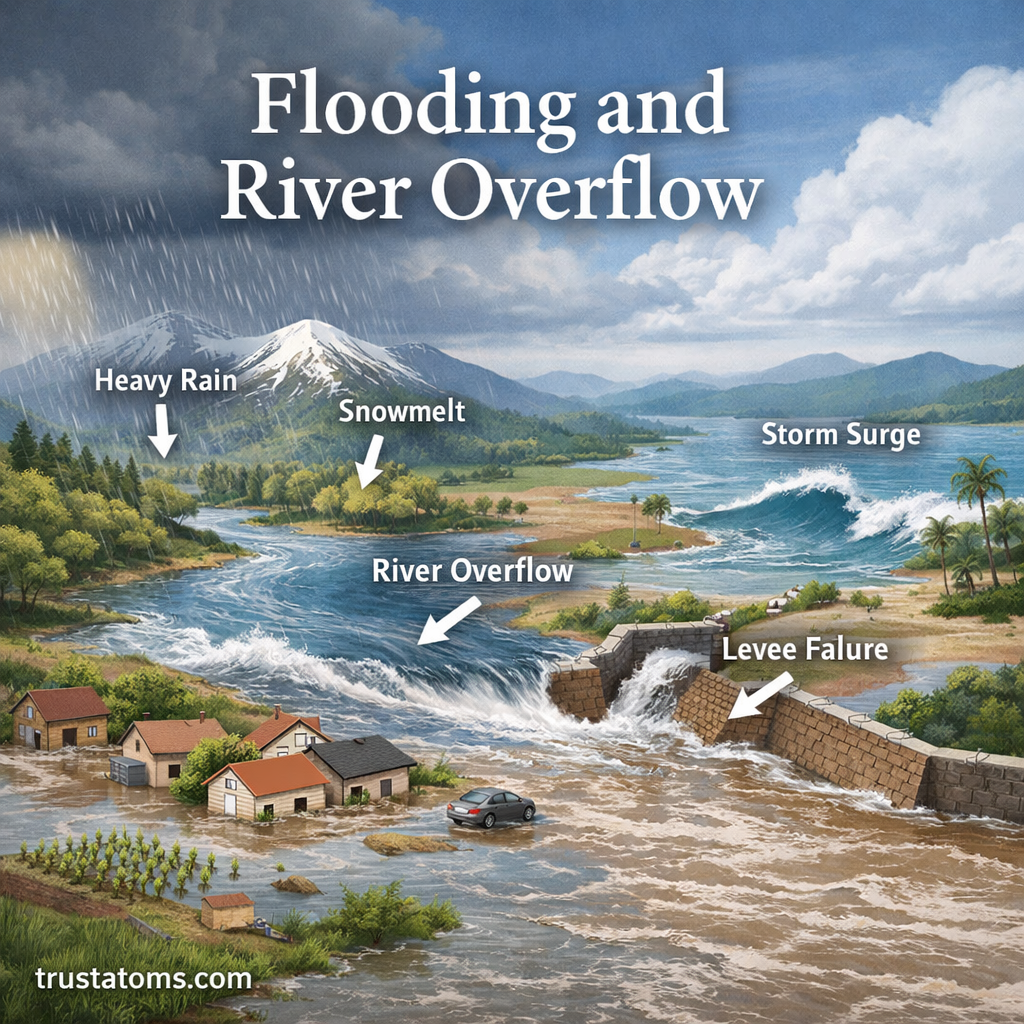
Flooding and River Overflow: Causes, Impacts, and Prevention

Illustration showing flooding and river overflow caused by heavy rain, snowmelt, storm surge, and levee failure.
Heavy rainfall, snowmelt, coastal water levels, and failures of flood-control structures can cause rivers to overflow into surrounding land.

Flooding occurs when water covers land that is normally dry, while river overflow happens when a river rises above its banks and spreads onto surrounding floodplains. Heavy rainfall, snowmelt, restricted drainage, and failures of flood-control structures can all contribute to rising water levels and damaging floods.

River flooding is a natural process, but it becomes hazardous when homes, roads, farms, and other infrastructure occupy vulnerable areas. Understanding how water moves through watersheds is part of Earth science and helps communities identify flood risks, improve planning, and prepare for emergencies.

Continue reading “Flooding and River Overflow: Causes, Impacts, and Prevention”

Tornado Outbreaks and Wind Damage: Understanding Nature’s Most Violent Storms

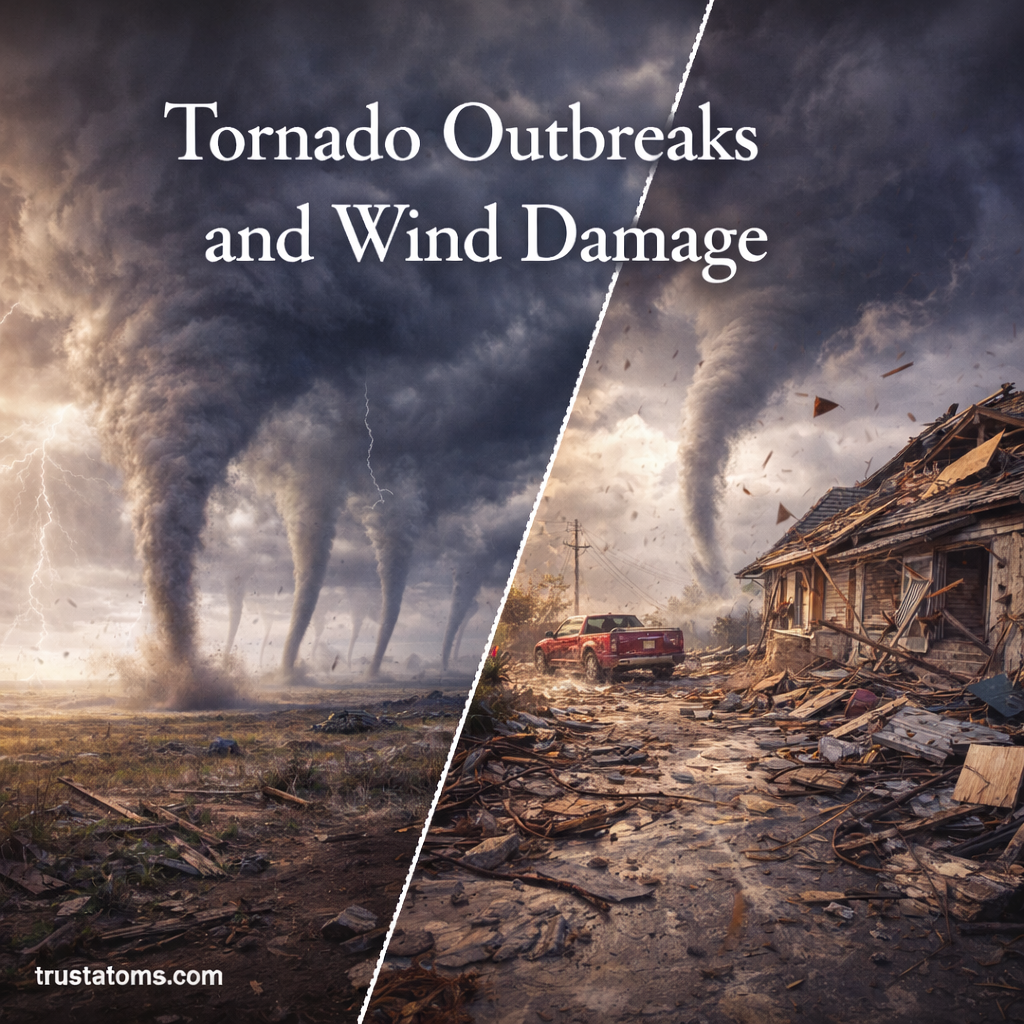
Illustration showing multiple tornadoes forming in an outbreak and severe wind damage to homes and vehicles.
A tornado outbreak involves multiple tornadoes associated with the same weather system, potentially causing widespread damage across several communities.

A tornado outbreak occurs when multiple tornadoes develop from the same large-scale weather system within a relatively short period. These events can produce widespread wind damage as rotating thunderstorms generate tornadoes that destroy buildings, uproot trees, and scatter dangerous debris.

Outbreaks are especially hazardous because several communities may face tornado threats during the same weather event, sometimes over many hours. Studying these storms is part of Earth science, connecting atmospheric instability, wind patterns, storm development, and the physical effects of extreme weather.

Continue reading “Tornado Outbreaks and Wind Damage: Understanding Nature’s Most Violent Storms”

Cyclones and Typhoons Explained: Understanding Powerful Tropical Storms

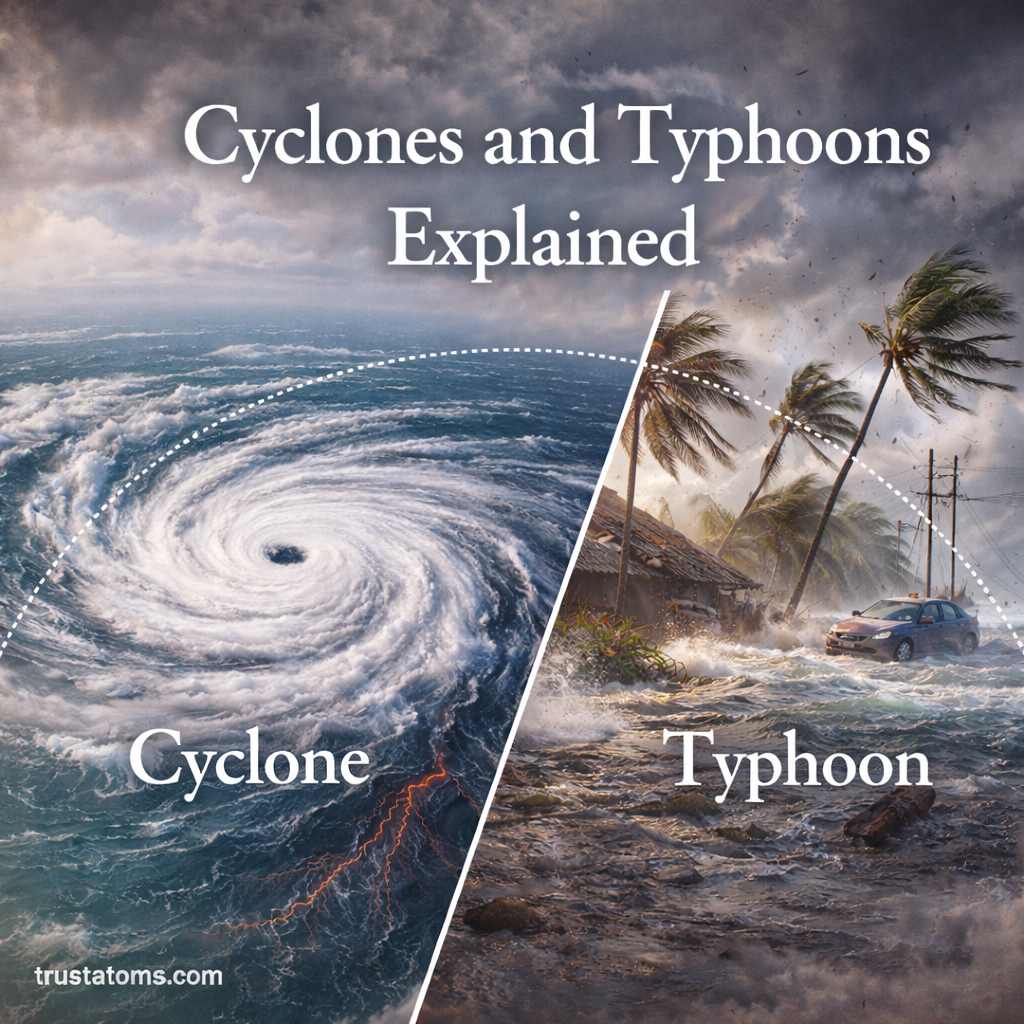
Illustration comparing cyclone over ocean and typhoon impacting coastal area with strong winds and flooding.
Tropical cyclones develop over warm oceans and can bring destructive winds, heavy rainfall, and coastal flooding when they approach land.

Cyclones and typhoons are powerful rotating tropical storms that develop over warm ocean waters, drawing energy from heat and moisture. They are the same type of weather system as hurricanes, but their regional names differ depending on where they form.

These storms can produce destructive winds, intense rainfall, storm surges, and widespread flooding. Understanding how they develop, move, and weaken is part of Earth science, which examines the atmosphere, oceans, and natural processes shaping our planet.

Continue reading “Cyclones and Typhoons Explained: Understanding Powerful Tropical Storms”

Hurricanes: Formation and Structure Explained

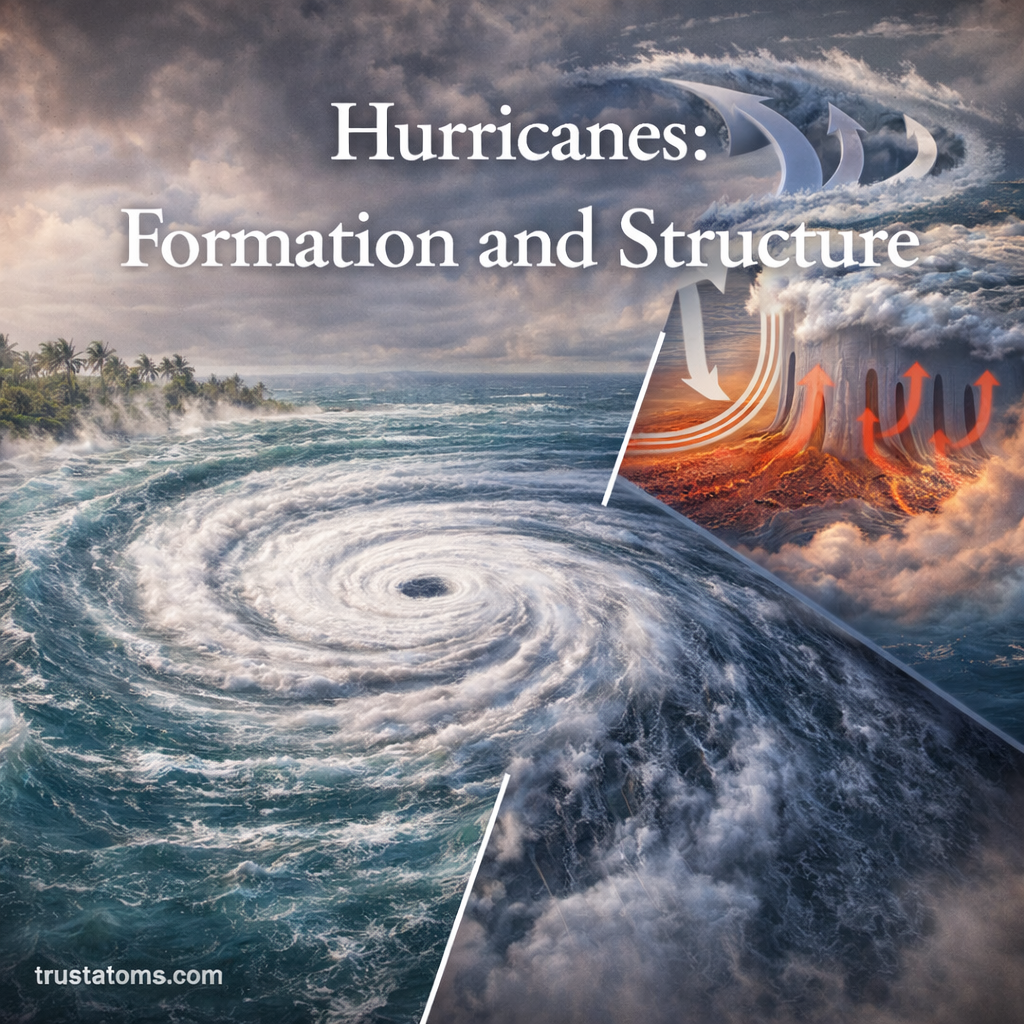
Illustration showing hurricane formation and structure with eye, spiral rainbands, and ocean-driven storm system.
A mature hurricane contains a central eye, an intense eyewall, spiral rainbands, and upper-level outflow sustained by heat and moisture from the ocean.

Hurricanes form when organized tropical thunderstorms draw heat and moisture from warm ocean waters, developing into powerful rotating low-pressure systems. Their structure typically includes a central eye, an eyewall containing the strongest winds, spiral rainbands, and upper-level outflow that helps sustain the storm.

Hurricanes are among the most powerful and destructive weather systems on Earth. They can affect millions of people through damaging winds, heavy rainfall, and storm surges, making their formation and behavior an important subject within Earth science.

Continue reading “Hurricanes: Formation and Structure Explained”